
Shower Surrounds vs. Tile: Which Is Better for Your Bathroom?
The choice between a shower surround and tile is one of the most practical decisions in a bathroom renovation. Both create a finished, waterproof shower enclosure. They differ significantly in cost, installation complexity, appearance, and long-term durability. Neither is universally superior — the right choice depends on the specific bathroom, budget, and homeowner priorities.
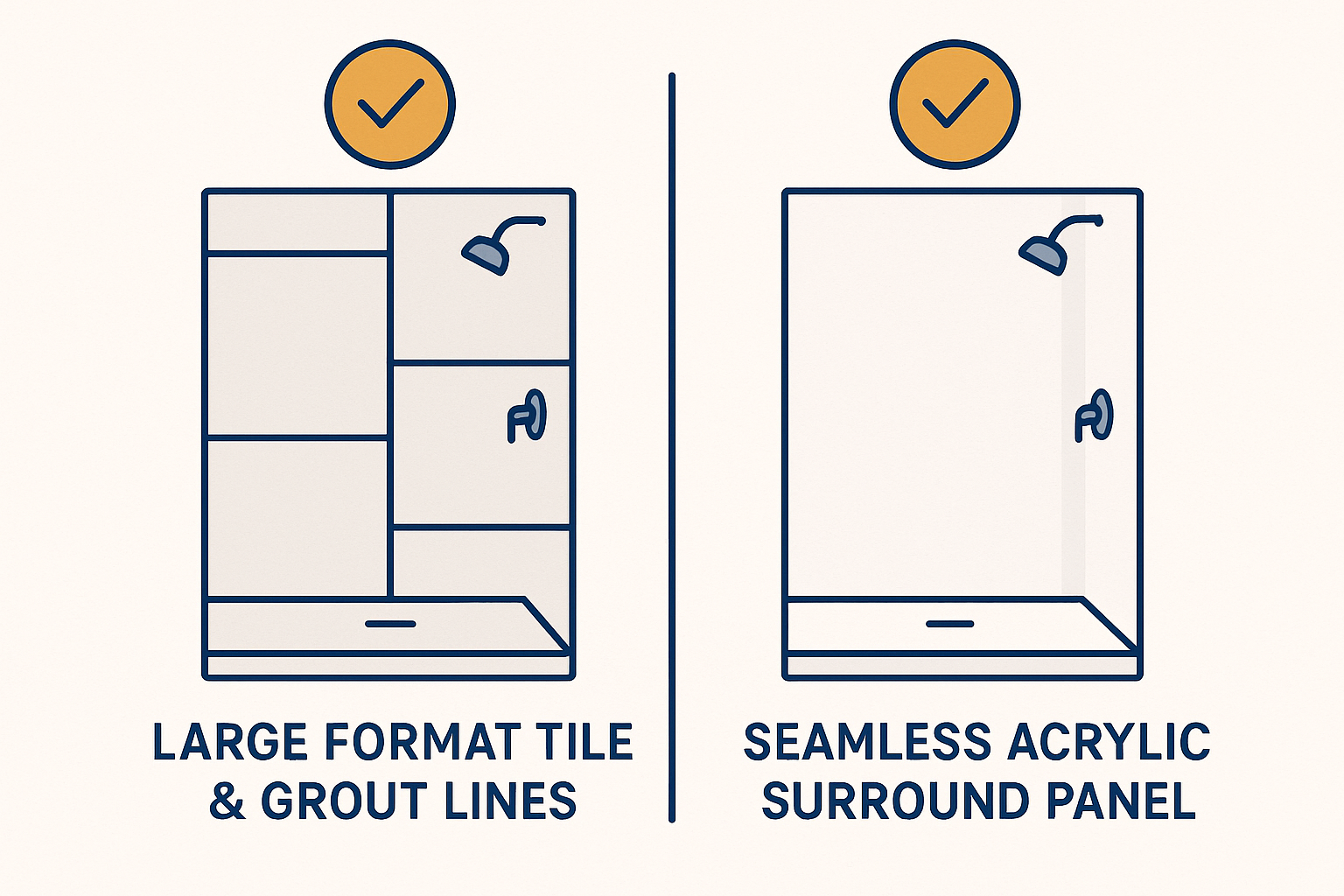
What Is a Shower Surround?
A shower surround is a pre-fabricated panel system that covers the shower walls. Panels are typically made from:
- Acrylic or fibreglass: The most common residential surround material. Lightweight, seamless within panels, available in a range of colours and simulated textures including simulated stone and tile patterns.
- PVC/solid polymer: More rigid than acrylic, better resistance to impact. Brands like Swanstone and DreamLine use this material.
- Cultured marble: A polyester resin and marble powder composite that is cast in the final shape. No grout lines. Premium look with a smooth, continuous surface.
- Solid acrylic panels: High-gloss, thick-gauge panels that resist cracking and impact better than standard acrylic.
A typical alcove surround comes in three panels (two end walls and one back wall) that install directly over the existing wall substrate or cement board.
What Tile Offers
Tile shower walls are installed by a tile setter on a properly prepared waterproofed substrate. The tile selection is effectively unlimited — ceramic, porcelain, stone, glass, mosaic — and the installation can express virtually any design direction.
Comparison: Cost
Shower surround (acrylic, 3-piece alcove):
– Material: $200–$800 for a standard acrylic surround
– Installation: $200–$500 (surround installation is faster and less complex than tile)
– Total installed: $400–$1,300
Tile shower walls (full gut renovation):
– Substrate (cement board): $100–$250 for a standard shower
– Waterproofing membrane: $100–$200
– Tile (mid-range porcelain): $400–$1,200 for a standard shower depending on tile selection
– Installation labour: $800–$2,000
– Total installed: $1,400–$3,650
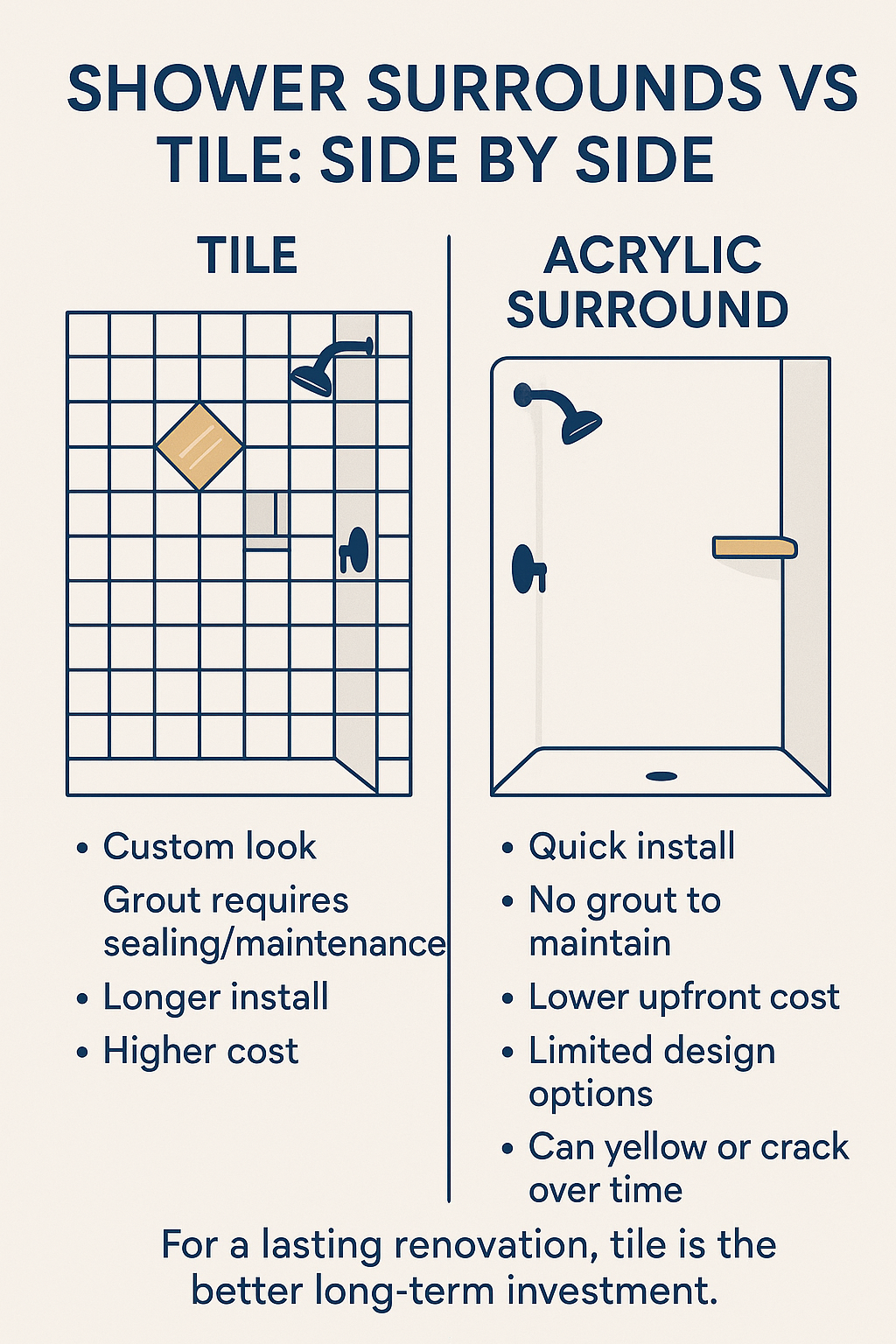
A tile shower is typically 2–4 times the cost of a comparable acrylic surround installation. The cost difference is real and significant for budget-conscious renovations.
Comparison: Installation
Surround installation: Surrounds attach to studs or substrate using adhesive and mechanical fasteners. The panels are cut to fit using standard woodworking tools. A typical surround installation can be completed in a few hours by a competent installer. Caulk is applied at all seams and transitions.
Tile installation: A full tile installation involves substrate preparation (cement board or waterproof panel), waterproofing membrane application, layout planning, tile cutting and setting with thinset adhesive, grouting, and caulking transitions. A professional tile installation takes 2–4 days for a standard shower.
Tile installation requires significantly more skill and time. The upside is flexibility — virtually any tile format, pattern, and combination is achievable.
Comparison: Appearance
This is where tile wins decisively for most homeowners. Tile offers:
– True design customization — the tile type, pattern, and colour you choose
– No seams between panels
– The genuine visual quality of ceramic, porcelain, or stone
– Ability to mix floor and wall tiles for a cohesive design
Acrylic surrounds, even the best-quality ones with embossed stone or tile patterns, read as simulated rather than genuine. For bathrooms where design and finish quality are priorities — particularly primary ensuites and bathrooms visible from principal living areas — tile is the appropriate choice.
For bathrooms where function and cost take priority over premium appearance — a secondary bathroom, a budget renovation, a rental property — a quality acrylic surround is a practical and serviceable choice.
Comparison: Longevity and Maintenance
Acrylic/fibreglass surrounds:
– Quality acrylic surrounds from major manufacturers carry 15–25 year warranties
– The primary failure modes are crazing (surface cracking from cleaning product damage), yellowing over time in lower-quality acrylic, and caulk failure at seams
– Maintenance: clean with non-abrasive cleaner, maintain caulk at seams
– Lifespan in practice: 15–25 years for quality product, less for budget versions
Tiled shower walls:
– Properly waterproofed and installed tile shower walls last 20–30+ years
– The primary failure modes are grout deterioration and caulk failure — both maintenance items that extend the lifespan when addressed
– Tile itself is essentially indefinite lifespan — it is the grout and caulk that require attention
– Maintenance: clean grout regularly, re-seal grout annually, replace caulk every 3–5 years
A properly installed tile shower with adequate waterproofing outlasts a standard acrylic surround. However, a poorly installed tile shower (with inadequate waterproofing) fails earlier and more expensively than a quality acrylic surround.
The Quality Gap in Surrounds
Budget acrylic surrounds ($100–$300) use thin acrylic that flexes under pressure, craze with cleaning products, and yellow within a few years. Premium acrylic and solid polymer surrounds ($500–$1,500) are genuinely durable products that perform well over 15–20 years.
If choosing a surround, choose a quality product. The premium surround at $700–$1,000 installed is worth the extra cost over the $300 builder-grade unit.
For a tub-to-shower conversion or full bathroom renovation in Ottawa, our team handles both surround and tile installations depending on scope and budget. Most Ottawa homeowners in the $15,000+ renovation range choose tile; budget renovations in the $8,000–$12,000 range sometimes include quality surround products.
For product specifications on shower surrounds, Swanstone, MAAX, and American Standard provide quality residential surround products with Canadian distribution.
Frequently Asked Questions
Is a shower surround as durable as tile?
A quality premium acrylic or solid polymer surround is durable and serviceable for 15–20 years with proper maintenance. A properly installed tile shower with adequate waterproofing can last 25–30+ years. Budget acrylic surrounds perform less well. The durability comparison favours tile at the high quality end, and favours surrounds over budget tile installation.
Can a shower surround be installed over existing tile?
Yes, in some cases. Acrylic and solid polymer surrounds can be installed over existing tile if the tile is soundly bonded and the wall surface is adequate. This eliminates demolition of the existing tile. The surround manufacturer’s installation instructions specify whether over-tile installation is approved for their product.
Is tile significantly more expensive than a shower surround?
Yes. A complete tile shower installation (material and labour) typically runs $1,400–$3,650 for a standard alcove. A quality acrylic surround installed runs $400–$1,300. The cost difference is typically 2–3x. For many homeowners, the appearance improvement of tile justifies this difference in a primary bathroom renovation.
What causes a shower surround to fail?
The most common failure modes are: caulk deterioration at panel seams (allows water behind the surround), surface crazing from abrasive cleaners, and panel flex from inadequate wall substrate support. Quality surrounds installed on proper substrate with non-abrasive cleaning products avoid most of these failure modes.