
What Is an Accessible Bathroom?
An accessible bathroom is designed to be safe and easy to use for people with mobility challenges, balance issues, or physical limitations. That includes seniors aging in place, people recovering from injury or surgery, and homeowners who want to future-proof their home for decades ahead.
Accessibility does not mean clinical or institutional. Today’s accessible bathrooms look just as polished as any standard renovation. The difference is in the details — the placement of grab bars, the size of the shower entry, the height of the toilet, the layout of the space.
If you own a home in Ottawa and are starting to think about how your bathroom will work for you in the years ahead, this guide covers the key features, what they cost, and how to get started.
Who Needs an Accessible Bathroom?
More people than you might expect. According to Ontario’s accessibility and aging-in-place resources, falls are the leading cause of injury-related hospitalizations for Canadians over 65. The bathroom is where most home falls happen.
An accessible renovation makes sense for:
- Seniors who want to stay in their home safely and independently
- Homeowners planning ahead for aging in place
- Family members renovating for a parent moving in
- Anyone recovering from a hip replacement, knee surgery, or other mobility-affecting procedure
- People with a disability that affects balance, strength, or mobility
You do not need to wait until there is a problem. The best time to add accessibility features is during a renovation, when the walls are already open and the layout is already being rethought.
Key Features of an Accessible Bathroom
Grab Bars
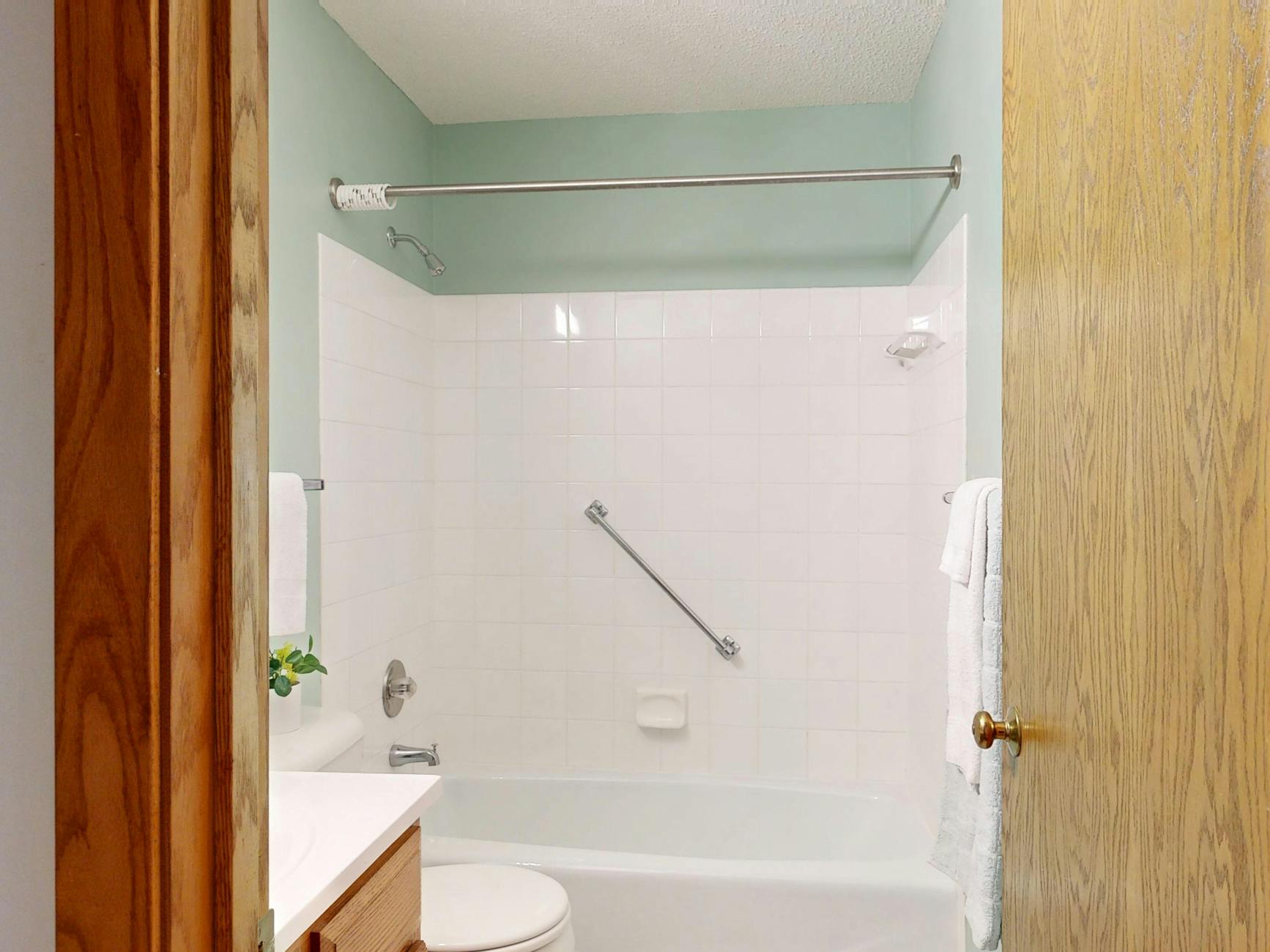
Grab bars are the single most effective safety upgrade you can make in a bathroom. Placed correctly — beside the toilet, inside the shower, along the tub — they provide support exactly when and where it is needed.
The key word is “correctly.” A grab bar installed into drywall without proper blocking is worse than no grab bar, because it creates a false sense of security. Bars need to be anchored into studs or backed with blocking installed during the renovation. This is work best handled by professionals who know where the loads need to go.
Modern grab bars come in brushed nickel, matte black, chrome, and other finishes. Many are designed to double as towel bars. Your bathroom does not have to look like a hospital room.
Walk-In Showers
A walk-in shower with a low or zero-threshold entry is one of the most-requested accessible upgrades. Eliminating the step over a tub edge removes a major trip hazard and makes bathing far easier for anyone with limited mobility.
A tub to shower conversion replaces your existing tub with a fully tiled or pre-fabricated walk-in shower. A built-in bench, a handheld showerhead, and a fold-down shower seat add further comfort and safety.
Shower floors should use small-format tiles or non-slip flooring to improve grip when wet. The drain placement and slope matter too — proper drainage prevents pooling.
Wider Doorways
Standard bathroom doorways in older Ottawa homes are typically 24 to 28 inches wide. A wheelchair requires at least 32 inches of clear passage, and 36 inches is the recommended minimum for comfortable access.
Widening a doorway during a renovation is a structural change, but it is a manageable one. If you are doing a full bathroom renovation anyway, it makes sense to address the doorway at the same time. Doing it later means reopening walls that have already been finished.
Comfort-Height Toilets
Standard toilets sit about 15 inches from floor to seat. Comfort-height toilets sit at 17 to 19 inches — closer to the height of a chair. For anyone with hip, knee, or back problems, this difference is significant. Rising from a low toilet is one of the most common causes of bathroom strain and falls.
This is an easy swap during a renovation and one most homeowners notice immediately in daily use.
Non-Slip Flooring
Wet bathroom floors are slippery by default. Small-format tiles with more grout lines, textured porcelain, and matte-finish materials all provide better grip than large polished tiles. The right flooring looks good and performs safely.
Blocking in the Walls
Even if you are not installing grab bars today, have your contractor add blocking inside the walls during your renovation. Blocking is a sheet of plywood or solid wood installed between the studs behind the drywall. It allows you to install a grab bar at any point in the future without opening the wall again. This costs very little to do during a renovation and a great deal to do after.
Barrier-Free Shower Entry
A barrier-free or zero-threshold shower entry is one of the most effective accessibility features you can build into a bathroom. There is no curb, no lip, no step. The floor transitions smoothly from the bathroom into the shower area. This works for walkers, wheelchairs, and anyone who is unsteady on their feet.
Achieving a true barrier-free entry requires careful attention to the floor slope and drain placement. The shower floor needs to slope toward the drain without creating a tripping hazard at the transition point. Done properly, it is invisible.
How Much Does an Accessible Bathroom Renovation Cost in Ottawa?
Costs depend on the scope of work. A targeted accessibility upgrade — adding grab bars with proper blocking, replacing a toilet, and swapping out flooring — typically falls in the $5,000 to $10,000 range.
A full accessible bathroom renovation that includes a tub to shower conversion, new flooring, comfort-height toilet, widened doorway, and a full tile job runs closer to $15,000 to $30,000 depending on materials, layout complexity, and the condition of the existing space.
If you are adding a new bathroom to your home to serve an aging parent or someone with a disability, a bathroom addition gives you the opportunity to design the space from the ground up with full accessibility built in from the start.
The Government of Ontario’s accessibility guidelines and related programs support accessibility improvements for eligible homeowners — it is worth checking whether any grants or tax credits apply to your project before you start.
What Accessible Bathrooms Look Like Today
One of the biggest misconceptions is that an accessible bathroom has to look medical. It does not.
Walk into a well-designed accessible bathroom in a Nepean or Kanata home renovated in the last few years and you would see a large walk-in shower with a frameless glass enclosure, a linear drain, a built-in teak bench, matte black hardware, and a grab bar that looks indistinguishable from a design element. You would see large-format porcelain tiles on the floor with a subtle textured finish. You would see a wall-hung vanity that gives wheelchair clearance underneath while looking completely intentional.
Accessible design and beautiful design are not in conflict. The best contractors know how to deliver both.
Questions to Ask Before You Start
Before you contact a contractor, think through a few things:
- Who is this bathroom being designed for, and what are their specific needs today?
- Are there needs that are likely to arise in the next 10 to 15 years that you should plan for now?
- Is the current doorway wide enough, or does it need to be widened?
- Is the existing layout workable, or does the bathroom need to be rethought?
- Are you doing a targeted upgrade or a full renovation?
Coming in with clear answers to these questions saves time and leads to better results.
Work With a Team That Understands Accessible Design
Miracle Dream Homes has been renovating bathrooms across Ottawa since 2004. Our team includes project managers and design consultants who understand both the functional requirements of accessible bathrooms and the finish-level expectations of homeowners who want something that looks as good as it performs.
We serve the full Ottawa area, including Barrhaven, Gloucester, Orleans, Manotick, Stittsville, and surrounding communities.
If you are ready to start planning, contact us for a free quote. We will walk through your space, understand your needs, and put together a plan that works for your home and your timeline.