
Bathroom Design Styles: A Homeowner’s Guide to Finding Your Look
Choosing a design style for your bathroom renovation is one of the most important decisions you’ll make — and one of the most underestimated. It isn’t just about picking colours you like. Your design style shapes every other decision that follows: the tiles, the vanity, the hardware, the lighting, and even the grout. Get this foundation right and the rest of your renovation falls into place.
The good news is that there are clear, well-established bathroom design styles to choose from, each with its own vocabulary of materials, shapes, and finishes. Whether you’re drawn to the clean lines of a modern spa bathroom, the cozy warmth of a farmhouse-inspired space, or the timeless elegance of a classic traditional look, understanding what defines each style will help you communicate your vision clearly and make confident choices throughout the renovation process.
This guide covers the most popular bathroom design styles, how to choose the one that fits your home and your goals, and what to watch for so your renovation delivers a look you’ll love for years to come.
The Most Popular Bathroom Design Styles
Understanding the defining characteristics of each style makes it much easier to pinpoint where your instincts are pointing you — and to stay consistent when you’re standing in a tile showroom or flipping through fixture catalogues.
Modern and Contemporary
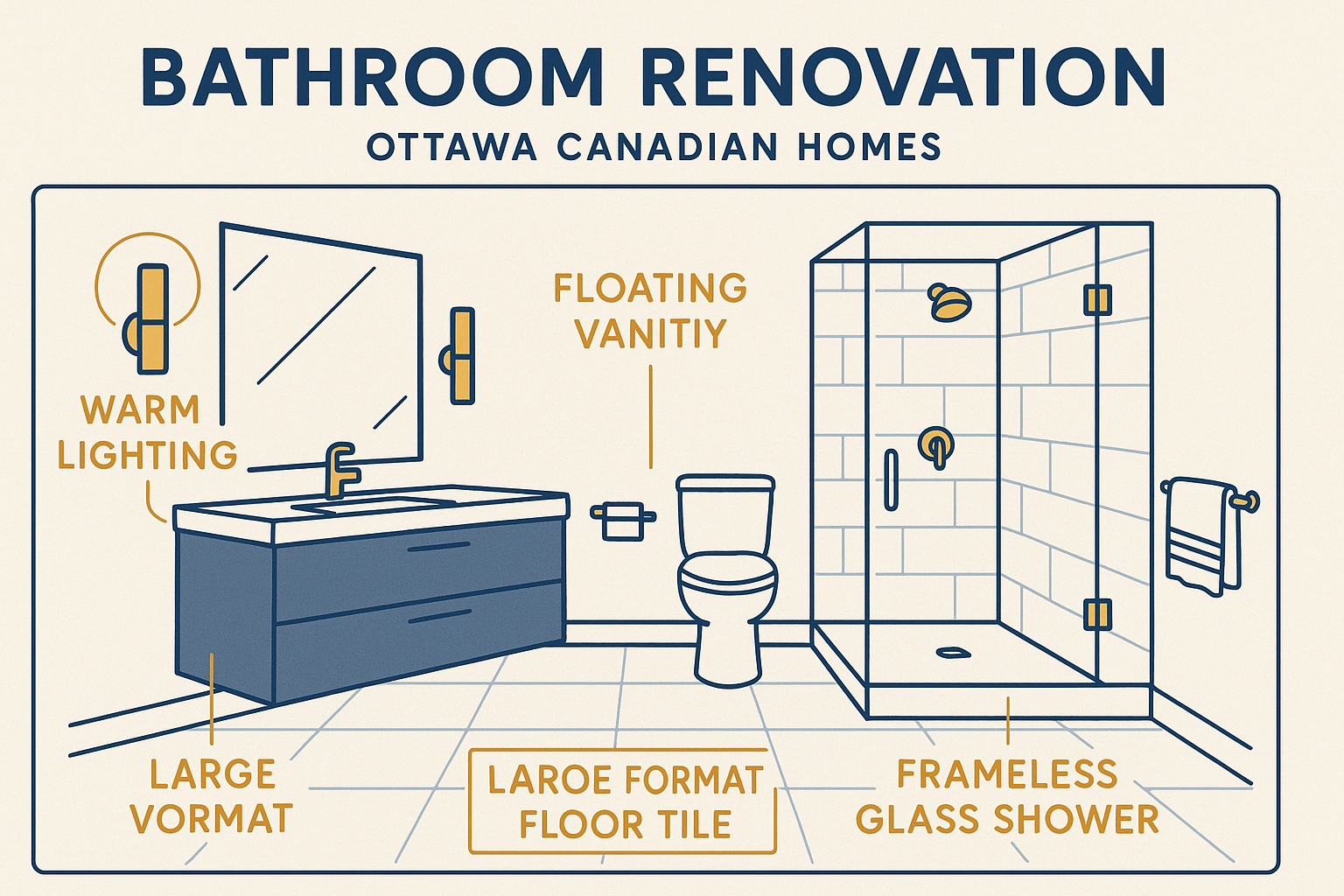
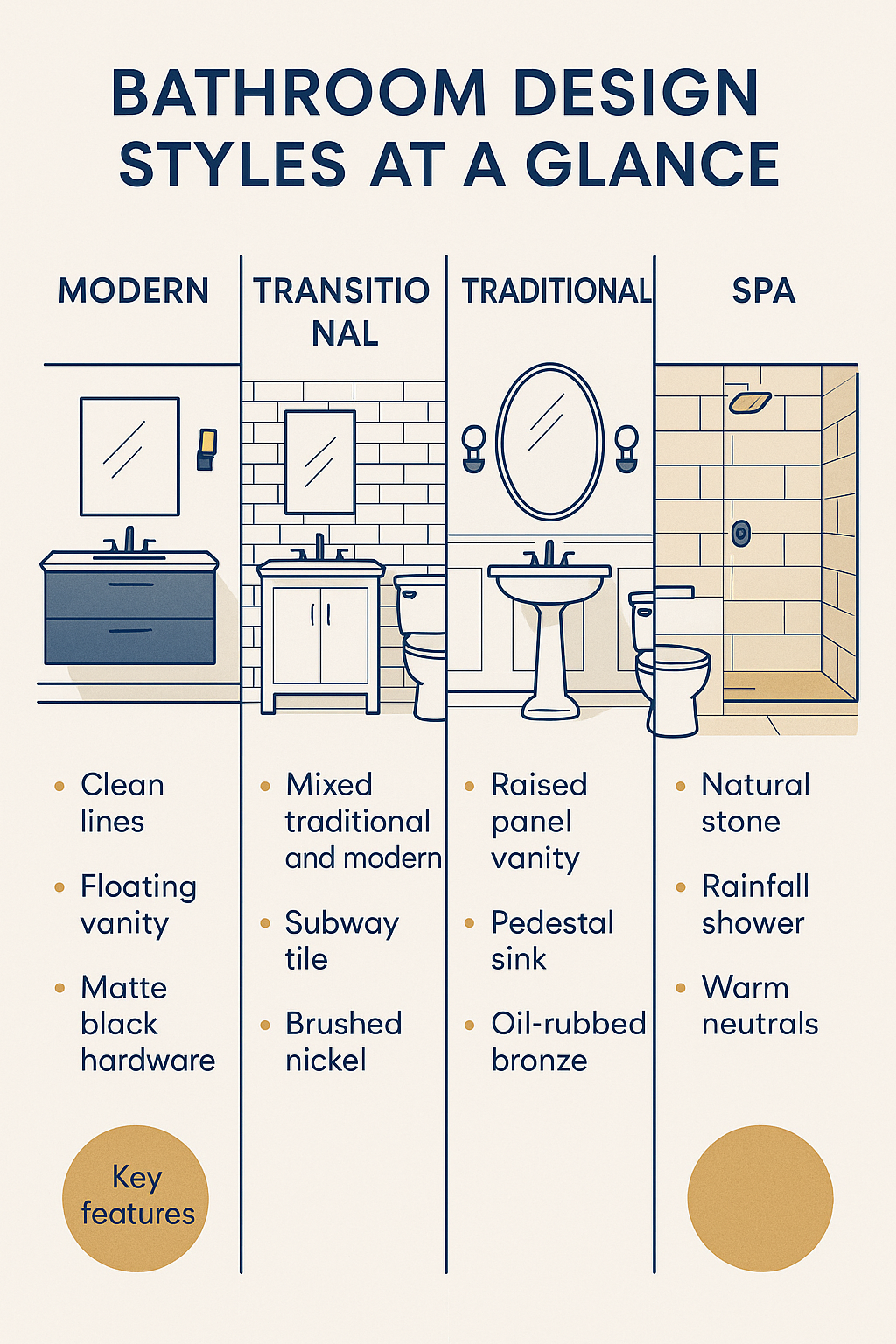
Modern bathrooms prioritize clean lines, minimal clutter, and a sense of open, airy space. The hallmarks are frameless glass shower enclosures, floating vanities, and monochromatic or high-contrast colour palettes — think crisp whites, deep blacks, and cool greys. Hardware is sleek and purposeful, typically in polished chrome or matte black. If clutter is your enemy and you prefer a space that feels like a high-end hotel, modern is likely your style.
Traditional (Classic)
Traditional design is warm, timeless, and rooted in historical architectural detail. Pedestal sinks, freestanding or clawfoot bathtubs, raised-panel cabinetry, and ornate moulding are the defining features. Classic tile patterns — penny, basketweave, hexagon — pair naturally with vintage-inspired hardware in polished nickel or antique brass. This is the style for homeowners who want a bathroom that feels refined and enduring rather than trend-driven.
Transitional
Transitional is consistently one of the most popular choices for Canadian homeowners, and for good reason: it blends the comfortable elegance of traditional design with the clean simplicity of contemporary spaces. Shaker-style cabinetry, soothing neutral palettes (soft greys, warm beiges, whites), and natural stone countertops paired with modernized fixtures strike a balance that appeals to a wide range of tastes — and ages well.
Pro Tip: If you’re renovating to increase resale value, transitional is your safest bet. It’s universally appealing without feeling generic, which means it attracts buyers without alienating them.
Farmhouse and Modern Farmhouse
Farmhouse style is cozy, practical, and rooted in rustic warmth. Apron-front sinks, shiplap wall panelling, sliding barn doors, and natural wood tones are the signatures. The modern farmhouse update sharpens those lines slightly and introduces high-contrast accents — matte black hardware against bright white shiplap, for example — for a look that feels current without losing its warmth.
Industrial
Industrial bathrooms borrow from converted warehouse aesthetics: exposed brick or concrete walls, visible plumbing, heavy metal accents, and subway tiles set with dark grout. It’s a bold, edgy style that works particularly well in older homes or urban spaces where the raw structural elements can be celebrated rather than hidden.
Midcentury Modern
Inspired by 1950s and 1960s design, midcentury modern pairs retro elements with highly functional, geometric layouts. Flat-panel wood vanities in warm tones like teak or walnut, geometric tile patterns, and playful pops of colour — teal, mustard yellow, avocado green — give this style an instantly recognizable character.
How to Choose the Right Style for Your Bathroom
Knowing the styles is one thing. Choosing the right one for your situation requires looking at a few practical factors beyond personal preference.
Start with Your Goal: Resale or Forever Home?
This single question changes everything. If you’re renovating to sell, research current trends and choose finishes that appeal to a broad range of buyers — clean, neutral, and durable. Avoid sinking money into highly specific luxury items that don’t always translate to a return on investment.
If this is your forever home, ignore what a hypothetical buyer might want. Choose the style, fixtures, and materials that genuinely make you happy every morning.
Match the Style to Your Home’s Character
A sleek, ultra-modern bathroom feels jarring in a 1920s craftsman bungalow. A heavily ornate traditional bathroom feels out of place in a mid-century split-level. While you don’t need to be rigid about matching your home’s architectural era, you do want your bathroom to feel like it belongs. Transitional and farmhouse styles tend to bridge the gap most gracefully in older Ottawa homes, while modern and industrial work well in newer builds.
Consider Your Bathroom’s Size
Your bathroom’s square footage will influence which design choices are practical. Small bathrooms benefit from lighter palettes, fewer grout lines, and wall-hung fixtures that keep floor space visually open. In larger bathrooms, you have more freedom to layer textures, introduce contrast, and use larger-format tiles.
Pro Tip: Tile size affects the perceived size of a room. In a small bathroom, medium-sized tiles (around 12×12 or 12×24 inches) with consistent grout lines make the space feel larger than very small mosaic tiles, which tend to visually fragment the room.
Set a Realistic Budget
Your budget will shape which version of your chosen style you achieve. A bathroom renovation in Ottawa ranges from roughly $15,000 for a clean functional refresh with mid-range finishes to $75,000 or more for a fully custom premium-grade transformation. Set a clear budget and put aside an additional 10–20% for unexpected costs that almost always emerge once walls are opened.
Materials, Tiles, and Colour Palettes by Style
Once you’ve identified your style direction, the material and finish choices become much more focused. Here’s how the three most popular styles translate into real decisions at the showroom.
Modern: Sleek, Seamless, and High-Contrast
- Colour palette: Crisp whites, deep blacks, cool greys — often monochromatic or two-tone
- Tile choices: Large-format porcelain (12×24 or 24×48 inches) to minimize grout lines; concrete-look or slate-look finishes; geometric accent tiles for feature walls
- Materials: Floating vanities with flat-panel doors, quartz countertops, frameless glass shower enclosures, polished chrome or matte black hardware
Transitional: Warm Neutrals with Timeless Shapes
- Colour palette: Soft greys, taupe, warm beige, cream, and off-white
- Tile choices: Subway tile, hexagon, and penny round in marble-look or natural stone-look porcelain for durability with elegance
- Materials: Shaker-style cabinetry, natural stone or quartz countertops, brushed nickel or spot-resistant hardware
Farmhouse: Rustic Warmth with Practical Utility
- Colour palette: Bright whites layered with natural wood tones, muted greens, and matte black accents
- Tile choices: Wood-look porcelain planks for floors; classic white subway tile with dark contrasting grout for showers
- Materials: Painted or natural wood vanities, apron-front sinks, shiplap panelling, oil-rubbed bronze or warm brass hardware
Pro Tip: If you love a premium material but your budget is tight, look for porcelain alternatives. Today’s porcelain convincingly replicates the look of natural marble, slate, or wood — at a fraction of the cost and with far better durability in wet environments.
Design Mistakes That Can Undermine Any Style
Even with a clear style vision, certain execution mistakes make a bathroom feel off. Here are the most common ones and how to avoid them.
Poor Tile Layout Planning
One of the most common regrets homeowners have is discovering that cut tile slivers ended up in the most visible spots — directly in front of the vanity or at the centre of the floor. Always plan your tile layout before any mortar is applied, starting from the most visible focal point and working outward. Hidden cut tiles belong in corners and behind fixtures.
If you’re using large-format tiles in a running bond pattern, use a maximum 33% offset rather than the standard 50%. Large tiles often have a slight bow, and a 50% offset causes lippage — uneven, raised edges that look sloppy and create a tripping hazard.
Using the Wrong Tile in Wet Areas
Large-format tiles are popular for their seamless modern look — but they should never be used on shower floors. They’re slippery when wet. Shower floors require smaller tiles (6-inch squares or mosaics at most) because the additional grout lines provide the friction and grip needed underfoot.
Skipping Proper Waterproofing
Regardless of your design style, waterproofing is the invisible foundation everything else depends on. Floors and walls in wet areas must be correctly waterproofed before tiling begins. Done poorly, it leads to structural damage, mould, and an expensive do-over. According to This Old House, improper waterproofing is one of the leading causes of bathroom renovation failures within five years.
Pro Tip: Always ask your contractor to confirm what waterproofing system they use and where it will be applied. A reputable renovator will be glad to walk you through it.
Forgetting to Budget for Hidden Costs
Materials like grout, tile adhesive, mortar, and underfloor heating supplies add up quickly. So do surprises behind the walls. Always build a 10–20% contingency into your budget from day one.
Making Your Style Work on Any Budget
One of the most empowering things to understand about bathroom design is that the look of a style and the cost of achieving it are more flexible than most homeowners expect.
If you love the elegance of natural marble but can’t stretch the budget, use marble-look porcelain on the main surfaces and splurge on a single marble accent piece — a windowsill, a niche shelf, or a feature strip — where it has the most visual impact.
If you’re drawn to the warmth of real wood but are concerned about moisture, wood-look porcelain planks deliver a convincingly similar aesthetic in a bathroom-appropriate format.
Entry-level fixtures — a classic pedestal sink, a pre-finished vanity, or brushed nickel hardware — completely transform a bathroom’s atmosphere without requiring a premium budget. The style is in the coherence of the choices, not the price tag of any single item.
Whether you’re planning a tub-to-shower conversion or a full gut renovation, deciding on your style direction first makes every subsequent decision easier. A bathroom with a clear, consistent design language always feels more intentional — and more satisfying — than one where individual items were chosen in isolation. For further inspiration, HGTV’s bathroom design guide is a useful visual reference for exploring styles before you commit.
Frequently Asked Questions
What is the most popular bathroom design style in Canada right now?
Transitional style is currently the most popular choice among Canadian homeowners. It blends the warmth of traditional design with the clean lines of contemporary spaces, using neutral palettes, Shaker cabinetry, and natural stone or quartz surfaces. It ages well and appeals to a wide range of buyers, making it a strong choice whether you’re renovating to stay or to sell.
How do I choose a bathroom design style that fits my home?
Start by looking at your home’s existing architectural character. Older homes with traditional details tend to suit transitional, traditional, or farmhouse styles. Newer builds with clean lines are better suited to modern or contemporary design. Your bathroom should feel like it belongs to the same house — not a showroom transplanted into it.
What bathroom design styles work best in small bathrooms?
Modern and transitional styles work best in small bathrooms because they favour light colours, minimal visual clutter, and wall-hung fixtures that keep the floor visible and the space feeling open. Avoid dark, heavy palettes and overly ornate detailing in small spaces — they close the room in rather than opening it up.
How much does a bathroom renovation cost in Ottawa?
A bathroom renovation in Ottawa typically ranges from $15,000 to $50,000 for a standard full bathroom, depending on the scope of work, the finishes selected, and whether any plumbing or electrical changes are required. Master ensuite renovations with premium finishes often run $40,000–$75,000 or more. Always budget an additional 10–20% contingency for unexpected conditions behind the walls.
Can I mix bathroom design styles?
Yes — mixing styles is common and often produces the most personalized results. The key is to anchor the space in one dominant style and use a second style as an accent only. For example, a transitional bathroom with one industrial-style Edison bulb fixture, or a modern bathroom with a single vintage-inspired freestanding tub. What doesn’t work is an equal mix of three or more competing styles, which creates visual confusion rather than character.
If you’re planning a bathroom renovation in the Ottawa area and want to talk through your style ideas with a team that has been doing this since 2004, we’re here to help. Request a free quote and we’ll walk you through the options that make sense for your home and your budget.