
Heated Towel Bars and Towel Warmers: What to Know Before You Buy
A heated towel bar — or towel warmer — is one of the more accessible luxury upgrades in a bathroom renovation. It provides a warm towel after every shower, reduces drying time for towels between uses (which reduces odour and mildew in damp bathroom towels), and adds a small but consistent comfort benefit that homeowners consistently appreciate.
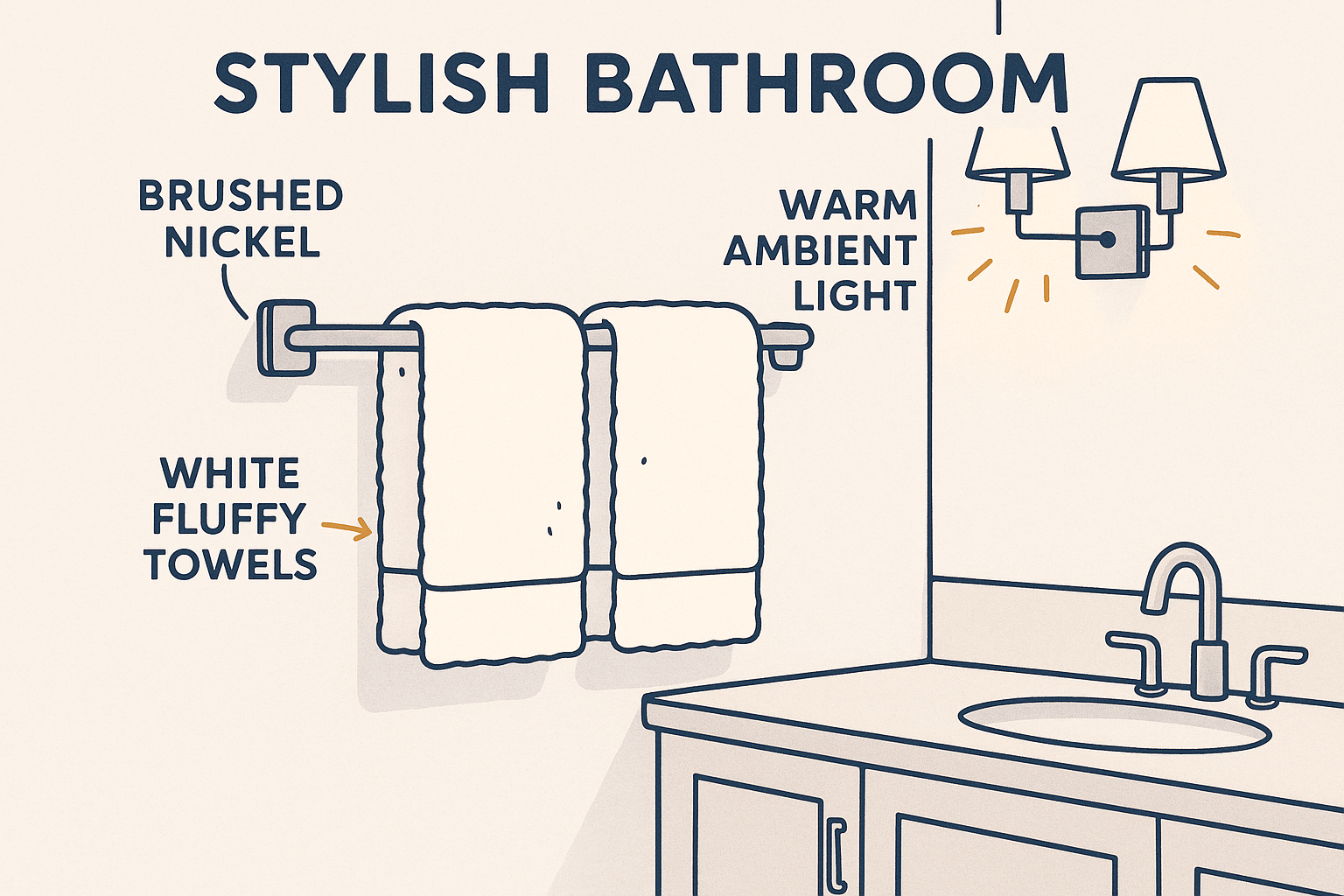
Unlike heated floors, which require installation under tile before the floor is finished, a heated towel bar can be added to most bathrooms without opening the wall — as long as an electrical outlet is accessible or a connection can be run to one.
Types of Heated Towel Bars
Electric Plug-In
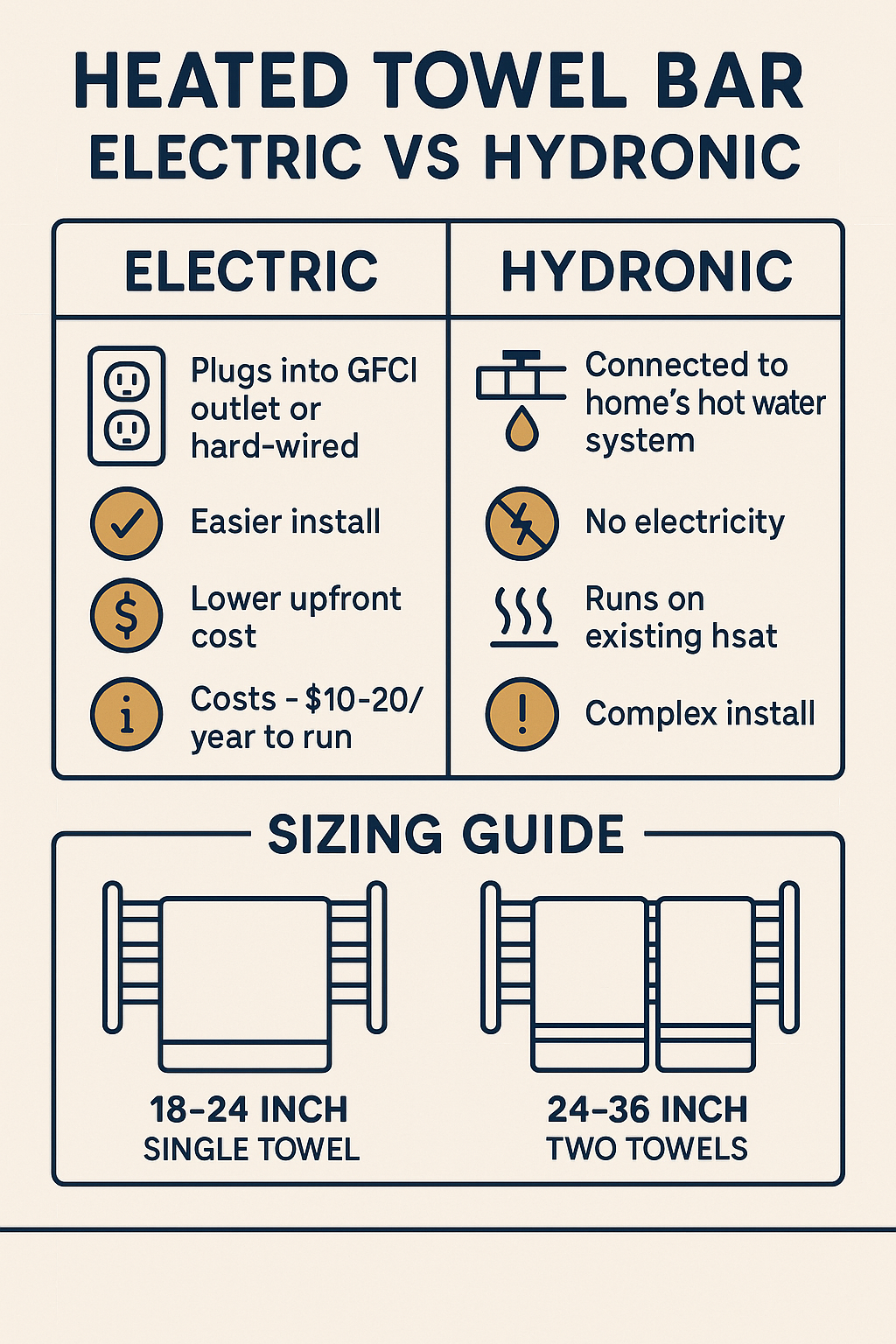
An electric towel warmer with a standard plug connects to a nearby outlet. Installation involves mounting the bar to the wall (screwing into studs or using appropriate wall anchors) and plugging in the cord.
This is the simplest installation — no electrician required, no new circuit needed, and the unit can be repositioned if the bathroom layout changes. The visible cord is the main aesthetic disadvantage, though some units include a cord management system or a relatively discreet cord path to a nearby outlet.
Best for: Bathroom renovations where adding a hardwired circuit is not practical or budget-friendly, or where the homeowner wants to test a heated towel bar before committing to a hardwired unit.
Electric Hardwired
A hardwired electric towel warmer connects directly to the electrical system with no visible cord. It requires a licensed electrician to run a circuit from the panel to the bathroom wall and connect the unit. In Ontario, this work requires an ESA permit if it is a new circuit.
Hardwired units look considerably cleaner than plug-in versions and are the standard choice in bathroom renovations where the space is open and a circuit can be run during the renovation electrical scope.
Best for: Bathroom renovations where the wall is open and electrical rough-in is practical, and for primary bathroom applications where the finished appearance matters.
Hydronic (Hot Water)
Hydronic towel warmers connect to a home’s hot water system — either the domestic hot water supply or a separate heating loop. Water circulates through the towel bar and returns to the system. They require a plumber to make the supply and return connections and a zone valve or control to regulate operation.
Hydronic towel warmers are energy-efficient because they use heat that is already being produced by the boiler or hot water heater. They are most practical in homes with hydronic heating systems where a bathroom zone is easily added.
Best for: Homes with existing hydronic heating systems, premium renovations where energy efficiency over the long term justifies the higher installation cost.
Wattage, Size, and Heat Output
Electric towel warmers are rated in watts. Higher wattage produces more heat. For bathroom towel warming (not space heating), most residential units are 60–150W.
60–80W: Appropriate for warming one or two towels, keeping them dry between uses. Mild heat output.
100–150W: Appropriate for heating towels to a noticeably warm temperature within 20–30 minutes. Suitable for a towel bar used as the primary post-shower towel.
A heated towel bar is not a space heater — its contribution to bathroom ambient temperature is minimal. If space heating is a goal, a dedicated bathroom electric heater or heated floors are more appropriate.
Size: Towel warmers come in single-bar, double-bar, and ladder/multi-bar configurations. A single bar warms one towel; a ladder warmer with 5–7 rungs can dry and warm multiple towels simultaneously.
Operating Costs
Electric towel warmers are low-wattage appliances. A 100W towel warmer running 3 hours per day:
- Daily: 0.3 kWh × $0.15/kWh = ~$0.05
- Monthly: ~$1.35
- Annual: ~$16
This is one of the lowest operating costs of any bathroom electrical upgrade.
Timer control: Many towel warmers include a timer, or can be connected to a timer switch, to run only during the hours the towel warmer is actually needed. Running the unit for 1 hour before the morning shower and 1 hour after keeps towels warm for use and dry between uses at minimal operating cost.
Installation Considerations
Wall mounting: Towel warmers are mounted to the wall at standard towel bar height (80–100 cm from the floor to the centre of the bar, or higher for larger ladder-style units). They should be mounted into studs when possible, particularly for heavier ladder-style units.
Clearance: Heated bars should have adequate clearance from flammable materials — curtains, toilet paper, and stored items. Check manufacturer specifications for minimum clearance requirements.
Electrical: For a new hardwired circuit in Ontario, a GFCI-protected circuit in the bathroom is required. The towel warmer may be on the same circuit as other bathroom loads if the total load is within the circuit capacity, or on a dedicated circuit.
Thermal protector: Quality electric towel warmers include a thermal protector that prevents the unit from overheating if covered or blocked. Confirm this feature is present before purchasing.
Standalone Towel Warmer vs. Replacement Towel Bar
A heated towel bar installs in the same location as a standard towel bar. For a bathroom renovation or update, it replaces the standard bar — same wall location, same height, same towel function — with the addition of heat.
This makes it an easy add-on to any bathroom renovation scope: the contractor who is installing bathroom accessories can specify a heated bar in place of a standard one. The cost difference between a standard towel bar ($30–$100) and a quality hardwired heated towel bar ($180–$450) is modest relative to the full renovation cost.
For bathroom renovation projects in Ottawa where accessories and lighting are being specified, our team at Miracle Dream Homes can include a heated towel bar as part of the renovation scope. See our bathroom renovation page and our tub-to-shower conversion page for more on what we include in a typical project.
For product specifications and Canadian-market options, Warmrails, Mr. Steam, and WarmlyYours are established suppliers with product documentation for Canadian installation requirements.
Frequently Asked Questions
Do heated towel bars need a dedicated electrical circuit?
A hardwired heated towel bar can share a circuit with other bathroom loads as long as the total load does not exceed the circuit capacity. A 100W towel warmer draws less than 1 amp, which has minimal effect on a 15A bathroom circuit. However, if a dedicated circuit is being run for other reasons during the renovation, connecting the towel warmer to it is straightforward.
Can a heated towel bar be installed without an electrician?
A plug-in model can be installed without an electrician — mount it to the wall and plug it in. A hardwired model requires a licensed electrician and an ESA permit if a new circuit is being installed. If the hardwired connection is to an existing outlet in the same location (converting an outlet to a hardwired connection), this also requires licensed electrical work.
Are heated towel bars safe to leave on?
Quality heated towel bars include thermal protection to prevent overheating and are designed for continuous operation. Most manufacturers specify that their products are safe to leave on continuously. A timer switch or built-in timer that turns the unit off when not in use reduces operating cost and is a practical addition even if continuous operation is technically safe.
How long does a heated towel bar take to warm a towel?
A 100–150W electric towel warmer typically warms a standard bath towel to a noticeably warm temperature in 15–30 minutes. A plug-in unit connected to a timer can be set to activate 30 minutes before a typical shower time, ensuring a warm towel is ready at the right moment.