
Hidden Costs in Bathroom Renovations (And How to Plan for Them)
A bathroom renovation quote covers what the contractor knows going in. It does not cover what the contractor cannot see until the walls open. In Ottawa homes — particularly houses built before 1990 — what is behind the tile, under the subfloor, and inside the walls is routinely different from what a surface inspection suggests.
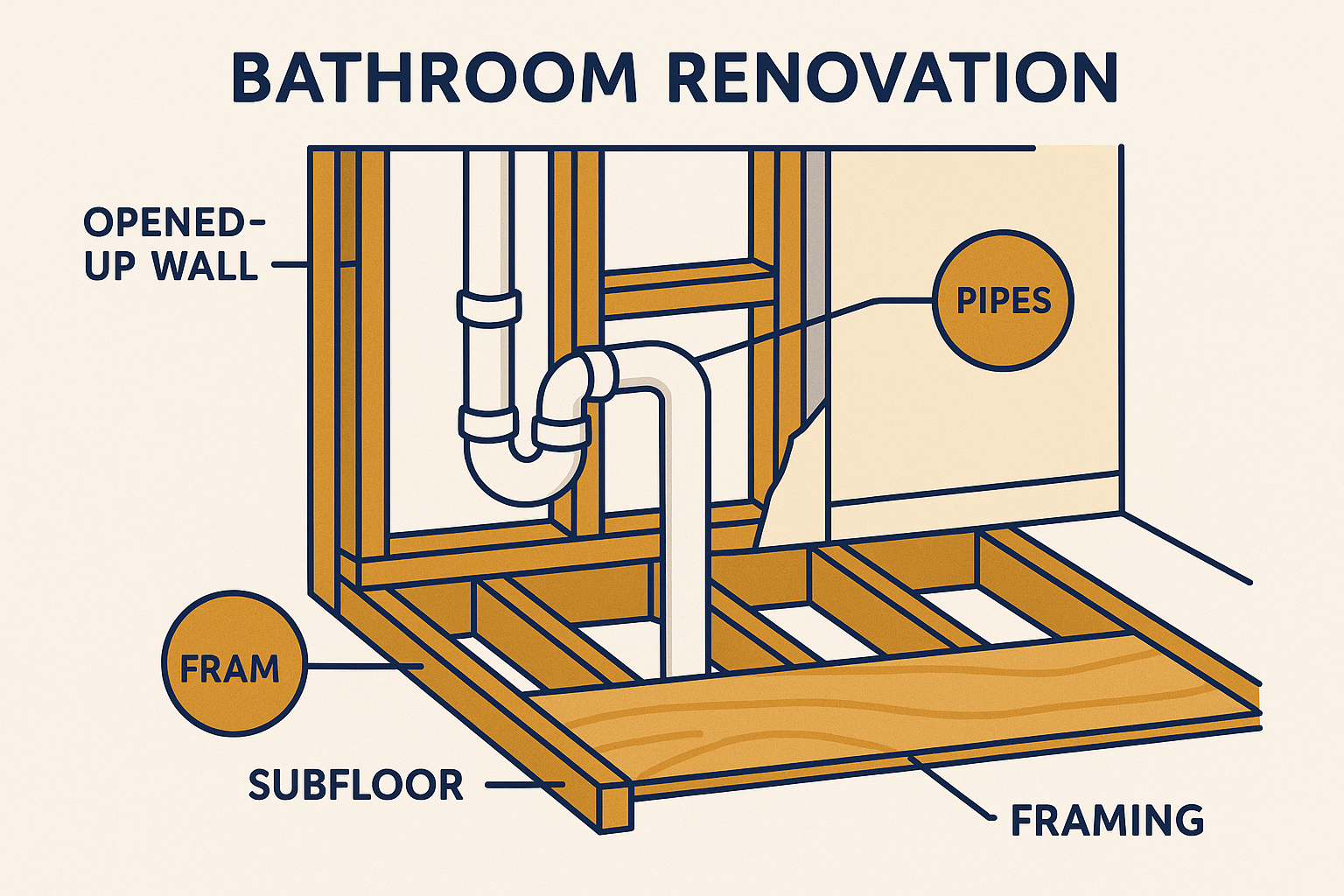
This guide covers the hidden costs that appear most frequently in bathroom renovations, why they happen, and how to plan your budget so they do not derail your project.
Why Hidden Costs Happen
A bathroom renovation quote is written based on visible conditions: the current layout, the fixtures to be removed, the dimensions of the space, and the scope of work the homeowner wants done. What the walls contain, what condition the subfloor is in, and what the plumbing and electrical look like behind the tile are unknown until demolition.
When contractors open up a bathroom they have not seen inside, they regularly find:
- Subfloor rot or water damage beneath the existing tile
- Outdated or undersized plumbing that requires upgrading
- Mould behind shower surrounds or tub enclosures
- Inadequate or non-existent waterproofing in the existing shower
- Electrical wiring that does not meet current code
- Structural issues — damaged joists, undersized headers over windows
None of these are the contractor’s fault. They are the normal condition of homes that have been lived in, and they represent genuine work that must be done before the renovation proceeds. The question is whether you are financially prepared for them.
The Most Common Hidden Costs in Ottawa Bathrooms
1. Subfloor Replacement
Water damage to the subfloor is the single most common hidden cost in bathroom renovations. Grout cracks, failing caulk around the tub, and years of minor water infiltration at the tub-floor junction allow water to reach the subfloor — which is typically plywood — and cause rot.
By the time old tile is pulled up, it is not uncommon to find a significant portion of the subfloor soft, discoloured, or structurally compromised. Subfloor replacement in a standard bathroom adds $400–$1,200 to a project depending on the extent of damage and whether floor joists are also affected.
How to plan for it: Add $500–$1,000 to your contingency specifically for subfloor issues if the bathroom is over 15 years old or if you have ever noticed soft spots in the floor.
2. Mould Remediation
Mould behind shower tile is common in bathrooms where the original installation did not include proper waterproofing, or where waterproofing has failed over time. Mould on the surface of grout is a maintenance issue. Mould behind the tile on the substrate is a remediation issue that must be addressed before new tile goes in.
Mould remediation in a bathroom typically involves removing affected drywall or backer, treating the framing with an antimicrobial agent, and installing new substrate before tiling. Cost: $500–$2,500 depending on extent.
How to plan for it: Any bathroom with a tub or shower over 10 years old and no documented waterproofing renovation should be treated as a potential mould risk. Add $500–$1,000 to your contingency.
3. Plumbing Upgrades
Plumbing in older Ottawa homes — particularly those built before 1975 — may include galvanized steel supply lines, lead-soldered copper fittings, or undersized drain lines. When a bathroom renovation involves moving fixtures or touching existing plumbing, a licensed plumber may identify code issues or failing components that require replacement.
Common plumbing additions:
– Replacing galvanized supply lines with copper or PEX: $300–$800
– Upgrading drain line diameter (e.g., 1.5 inch to 2 inch): $400–$900
– Adding shut-off valves that were not present: $150–$400
How to plan for it: Request that your plumber inspect visible supply and drain lines during the design consultation. Any galvanized steel or suspect fittings should be identified before work begins.
4. Electrical Upgrades
Ontario’s Electrical Safety Code requires GFCI (ground fault circuit interrupter) protection for all bathroom outlets and lighting within a certain proximity of water. If the bathroom being renovated was never updated to meet current code, the electrical work required during a renovation may exceed what a simple fixture swap would suggest.
Additionally, adding heated floors, a new exhaust fan circuit, or additional lighting circuits may require a panel upgrade or new branch circuits where none currently exist.
Electrical additions typically run $300–$1,200 depending on scope. An ESA (Electrical Safety Authority) inspection fee is also required when new electrical work is completed in Ontario.
How to plan for it: Establish during the initial assessment whether the current electrical is code-compliant. Budget for GFCI upgrades if the bathroom was never previously updated.
5. Asbestos and Lead Paint
Ottawa homes built before 1980 may contain asbestos in floor tile adhesive (mastic), pipe insulation, or ceiling texture. Lead paint on walls and trim is also possible in pre-1978 construction. Both require testing and specific remediation protocols before demolition proceeds.
Testing for asbestos: $200–$500 for a certified inspection. Remediation if found: $500–$3,000+ depending on material and location.
How to plan for it: If your home was built before 1980, budget for asbestos testing as a pre-renovation step. Many contractors require this before proceeding.
6. Ventilation Deficiencies
A bathroom exhaust fan that vents into the attic rather than through the roof is a code violation and a moisture problem. When a renovation includes bathroom work and an inspection reveals this condition, bringing the ventilation up to code adds cost: $300–$700 for proper roof penetration installation.
7. Window and Door Complications
Moving plumbing or reconfiguring a bathroom layout sometimes creates conflicts with window placement, door swing, or structural elements. If your renovation involves any layout changes, build in additional contingency for unexpected structural findings.
How to Protect Your Budget
Get a realistic scope assessment before setting a final budget. A contractor who walks through the bathroom, asks about its history, and identifies high-risk areas (old shower, known leaks, suspected water damage) is providing a more useful foundation for your budget than one who quotes from photos.
Use a detailed, line-item contract. A contract that specifies what is included — and explicitly states how unforeseen conditions will be handled and priced — protects both parties. Most reputable contractors include a contingency allowance clause that defines the process for change orders.
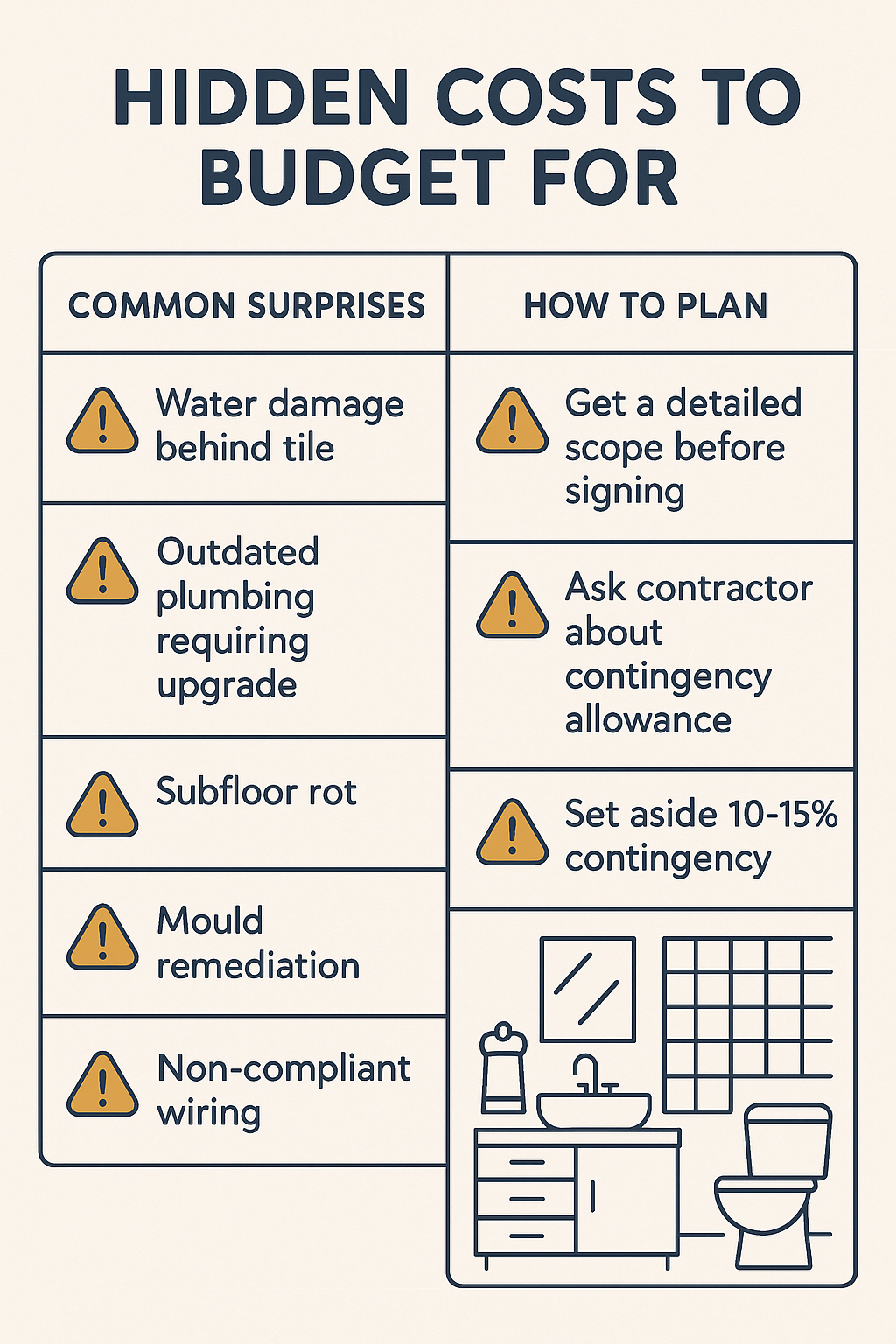
Treat your contingency as part of the budget, not extra. A 10–15% contingency is not pessimism; it is the normal expectation for bathroom renovation work in existing homes. Homeowners who treat the contingency as money they expect to keep back are frequently disappointed.
Our team at Miracle Dream Homes provides detailed scope assessments as part of our quote process for bathroom renovations and basement bathroom installations, where hidden conditions are especially common.
For guidelines on renovation contracts and homeowner protections in Ontario, the Tarion Warranty Corporation and Ontario’s Consumer Protection Act provide relevant information on contractor obligations.
Frequently Asked Questions
How much extra should I budget for hidden costs in a bathroom renovation?
A 10–15% contingency above your base renovation budget is a reasonable standard. For bathrooms in homes older than 20 years, or bathrooms with a known history of leaks or water issues, 15–20% is more appropriate.
What are the most common hidden costs in Ottawa bathroom renovations?
Subfloor rot and water damage are the most frequent, followed by mould behind shower tile, plumbing upgrades in older homes, and electrical work to meet current code. Homes built before 1980 add asbestos and lead paint testing as a potential item.
Can hidden costs void my original renovation quote?
They add to it. A reputable contractor will present a change order with the additional scope and cost when unforeseen conditions are found. The change order should describe the issue, the required work, and the price. You have the right to review and approve before work proceeds.
How do I know if my home is high-risk for hidden costs?
Age of the bathroom (over 15 years without renovation), visible signs of past leaks (staining, soft floor near the tub), galvanized or older plumbing, and pre-1980 construction are all risk indicators. A thorough pre-renovation assessment with an experienced contractor is the most reliable way to identify risks early.