
Kids’ Bathroom Renovation: Durable, Practical, and Easy to Clean
A bathroom used by children is used differently than any other bathroom in the home. Water gets on every surface. Grout gets dirty quickly. Fixtures get banged. Towels end up on the floor. The soap dispenser gets knocked over. A kids’ bathroom that requires careful maintenance and delicate handling is the wrong bathroom for how it will actually be used.
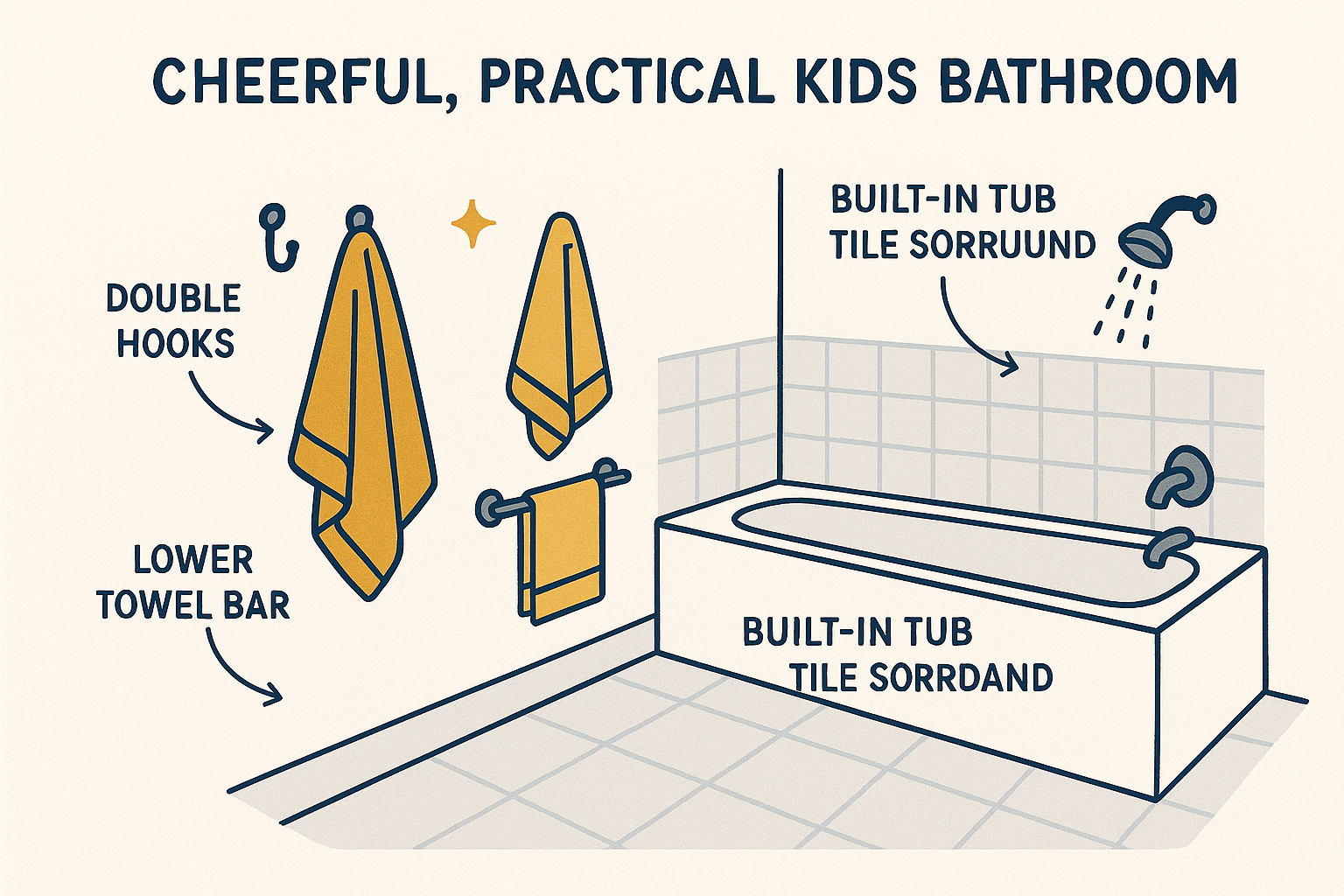
The right approach is to design for durability, easy cleaning, and the ability to accommodate children of different ages as they grow — not to design for a bathroom that looks great in a showroom sample but deteriorates within two years of school-age use.
What Makes a Kids’ Bathroom Different
Heavy use. A family bathroom used by three or four children gets daily use from multiple users simultaneously. The wear on surfaces, fixtures, and hardware is proportional.
Wet use. Children splash more than adults. The shower area, the toilet surround, and the vanity area all get wet regularly. Surfaces that hold up to splashing matter more than surfaces that look sophisticated.
Supervision is intermittent. An adult is not present for every use. Cleaning mistakes (abrasive cleaners on acrylic), overflow events, and general misuse happen. Materials need to tolerate imperfect care.
Growth. A bathroom renovated when the children are 5 and 8 will be used by teenagers in a few years. Designs that are too juvenile look wrong on teenagers; designs that are too sophisticated are wasted on young children.
Age-appropriate function. The fixture and hardware heights that suit a seven-year-old do not suit a teenager. When possible, design for the range — adjustable-height options and neutral choices that work across the age range.
Flooring
The bathroom floor in a high-use family or kids’ bathroom needs:
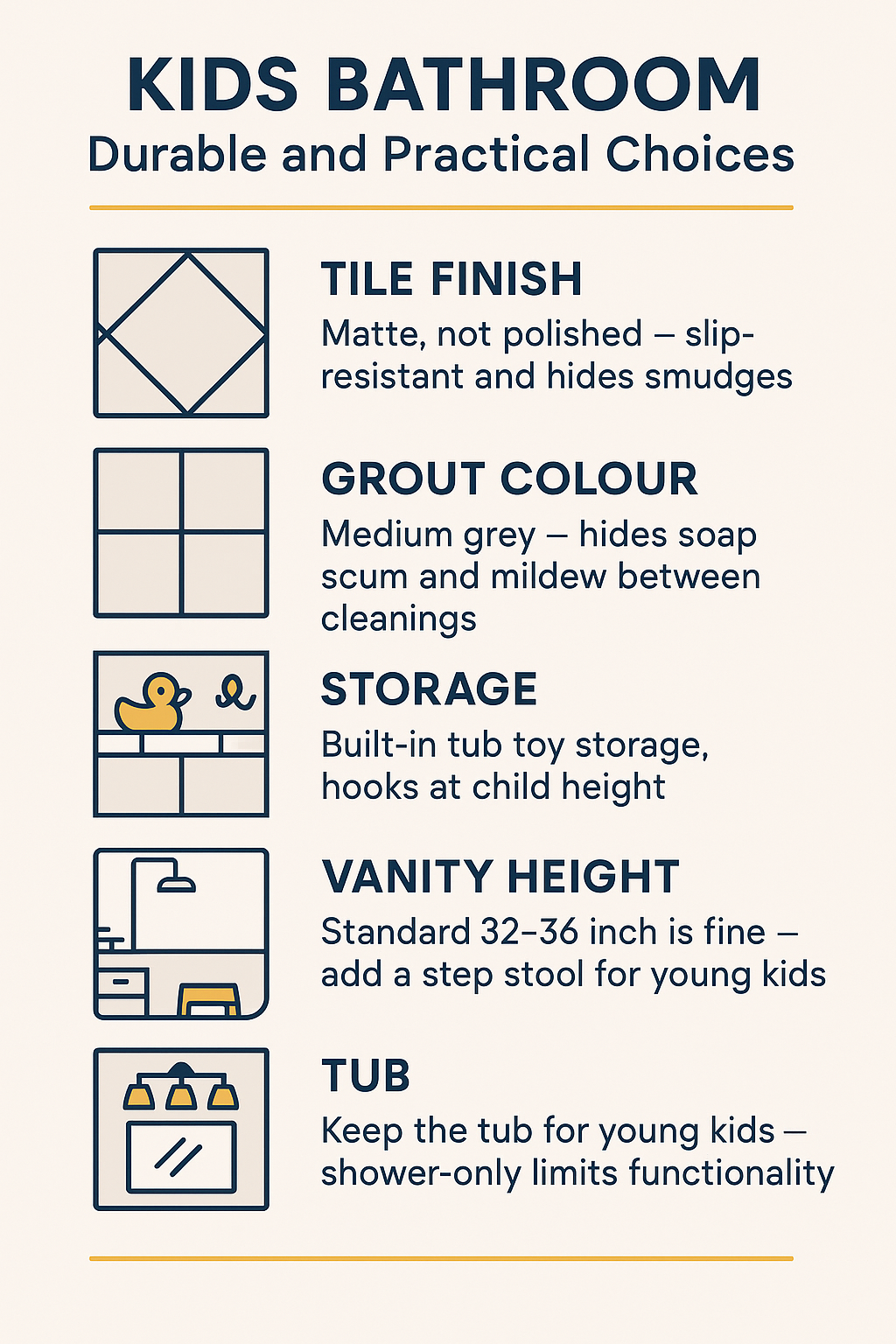
Slip resistance. The floor gets wet consistently from bath and shower use, dripping children, and splashing. Tile with a DCOF (Dynamic Coefficient of Friction) rating above 0.42 — the standard for wet areas — is a safety requirement, not just a recommendation. Mosaic tile (small format with more grout lines) provides more texture than large-format tile.
Durability. Porcelain tile is the best-performing floor material — harder and less porous than ceramic, resistant to impact and staining.
Easy cleaning. Light-coloured grout gets visibly dirty faster than mid-tone grout. For a high-traffic bathroom, medium grey or warm greige grout is easier to maintain than white or cream. Epoxy grout, which is non-porous and stain-resistant, is worth the premium in a high-use family bathroom.
Warmth. Heated floors under tile are a comfort feature that makes a family bathroom more usable, particularly in Ottawa’s cold seasons. The cost premium for in-floor radiant heat — typically $500–$1,000 for a standard bathroom — is one of the highest-valued renovation features per dollar among Ottawa homeowners.
Tile and Wall Surfaces
Shower and tub surround: Full tile to ceiling height in the wet zone. Porcelain tile rated for wet areas performs better than ceramic over the long term. Avoid natural stone in a family bathroom — the sealing maintenance requirement is not compatible with how the bathroom will actually be cleaned.
Grout lines: Wider grout joints are harder to clean than narrower ones. In a family bathroom, keep grout joints at standard width (2–3 mm for rectified tile) and use epoxy grout for durability and stain resistance.
Tile selection: A neutral, durable tile that does not require careful maintenance is a better choice than a distinctive tile that will date. Large-format porcelain (300 × 600 mm or similar) with minimal grout lines is easier to clean than small mosaic. Reserve bold tile choices for the powder room or the primary ensuite — spaces used by adults.
Wall paint: In the dry zone, semi-gloss or satin paint with a washable finish handles the wall splashes and handprint marks that accumulate in a family bathroom.
Fixtures
Bathtub: Most kids’ bathrooms retain a bathtub — particularly for households with young children who are bathed rather than showered. A standard alcove acrylic tub in a 1,500 mm length handles this. Quality acrylic (Mirolin, MAAX) performs better than budget acrylic in daily family use.
Shower: If a shower is added or the tub is replaced, a shower with a hand-held showerhead on a slide bar accommodates different heights and makes bathing young children in the shower easier. For tub-to-shower conversions in family bathrooms, the hand-held slide bar is a standard recommendation.
Toilet: A standard two-piece toilet is appropriate — functional, repairable, and easy to maintain. Avoid pressure-assisted toilets in a kids’ bathroom; the noise level and force can be unsettling for young children.
Vanity and sink: An undermount sink in a quartz or solid-surface countertop is the most practical choice. No rim to accumulate debris, no grout line at the sink, easy to wipe clean. Avoid vessel sinks in a kids’ bathroom — the elevated bowl is difficult for small children and prone to accidental impact.
Faucets: Lever-style faucets are easier for small children than round knobs. A single-lever faucet with built-in temperature limiting (scalding protection) is appropriate in a bathroom used by young children — it prevents the hot water side from being turned up to scalding temperatures.
Storage
Children generate more bathroom product volume than adults per unit of storage capacity — shampoo, conditioner, body wash, bath toys, toothpaste, and hair products accumulate quickly. Plan generously:
- Under-sink cabinet with deep drawers for toiletries
- Towel hooks at child height (1,100–1,200 mm) as well as adult height (1,500–1,600 mm)
- A shower caddy or wall-mounted niche for bath products
- A small storage unit for bath toys if the household has young children
Design That Ages Well
Avoid highly themed or novelty design choices — underwater murals, cartoon character fixtures, bright primary colour schemes — that will feel wrong in three or four years. A neutral, well-executed bathroom with quality tile and fixtures serves a six-year-old and a sixteen-year-old equally well.
The appropriate way to add personality to a kids’ bathroom is through accessories — towels, bath mats, a colourful mirror — that change as the children grow, not through fixed tile and finishes that are expensive to change.
For kids’ bathroom renovations in Ottawa, including tub-to-shower conversions and full renovations, our team at Miracle Dream Homes advises on durable materials and practical fixture selections that hold up over years of family use.
For child safety standards in residential bathrooms, the CSA Group and Health Canada publish guidelines on scalding prevention, anti-tip fixture requirements, and accessible bathroom design relevant to family households.
Frequently Asked Questions
What is the most durable tile for a kids’ bathroom floor?
Porcelain tile with a textured surface and a DCOF rating above 0.42 is the best combination of durability, slip resistance, and easy cleaning for a family bathroom floor. Choose a mid-tone grout colour (grey or greige) rather than white to reduce visible soiling. Epoxy grout is worth the additional cost for its stain resistance in a high-traffic family bathroom.
Should a kids’ bathroom have a tub or a shower?
For households with children under ten, a tub is valuable — young children are bathed rather than showered, and a tub makes this practical. For older children, a shower is sufficient and often preferred. If the bathroom serves children across a wide age range, a tub-shower combination (standard alcove tub with a shower valve, curtain, and hand-held showerhead) handles both functions in the same footprint.
How do I childproof a bathroom vanity?
The most effective approach is a vanity cabinet with soft-close doors and drawers equipped with child locks. Store medications, cleaning products, and sharp items in a locked medicine cabinet rather than under the sink. A countertop with no overhang (flush or minimally projecting edge) reduces head-height impact risk for small children reaching the sink.
What fixtures should I avoid in a kids’ bathroom?
Avoid vessel sinks (elevated bowl is difficult for small children and easily knocked), round knob faucets (lever handles are easier for small hands), frameless glass shower doors in a heavy-use shared bathroom (the glass can chip on impact), and natural stone tile or counters (sealing maintenance is not compatible with how children use bathrooms). Choose functional, durable, and low-maintenance over visually distinctive.