
Full Bathroom vs. Three-Quarter vs. Half Bath: What’s the Difference?
Bathroom terminology gets used loosely in real estate listings and renovation conversations. “Full bath,” “half bath,” and “three-quarter bath” refer to specific combinations of fixtures — and understanding the distinctions matters when you are planning a renovation, budgeting for a bathroom addition, or evaluating what a home’s current bathrooms provide.
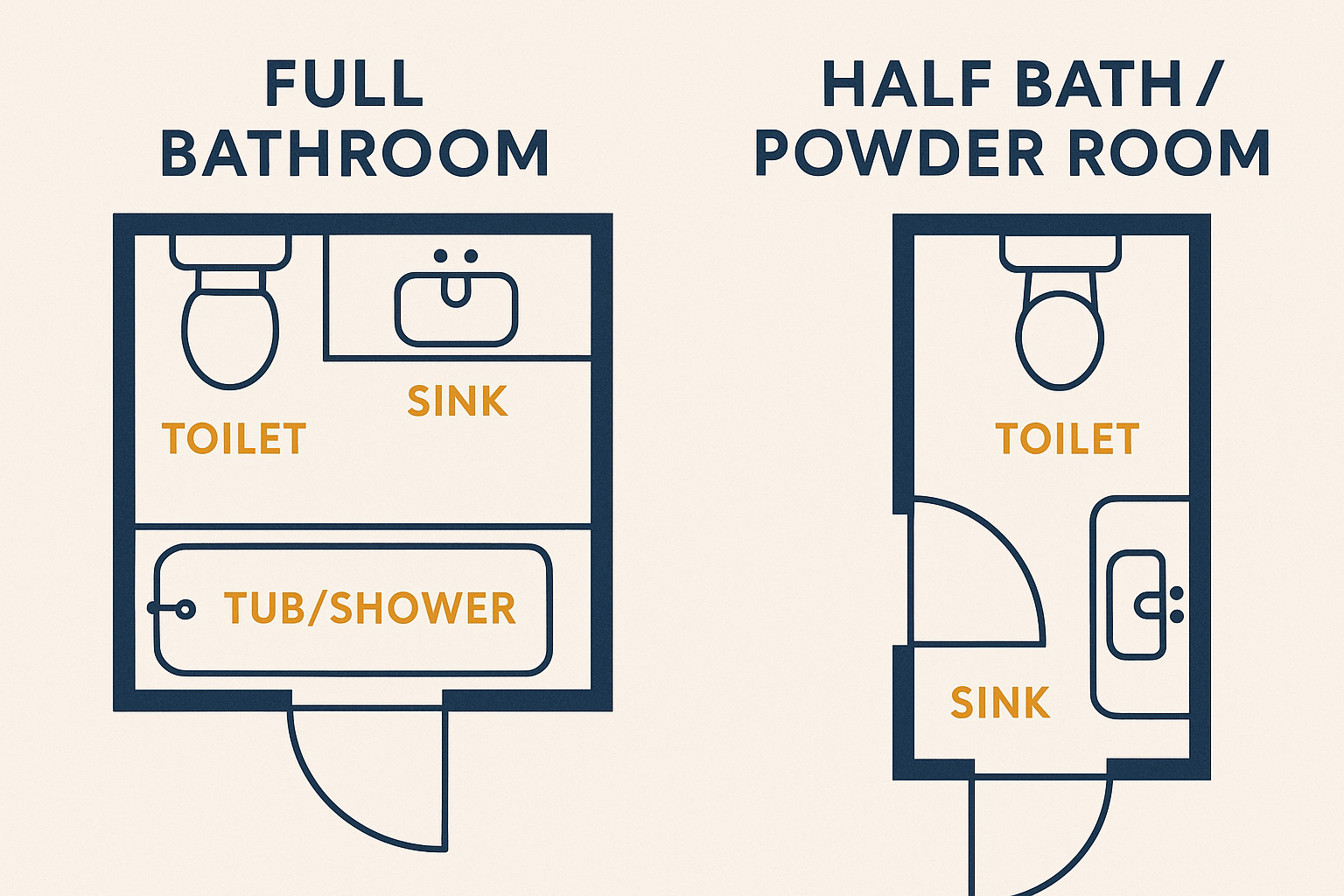
The Fixture Count System
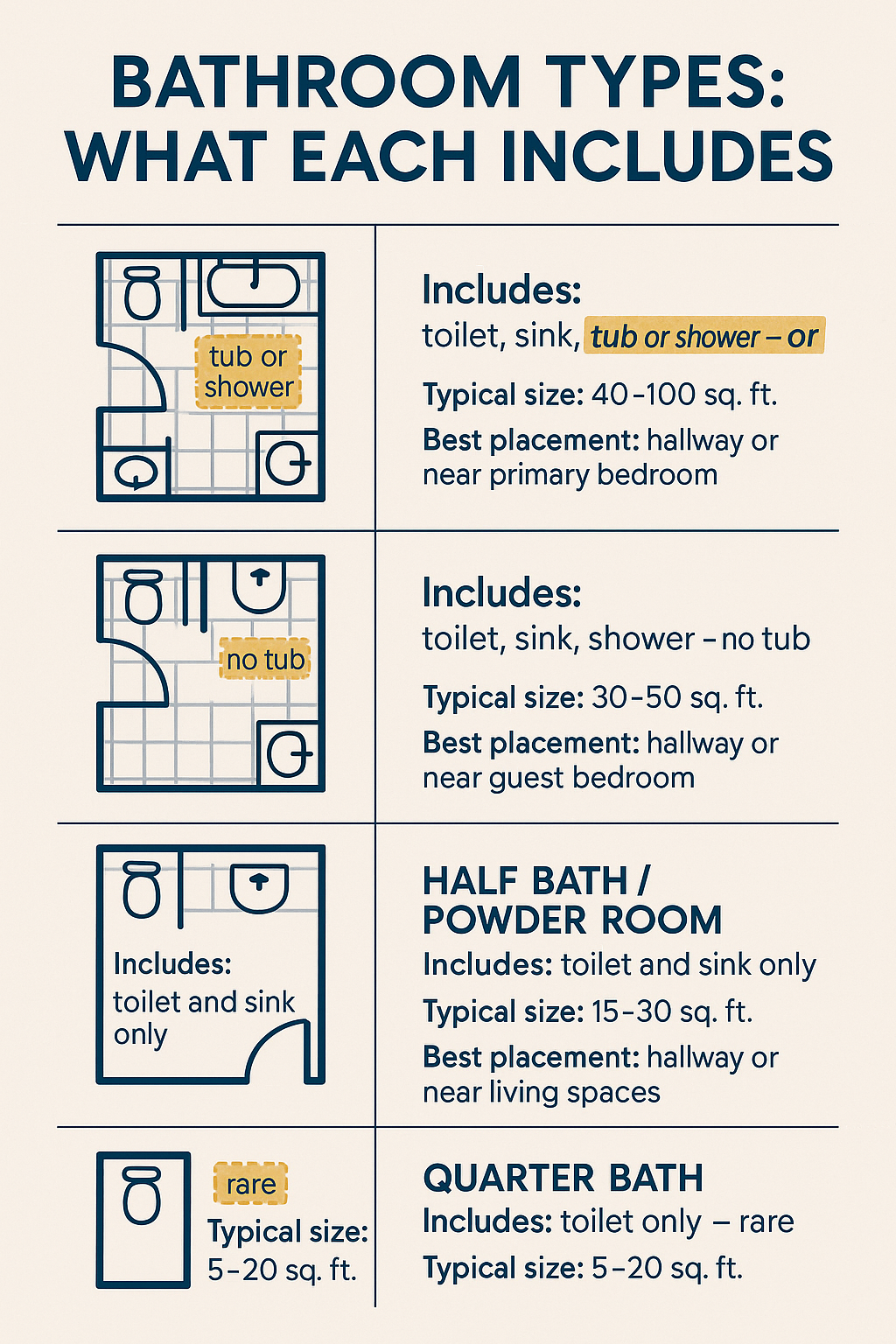
The traditional bathroom classification system counts plumbing fixtures and assigns each a value of one quarter:
- Toilet: ¼
- Sink (lavatory): ¼
- Shower: ¼
- Bathtub: ¼
Adding the fractions gives the bathroom type:
| Type | Fixtures | Total |
|---|---|---|
| Full bath | Toilet + sink + shower + tub | 4/4 |
| Three-quarter bath | Toilet + sink + shower (no tub) | 3/4 |
| Half bath (powder room) | Toilet + sink only | 2/4 |
| Quarter bath | Toilet only | 1/4 (rare) |
This system is simple and widely understood, but it does not capture the functional quality of the bathroom — a half bath in a premium powder room renovation is a very different space from a basement half bath with a utility sink.
Full Bathroom (4-Piece)
A full bathroom contains a toilet, sink, shower, and bathtub. In practice, the shower and tub are often combined in a single tub-shower unit — a standard alcove tub with a shower valve and curtain or glass door — rather than separate fixtures.
When a full bathroom makes sense:
- Primary bathroom for a family with children, where bathing flexibility is a priority
- Any bathroom where a dedicated soaker tub is part of the design intent
- Homes where resale value benefits from having at least one full bathroom with a tub
Renovation scope: A full bathroom renovation is the most complex and expensive bathroom type because it includes the most fixtures. A full gut renovation of a primary full bathroom in Ottawa runs $18,000–$35,000+ depending on finishes and size.
Three-Quarter Bathroom (3-Piece with Shower)
A three-quarter bathroom contains a toilet, sink, and shower — no tub. This is the configuration of choice for primary ensuites in contemporary renovations, where a large walk-in shower replaces the bathtub as the primary bathing fixture.
When a three-quarter bathroom makes sense:
- Primary ensuite for adults who do not regularly take baths
- Secondary bathroom or guest bathroom where showering is the expected use
- Any space where eliminating the tub increases the shower footprint and overall design quality
- Tub-to-shower conversions, which are the most common bathroom renovation type
The trend in Ottawa bathroom renovation over the past decade has moved strongly toward shower-only primary ensuites. Homeowners choosing a tub-to-shower conversion are effectively converting a full bathroom to a three-quarter bathroom — or, in some cases, creating a dedicated shower space within a larger ensuite that also has a freestanding tub.
Renovation scope: A three-quarter bathroom renovation ranges from $12,000–$25,000+ for a standard Ottawa renovation, depending on the shower size and finish selection.
Half Bath (2-Piece / Powder Room)
A half bath — also called a powder room — contains only a toilet and a sink. No bathing fixture. The half bath serves visitors and provides an additional toilet for the home without the cost of a full or three-quarter bathroom.
When a half bath makes sense:
- Main floor addition to a home that has all bathrooms on the upper floor
- High-traffic household where an additional toilet reduces morning congestion
- Basement space where a full bathroom is not required
- Homes where a powder room renovation provides high visual impact per renovation dollar
The powder room is notable as a renovation opportunity: a small, contained space where premium finishes, statement tile, and distinctive design choices have a high visual-to-cost ratio. A well-designed powder room makes a strong impression precisely because it is small.
Renovation scope: A powder room renovation in Ottawa runs $6,000–$12,000 for a standard scope with quality finishes. See our powder room renovation page for more detail on what this scope includes.
Adding a Bathroom Type
When planning a bathroom addition — not just a renovation of an existing bathroom — the type determines the plumbing rough-in required:
Adding a half bath: Requires supply lines and a drain for one toilet and one sink. The least complex and least expensive bathroom addition.
Adding a three-quarter bath: Requires supply lines and a drain for toilet, sink, and shower. A shower drain must connect to the drain stack. In a basement addition, a sewage ejection system may be required.
Adding a full bath: Requires supply lines and a drain for all four fixtures. The bathtub drain adds cost and complexity. In an upper-floor addition, load calculations for the tub weight are part of the structural assessment.
How Bathroom Count Affects Resale Value
In the Ottawa residential real estate market, bathroom count is a meaningful factor in listing value:
- Homes without a main-floor bathroom (all bathrooms upstairs) benefit from adding a half bath on the main floor
- Homes with only one full bathroom and multiple bedrooms benefit from adding a second bathroom (typically a three-quarter ensuite)
- The first full bathroom addition typically provides better return on investment than subsequent additions
The relationship between bathroom count and home value is strongest when the bathroom type matches the home’s use pattern. A family home with four bedrooms and one full bathroom is under-bathed for its bedroom count — adding a second bathroom addresses a real functional gap.
For full bathroom renovations, three-quarter ensuite additions, and half bath installations in Ottawa, our team at Miracle Dream Homes handles all bathroom types and renovation scopes.
For property value context, the Canadian Real Estate Association (CREA) and regional Ottawa real estate data on bathroom count and listing value provide market context for renovation investment decisions.
Frequently Asked Questions
Does a home need at least one full bathroom with a tub?
For resale purposes, most Ottawa real estate professionals recommend that a home retain at least one full bathroom with a bathtub — typically the main family bathroom — even if the primary ensuite is shower-only. Families with young children and some buyers specifically require a tub. For a home where the only bathing option is a shower, this eliminates a segment of buyers. However, if the bathroom is a dedicated primary ensuite in a two-bathroom home (with a separate family bathroom that retains a tub), a shower-only ensuite is fully appropriate.
What is the difference between a powder room and a half bath?
The terms are essentially interchangeable — both refer to a bathroom with a toilet and sink, and no bathing fixture. “Powder room” tends to be used for main-floor visitor bathrooms with a higher design intent; “half bath” is more neutral and is used in real estate listings and renovation planning regardless of the space’s quality or location.
How much does it cost to add a half bath to a main floor?
A half bath addition on the main floor of an Ottawa home runs $8,000–$15,000, depending on how close the new bathroom can be located to existing plumbing stacks. Adding a half bath in a space adjacent to the kitchen (where the drain stack is accessible) costs less than one requiring long drain runs. The renovation includes plumbing rough-in, framing, tile or flooring, vanity, toilet, and finishes.
Is a three-quarter bathroom (shower only) a disadvantage when selling?
A shower-only primary ensuite is not a disadvantage when the home also has a second full bathroom with a tub for the family and visitors. Buyers looking at a home with a dedicated ensuite understand that the shower-only configuration is the contemporary standard for primary ensuites. The disadvantage arises only when the shower-only bathroom is the sole bathroom in the home.