
Bathroom Tile Types: Ceramic, Porcelain, Stone, and More
Tile is the dominant material in most bathrooms — it covers the floor, lines the shower, and often covers one or more walls entirely. Choosing the right tile type is not primarily a design decision; it is a performance decision. Different tile types behave very differently in wet environments, under foot traffic, and over time.
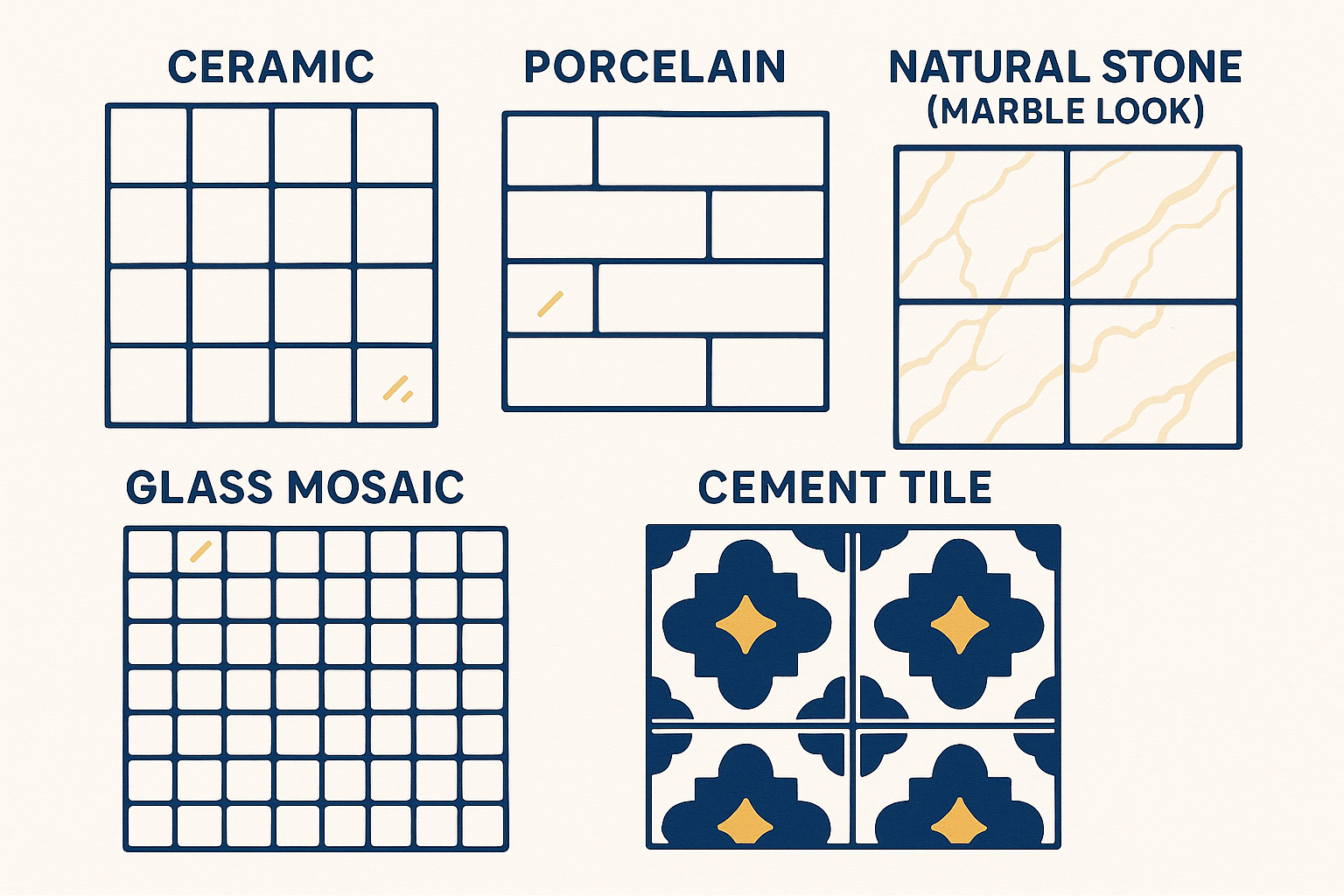
This guide covers the main tile types used in Canadian bathrooms, how they differ in performance and cost, and where each is best suited.
Ceramic Tile
Ceramic tile is made from natural clay fired in a kiln. It is the original bathroom tile — widely available, relatively affordable, and workable for most applications. Ceramic tile is glazed on the surface, meaning the colour and pattern are applied as a glaze layer on top of the clay body.
Performance characteristics:
– Moderate water resistance (the glaze is water-resistant; the unglazed body beneath is not)
– Lower density than porcelain — absorbs more water if the glaze chips or cracks
– Easier to cut than porcelain, which makes installation more straightforward
– Generally softer than porcelain — more susceptible to chipping at edges
Where ceramic tile works well:
– Bathroom walls above the wet zone (not inside the shower)
– Powder room floors with low traffic
– Backsplash applications
Where ceramic is not ideal:
– Shower floors or walls where direct, daily water contact is constant
– High-traffic bathroom floors where edge chipping is a risk
– Exterior or frost-exposed applications (most ceramic is not rated for frost)
Cost range: $2–$8/sq ft for standard residential ceramic tile.
Porcelain Tile
Porcelain is a subcategory of ceramic — also made from clay and fired — but at higher temperatures and from denser clay compositions. The result is a tile that is significantly denser, harder, and less water-absorbent than standard ceramic.
The technical standard for porcelain classification is a water absorption rate of 0.5% or less (vs. up to 3% for standard ceramic). In a bathroom context, this means porcelain is more resistant to moisture penetration, freeze-thaw cycles, and staining.
Performance characteristics:
– Very low water absorption — appropriate for all bathroom applications including shower floors and walls
– High density — chip and scratch resistant
– Through-body colour in many unglazed formats (damage does not reveal a contrasting clay body)
– Harder to cut than ceramic — requires diamond blade tools and more precision
Where porcelain works well:
– All bathroom applications: floor, shower floor, shower walls, tub surrounds
– High-traffic bathrooms
– Outdoor and frost-exposed applications (frost-rated porcelain)
– Large-format applications (60 x 60 cm and larger)
Cost range: $4–$25/sq ft depending on format, finish, and brand. Large-format and stone-look porcelain runs $12–$25/sq ft.
Rectified porcelain: High-quality porcelain tiles are often “rectified” — cut to precise dimensions after firing. Rectified tiles can be installed with very tight grout joints (2–3 mm) that produce a nearly seamless surface. Non-rectified tiles have natural size variation that requires wider grout joints.
Natural Stone Tile
Natural stone tile includes marble, travertine, slate, granite, limestone, and quartzite. Each is cut from quarried stone and finished to varying surface textures. Stone tile is visually distinctive and genuinely luxurious, but it requires more maintenance than ceramic or porcelain and performs differently in wet environments.
Marble
Marble is a calcite-based stone that is highly porous, acid-sensitive, and prone to etching from common household products including soap, shampoo, and cleaning products. In a bathroom, marble requires sealing before installation, regular re-sealing, and pH-neutral cleaning products.
Despite these requirements, marble remains a popular choice for primary ensuites — its visual quality is unmatched by any manufactured tile. In a bathroom where the homeowner is prepared for the maintenance commitment, marble holds up well.
Cost range: $15–$50+/sq ft. Carrara marble starts around $15–$20/sq ft; premium marble cuts run significantly higher.
Travertine
Travertine is a limestone-based stone with a naturally porous, textured surface. It is softer and more porous than marble. Filled travertine (with the natural voids filled before polishing) is more suitable for bathroom floors than unfilled. All travertine requires sealing.
Cost range: $10–$25/sq ft.
Slate
Slate is a fine-grained metamorphic rock with natural cleft surfaces that provide inherent slip resistance — a significant advantage on shower floors and bathroom floors. Slate is denser and harder than marble or travertine, and less prone to etching from acidic products. The natural variation in slate surfaces requires sealing but is generally more forgiving in terms of maintenance.
Cost range: $8–$20/sq ft.
Granite
Granite is the hardest and most durable of common natural stones. It is dense, scratch-resistant, and heat-tolerant. Less common as wall tile (it is heavy), but used as vanity countertops and occasionally as floor tile. Requires sealing.
Glass Tile
Glass tile does not absorb water at all — it is impermeable. This makes it an ideal material for shower walls and backsplash applications where staining and water resistance are priorities. Glass tile is typically installed with white thinset to preserve colour clarity (dark thinset shows through transparent glass).
Glass tile is more fragile than ceramic or porcelain — it chips and cracks at cut edges and under point loads. It is generally not appropriate for bathroom floors where foot traffic is a factor. As a wall tile accent or a full shower wall tile, it is excellent.
Cost range: $10–$30+/sq ft for quality glass tile.
Cement and Encaustic Tile
Cement and encaustic (patterned, pigmented cement) tiles are decorative tiles made from compressed pigmented cement rather than fired clay. They are porous and must be sealed before installation and regularly thereafter. They are not ideal for direct wet-zone applications (shower floors and walls) but work well as bathroom floor tile in non-shower areas.
The appeal is visual: the handmade variation and pattern richness of encaustic tile cannot be replicated by manufactured tile. In a powder room or as a feature floor, cement tile is a strong design choice.
Cost range: $15–$40/sq ft for imported encaustic tile.
Choosing the Right Tile for Each Area
| Area | Recommended Tile Types |
|---|---|
| Shower floor | Slip-rated porcelain, slate, small-format mosaic porcelain |
| Shower walls | Porcelain, ceramic (above grout line), glass, marble (with sealing) |
| Bathroom floor | Porcelain, ceramic, slate, marble (with sealing) |
| Vanity wall | Ceramic, porcelain, glass, marble |
| Powder room floor | Porcelain, ceramic, encaustic/cement |
| Tub surround | Porcelain, ceramic, marble (with sealing) |
For a full bathroom renovation in Ottawa, our team handles tile selection and installation as part of the project. If you are planning a tub-to-shower conversion, tile selection for the new shower is one of the first decisions in the material planning process.
For technical tile specifications and performance standards, the Tile Council of North America (TCNA) publishes the standard reference for tile installation methods and material classifications used across the industry.
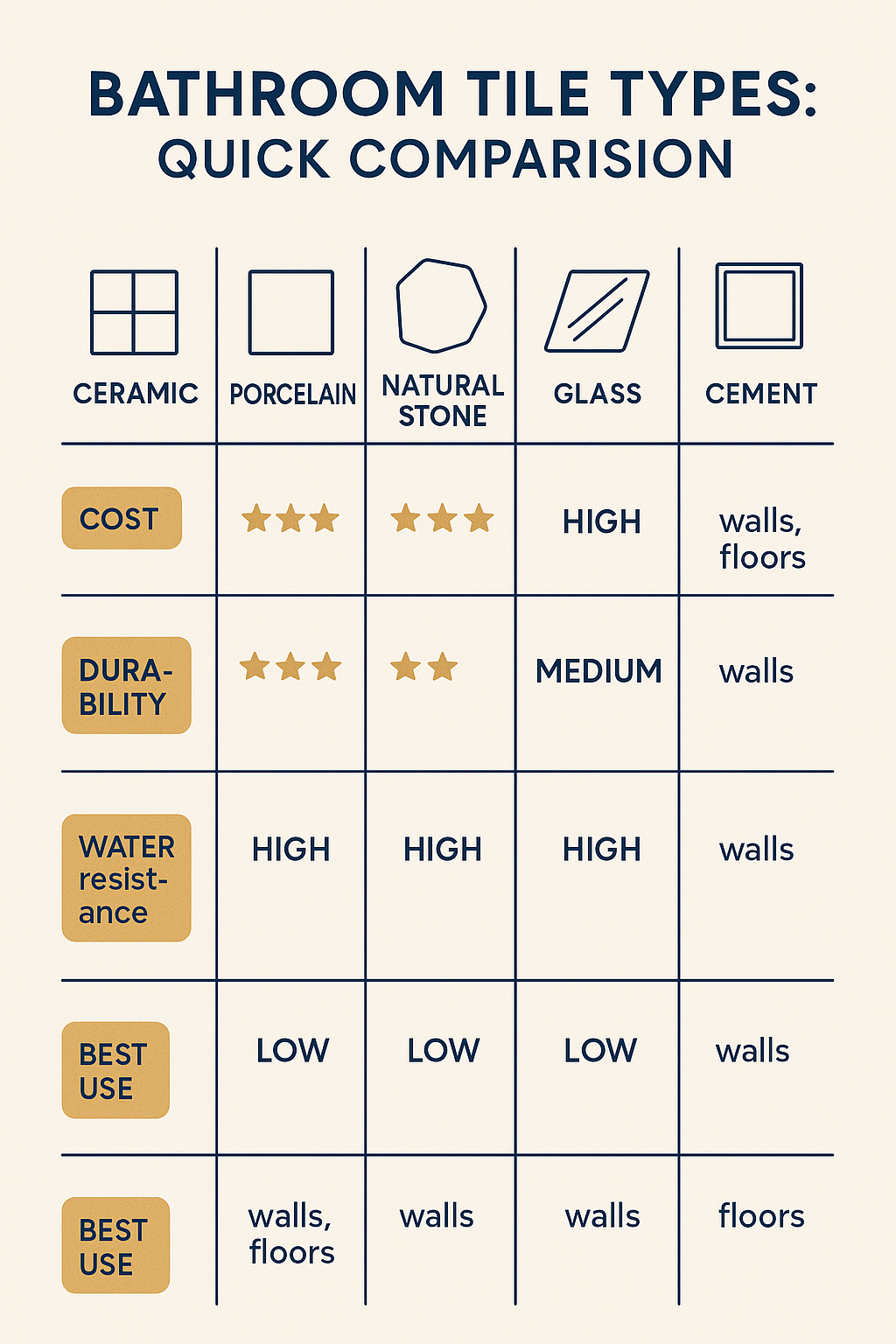
Frequently Asked Questions
What is the difference between ceramic and porcelain tile?
Both are made from clay and fired in a kiln. Porcelain is denser, harder, and less water-absorbent than ceramic — technically defined as tile with water absorption of 0.5% or less. Porcelain is suitable for all bathroom applications including direct wet zones. Standard ceramic is best for wall applications and lower-moisture floor areas.
Is natural stone tile practical in a bathroom?
Natural stone is practical in a bathroom when properly specified and maintained. Stone requires sealing before installation and periodic re-sealing to prevent water and stain penetration. Marble is the most maintenance-intensive common stone; slate and granite are more forgiving. The investment is justified in a primary ensuite where the homeowner values the aesthetic and is prepared for the maintenance.
What tile type is best for a shower floor?
A slip-rated porcelain tile with a PEI (Porcelain Enamel Institute) rating of 4 or 5, or a natural slip-resistant stone like slate. Smaller format tiles — 30 x 30 cm or mosaic tiles — allow more grout lines, which improves grip underfoot. Large-format tiles on a shower floor require a very precise floor slope and are harder to achieve adequate slip resistance on.
What does “rectified” mean for porcelain tile?
Rectified tile is cut to precise dimensions after firing, resulting in very consistent tile sizes. This allows installation with minimal grout joints (2–3 mm) for a nearly seamless surface. Non-rectified tiles have natural size variation from the firing process and require wider grout joints to accommodate dimensional differences.