
Guest Bathroom Renovation: What to Prioritise for a Welcoming Space
A guest bathroom is used infrequently — perhaps a few days per month, or during specific periods when visitors are staying. That pattern of use shapes the renovation priorities in ways that distinguish it from a family bathroom or primary ensuite.
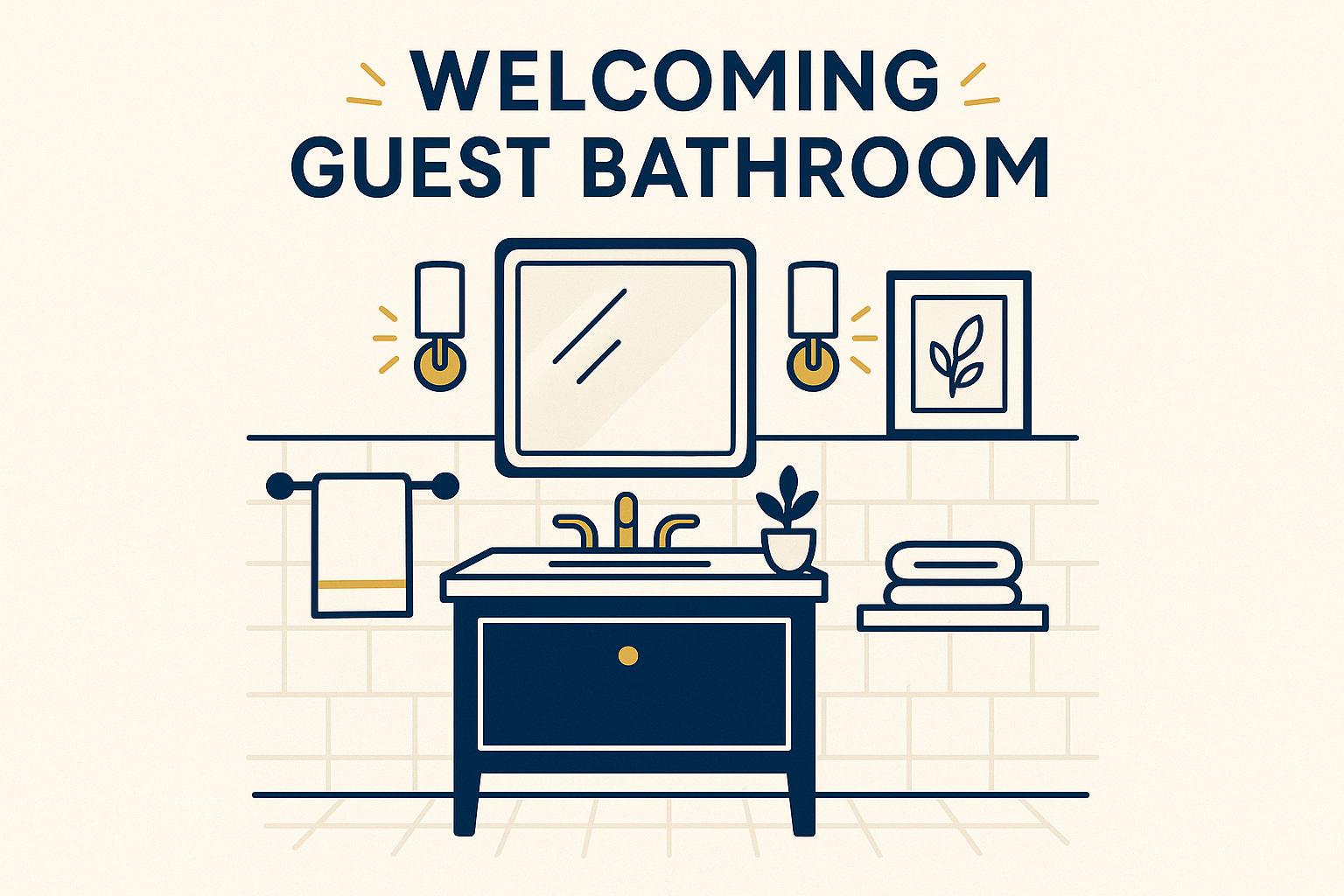
The guest bathroom is one of the first spaces visitors encounter in the home. A dated, worn bathroom leaves a different impression than a clean, finished space — even when it is small. At the same time, investing heavily in rarely used fixtures and premium materials has a different return on investment than the same investment in a daily-use bathroom.
The goal is a bathroom that feels genuinely welcoming and well-considered without over-investing in features that will not be used.
What a Guest Bathroom Typically Includes
Guest bathrooms in Ottawa homes range from a powder room (toilet and sink, for guests during visits) to a full three-quarter bathroom (toilet, sink, shower) for overnight guests. The renovation scope depends on what the bathroom currently is and what it needs to become.
Powder room for daytime guests: Toilet and sink only. High visual impact per dollar because the space is small and the design quality is immediately apparent.
Three-quarter bathroom for overnight guests: Toilet, sink, and shower. This configuration serves overnight visitors who need bathing access and is appropriate for homes with a dedicated guest room.
Full bathroom with tub: Appropriate if the home has visitors with young children, or if the household otherwise benefits from having a second tub.
Design Priorities for a Guest Bathroom
Impression First
A guest bathroom is used briefly and infrequently, but the impression it makes is immediate. The surfaces visible on entering — the tile, the vanity, the mirror, the lighting — determine how the space is perceived. Investment in visible finishes (tile, vanity, hardware) has more impact than investment in features that guests will not use during a short stay.
Tile choice: A cohesive, quality tile installation — floor and shower wall in complementary materials — signals a renovated, intentional space. Budget tile poorly installed reads as dated regardless of the room’s age. A well-chosen neutral tile (large-format porcelain, simple subway tile in a quality format) reads as appropriately finished in any Ottawa home.
Vanity: A wall-hung or furniture-style vanity is appropriate in a guest bathroom where storage demands are lower than in a daily-use bathroom. A floating vanity in white with a quartz countertop and undermount sink is clean, easy to maintain, and reads well across design styles.
Mirror and lighting: A large, well-lit mirror — or a backlit frameless mirror — provides good vanity lighting for guests who may need to apply makeup, shave, or otherwise use the mirror for tasks. Poor mirror lighting is one of the most common complaints about guest bathrooms.
Function Over Features
A guest bathroom does not need:
- Double vanity (one sink is sufficient for occasional guest use)
- Large shower with multiple valve controls (a standard shower with clear controls is better)
- Complex heated floor system (a bath mat provides sufficient comfort for infrequent use)
- Elaborate storage (guests bring limited toiletries)
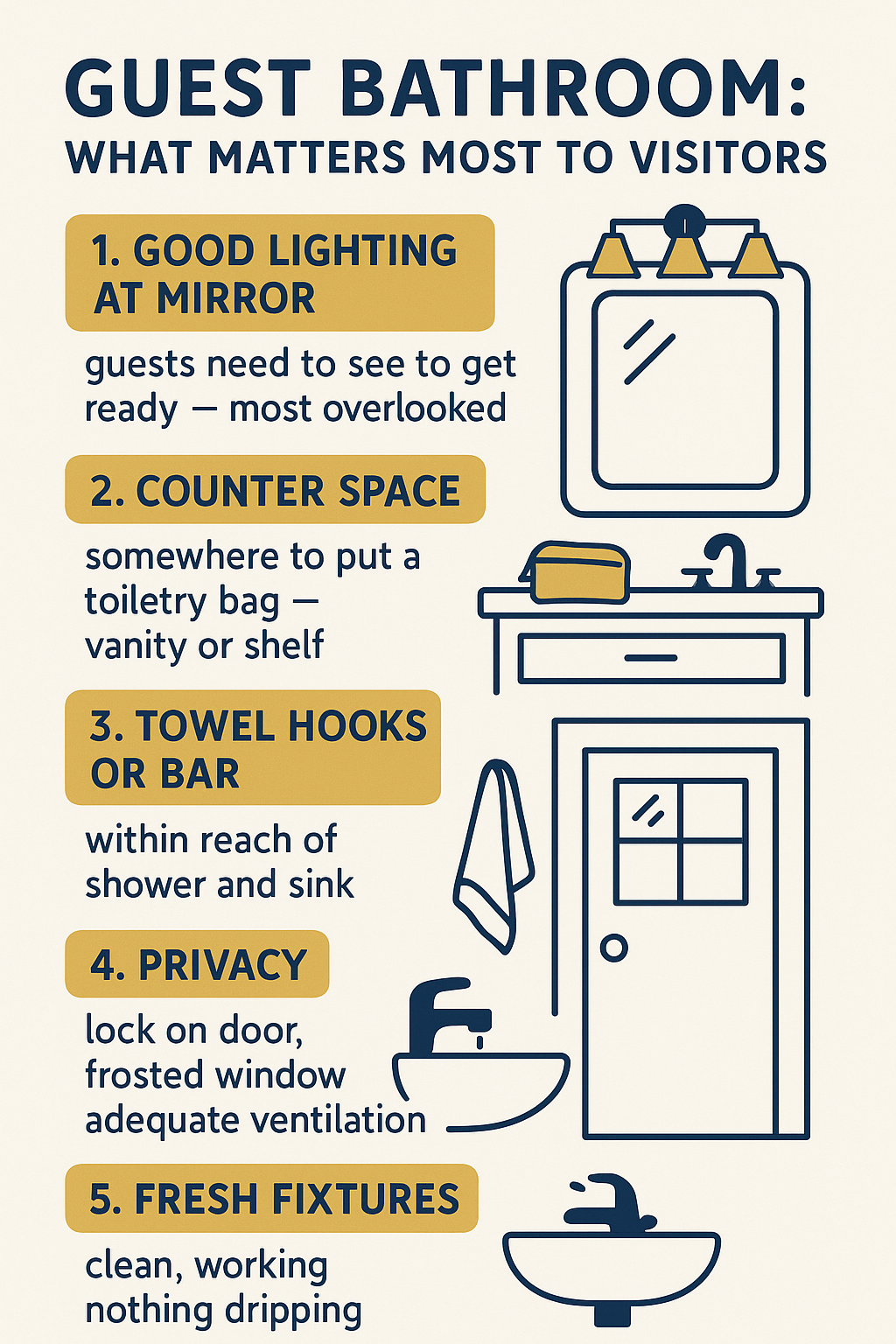
What a guest bathroom does need:
- A clean, functional shower with good water pressure and reliable temperature control
- A clear, well-lit mirror
- Accessible towel storage (hooks or a towel bar, positioned obviously)
- Toilet paper accessible (not hidden in a cabinet the guest has to search)
- Hand soap and hand towel visible at the sink
These functional requirements are simple and inexpensive to meet. They matter more to the guest’s experience than the material choices.
Accessibility Consideration
If your regular guests include elderly parents, family members with limited mobility, or others who benefit from accessibility features, a guest bathroom renovation is the appropriate time to add grab bars, a lower threshold shower entry, or a comfort-height toilet. These features do not detract from the bathroom’s appearance and significantly improve usability for guests who need them.
A curbless shower entry (a linear drain at the shower threshold or a fully level shower floor) is both accessible and contemporary — it suits a renovation targeted at aging family members without signalling a medicalized design intent.
What Not to Overdo
Guest bathrooms are sometimes over-renovated relative to their use pattern:
Avoid distinctive or fashionable tile choices that will look dated within five years. A guest bathroom serves the home for 15–20 years; a bold design choice that feels fresh in 2026 may feel wrong in 2032. Neutral, quality tile ages better than trend-driven patterns.
Avoid over-specified fixtures. A thermostatic shower valve with multiple outlets and digital controls is impressive in a primary ensuite where the user calibrates it daily. In a guest bathroom, it is confusing to occasional visitors who just want to take a shower without reading instructions.
Avoid elaborate towel arrangements. Towel warmer ladders, decorative towel stacks, and artful towel folding require ongoing maintenance and do not substitute for a clear, accessible towel bar where guests can hang a wet towel.
Cost Expectations
A guest bathroom renovation in Ottawa runs:
Powder room refresh (tile, vanity, fixtures, lighting): $6,000–$12,000
Three-quarter guest bathroom (full gut, tile, walk-in shower, vanity): $14,000–$22,000
Full bathroom with tub and shower: $18,000–$28,000
These ranges reflect quality finishes appropriate for a guest context — not the premium investment of a primary ensuite, but not the budget approach of a secondary family bathroom either.
For guest bathroom and powder room renovation in Ottawa, our team at Miracle Dream Homes helps homeowners achieve the right balance of quality and scope for infrequently used bathrooms. See our powder room renovation page for more on the smaller-scope half-bath option.
For bathroom accessibility standards relevant to aging-in-place or accessible guest bathrooms, the Rick Hansen Foundation Accessibility Certification and CSA Group B651 provide residential accessibility standards used in Canadian renovation practice.
Frequently Asked Questions
Does a guest bathroom need a shower?
A guest bathroom needs a shower if overnight guests are expected to use it for bathing. For a bathroom used only during daytime visits — a main-floor bathroom where guests use it briefly — a powder room (toilet and sink) is sufficient. If the home regularly hosts overnight guests, a three-quarter bathroom with a shower is significantly more welcoming than directing guests to a shared family bathroom.
What is the most important thing in a guest bathroom renovation?
Cleanliness and function over visual complexity. A guest bathroom that is clean, well-lit, has clear faucet controls, obvious towel storage, and accessible toilet paper makes a better impression than a visually elaborate bathroom that guests cannot navigate easily. Invest in quality where it is visible (tile, vanity, mirror) and keep function simple and clear.
Should I add grab bars to a guest bathroom?
If any regular guests include elderly parents or people with limited mobility, yes. Grab bars installed during a renovation are far less expensive than retrofitting them later. Modern grab bars in contemporary finishes (brushed nickel, matte black) do not look medicalized or institutional — they look like thoughtful design. A grab bar beside the toilet and one in the shower are the two highest-value accessibility additions.
How do I make a small guest bathroom feel more welcoming?
Good lighting is the highest-impact improvement: a bright, well-distributed light at the mirror makes the room feel more spacious and functional. A large mirror reflects light and adds visual depth. Consistent materials on floor and wall (matching tile family or complementary neutrals) reduces visual fragmentation. Fresh grout and caulk — even without a full renovation — change the perceived cleanliness and age of the bathroom significantly.