
Jack-and-Jill Bathrooms: Layout, Design, and Renovation Considerations
A Jack-and-Jill bathroom is a bathroom accessible from two separate bedrooms — typically children’s bedrooms — rather than from a hallway. Each bedroom has its own door into the bathroom. The design concept goes back to mid-century residential architecture and remains common in Ottawa homes built from the 1970s through the 2000s.
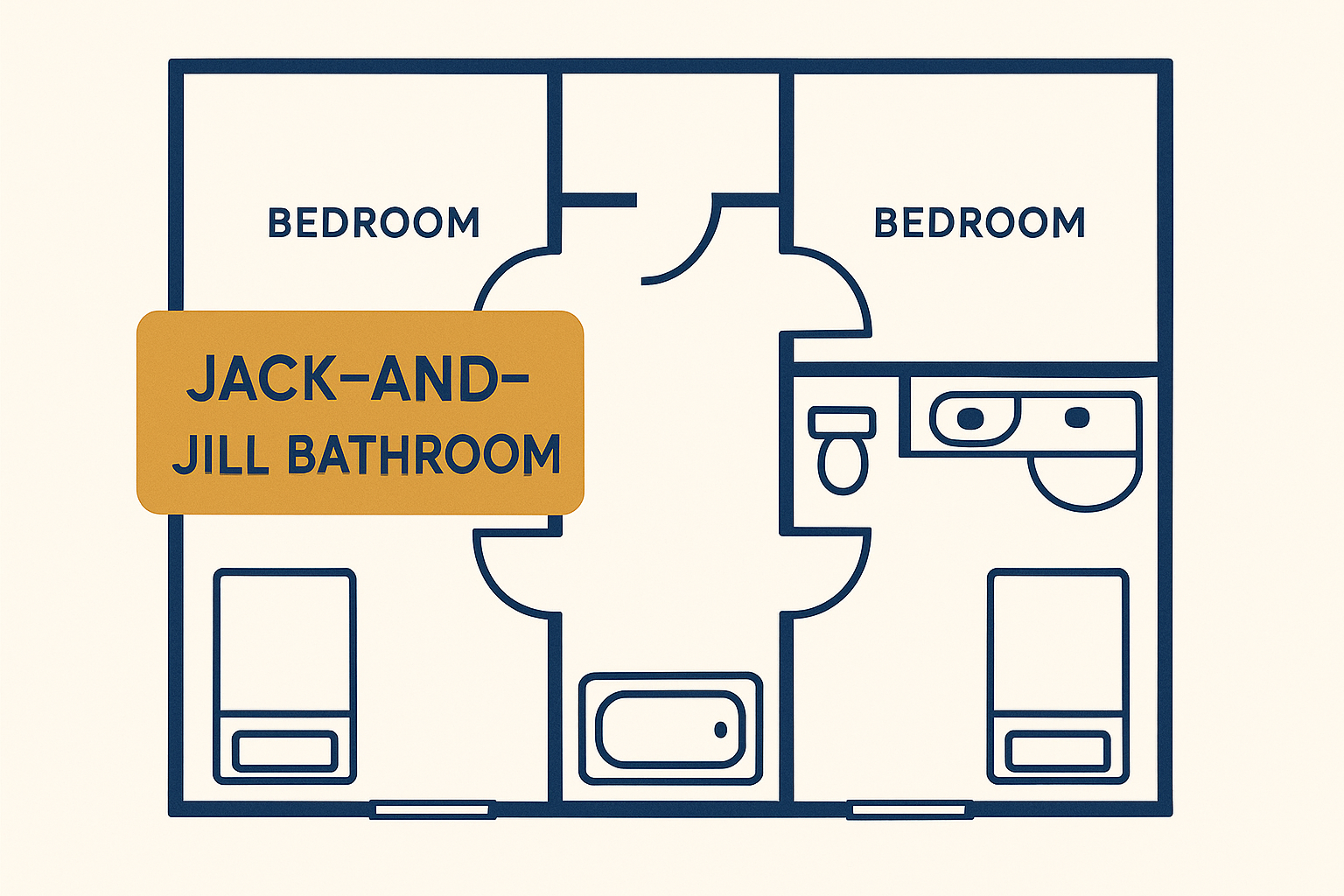
The Jack-and-Jill arrangement solves a specific problem: providing private bathroom access from two bedrooms without building two separate bathrooms. It works well when the household understands and respects the shared-access nature of the space. It causes friction when it does not.
How Jack-and-Jill Bathrooms Are Configured
The standard Jack-and-Jill configuration places the bathroom between two bedrooms, with a door from each bedroom into the bathroom. Some configurations include:
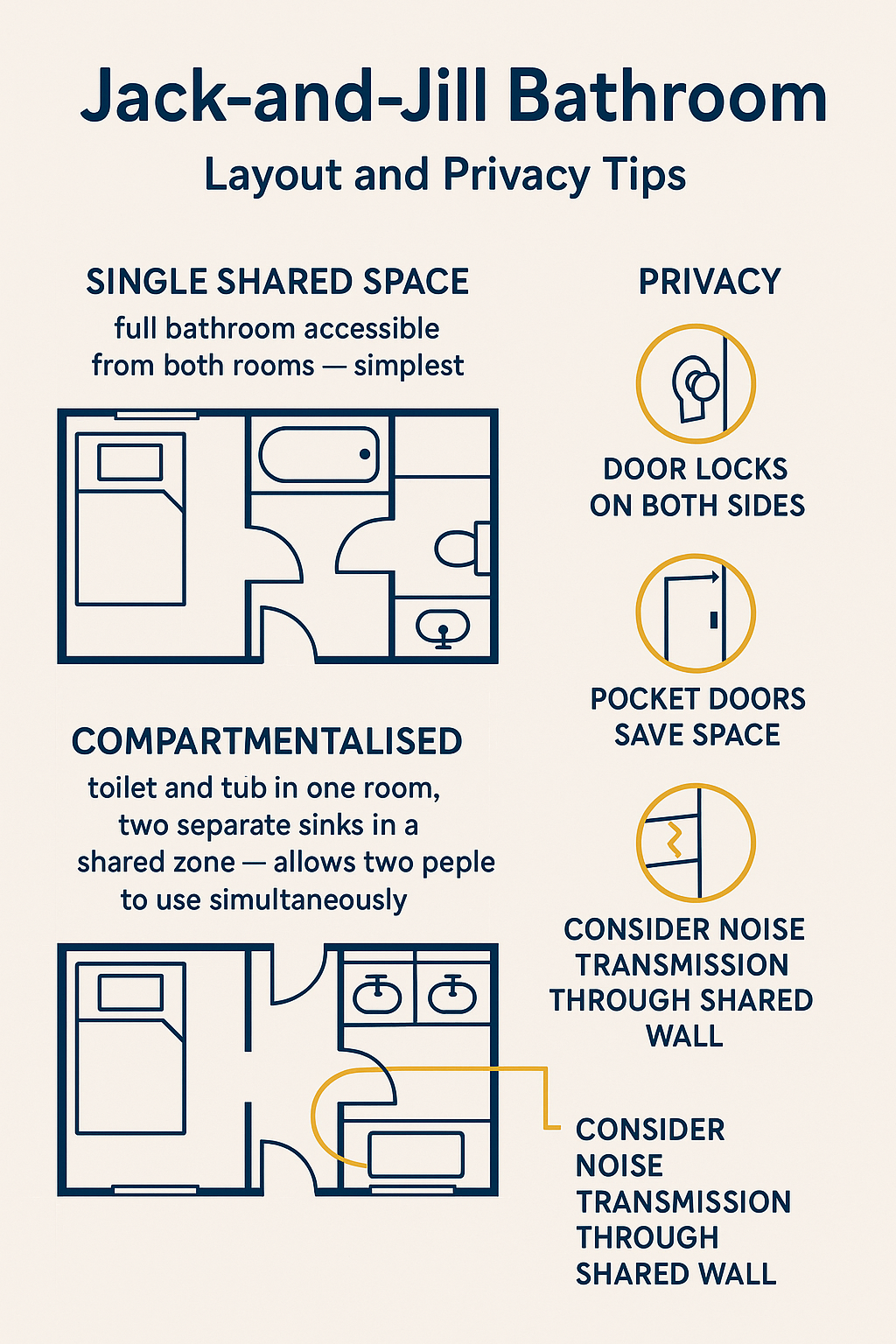
Single wet zone (standard): Toilet, single vanity, and shower/tub all in one shared room. Both users access the same space. Privacy requires both doors to be locked when the bathroom is in use.
Split configuration (preferred): The bathroom is divided so that the vanity zone is separate from the toilet and shower zone. Each user can access the vanity without disturbing someone using the toilet or shower. This significantly reduces friction in a two-person household.
In the split configuration, the toilet and shower are in a central compartment with lockable doors on both sides. The vanity area — which does not require privacy — is accessible from both bedrooms simultaneously. Two vanities (one adjacent to each bedroom) are the most functional version of this design.
Design Considerations for Jack-and-Jill Renovations
Door Privacy and Locking
The most common complaint about Jack-and-Jill bathrooms is the locking system. A standard interior door lock prevents both doors from being opened from the outside — but if one occupant forgets to unlock the door on their side when leaving, the bathroom becomes inaccessible from the other bedroom.
Better solutions:
Indicator locks with visual signal: These locks include a privacy indicator on the outside of the door that shows whether the bathroom is occupied. The indicator activates when the lock engages, giving the other user information without having to try the door.
Automatic deadbolt systems: Some hardware systems automatically unlock both doors when the occupant leaves — removing the forgotten-lock problem entirely.
Passage locks for vanity zone: If the split configuration is used, the vanity zone doors can use passage sets (no lock) since the vanity does not require privacy. Only the toilet/shower zone doors need locks.
Dual Vanity Space
A Jack-and-Jill bathroom shared between two children or teenagers performs much better with two separate vanity areas — one side per bedroom — than with a single shared vanity. Separate vanity areas reduce morning congestion when both users need to prepare simultaneously.
The dual vanity configuration does not require a split room plan. A long vanity along one wall with two sinks — each positioned to serve one of the two bedrooms — provides independent prep zones without structural separation.
Storage
In a Jack-and-Jill bathroom, storage is shared but personal items are separate. The most practical approach:
- Under-sink storage for each vanity position assigned to the adjacent bedroom
- A shared medicine cabinet for common items (first aid, medication)
- Individual hooks or towel bars near each bedroom door for personal towels
- No shared open storage that requires both users to sort through each other’s items
Noise and Privacy
The Jack-and-Jill bathroom is acoustically connected to both bedrooms — both through the bathroom doors and through the shared wall. Sound-absorbing elements (bath mat, towel softness, quiet exhaust fan, door weatherstripping) reduce noise transmission.
If the bathroom renovation involves opening walls, adding sound batt insulation in the walls adjacent to both bedrooms is an inexpensive improvement that significantly reduces bathroom noise intrusion.
Finishes and Style
Because a Jack-and-Jill bathroom typically serves children or teenagers, it benefits from finishes that are durable, easy to clean, and not so distinctive that they will feel dated as the users age:
Porcelain tile over ceramic for durability; avoid small-format mosaic tile that accumulates grout (teenagers are not reliably good grout cleaners).
Solid-surface or quartz countertop for stain resistance.
Matte or semi-gloss paint on walls that can be wiped down.
Durable hardware — hooks and towel bars in brushed nickel or matte black that survive daily use without corrosion.
Renovating an Existing Jack-and-Jill Bathroom
Most Jack-and-Jill bathroom renovations involve updating fixtures, tile, and vanity rather than reconfiguring the room’s relationship to the bedrooms. The renovation scope is similar to any full bathroom renovation:
- Gut tile from floors and walls
- Waterproof shower/tub zone
- New tile, vanity, fixtures, and lighting
- Updated door hardware with better privacy indication
If the existing single-room configuration causes significant friction in the household, a renovation is the opportunity to add the split-zone configuration — a centre wall with lockable doors on each side separating the vanity zone from the toilet and shower. This requires framing, tiling, door installation, and plumbing adjustment if the vanity moves.
A standard Jack-and-Jill bathroom renovation in Ottawa runs $15,000–$25,000. A reconfiguration with split zones adds $3,000–$8,000 in framing and door work.
For bathroom renovation and bathroom addition work in Ottawa, our team at Miracle Dream Homes handles full bathroom renovations including layout reconfigurations. For homes that need a Jack-and-Jill replaced with two separate bathrooms, see our bathroom addition page.
For bathroom design guidelines and clearance standards for multi-user bathrooms, the National Kitchen and Bath Association (NKBA) publishes residential bathroom planning guidelines covering shared bathroom configurations.
Frequently Asked Questions
What is the difference between a Jack-and-Jill bathroom and a shared bathroom?
Both terms describe a bathroom shared between multiple users, but “Jack-and-Jill” specifically refers to a bathroom with private door access from two separate bedrooms. A shared hall bathroom is accessible from the hallway and serves multiple bedrooms without direct bedroom access. The Jack-and-Jill configuration provides more privacy (no need to walk into the hallway) but creates the door-locking friction specific to the two-door setup.
How do you solve the lock-out problem in a Jack-and-Jill bathroom?
The most reliable solution is hardware with a privacy indicator that shows from outside whether the bathroom is occupied, combined with a turn-snib lock (not a push-button lock) that requires deliberate action to lock rather than locking by default. Some households use a simple system: leave the door on your side unlocked when you leave. Others install indicator-bolt locks that visually signal occupancy. The hardware choice matters more than reminding occupants verbally.
Can a Jack-and-Jill bathroom be converted to a private ensuite?
Yes. The most common conversion removes the door from one bedroom, eliminates that door’s framing, and patches the wall — effectively making the bathroom a private ensuite for the remaining bedroom. The other bedroom then needs a different bathroom access arrangement (a new hall bathroom, or sharing the family bathroom). This is a common renovation when children grow up and one bedroom is repurposed.
Is a Jack-and-Jill bathroom a selling feature or a liability?
A Jack-and-Jill bathroom is a neutral feature in the Ottawa market for homes with multiple children’s bedrooms — buyers with families understand and appreciate the configuration. For buyers without children, or buyers looking for a home office setup where private bathroom access from both rooms matters, it can be a minor concern. The configuration itself is not a significant factor in listing value; bathroom quality (finishes, size, condition) matters more than the access arrangement.