
How to Plan a Bathroom Renovation: A Step-by-Step Guide
Bathroom renovations go wrong most often not because of poor workmanship, but because of poor planning. Decisions made in the wrong order — choosing tile before confirming plumbing layout, ordering a vanity before confirming rough-in dimensions, starting demolition before a permit is in place — create delays, change orders, and costs that a well-planned project avoids entirely.
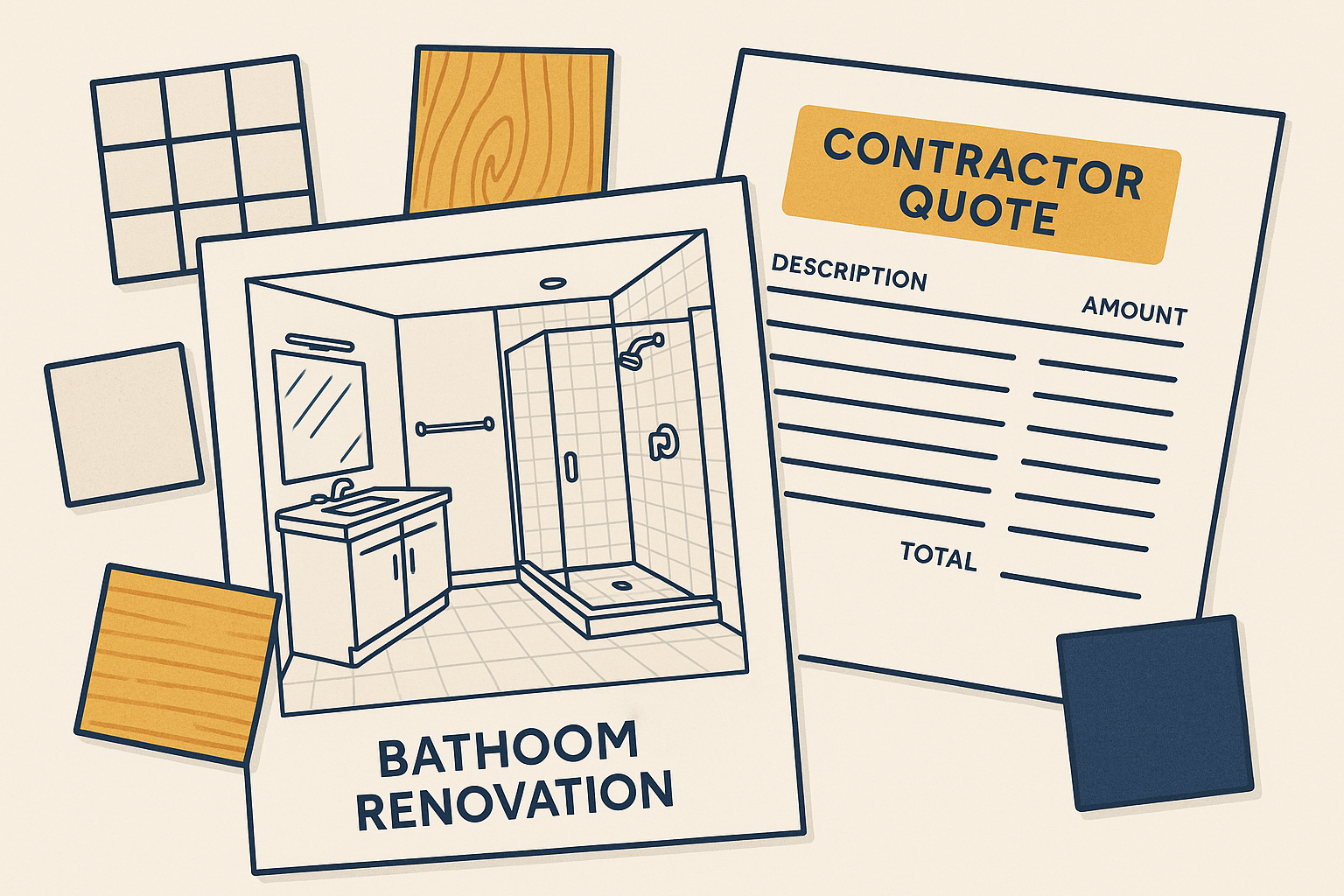
This guide walks through the planning process in the correct sequence, from the initial decision to the moment construction begins.
Step 1: Define What You Actually Want
Before any professional is involved, clarify what the renovation is meant to accomplish. The answer shapes every subsequent decision.
Ask yourself:
– Is this renovation for daily use improvement, resale value, or both?
– Are there specific problems with the current bathroom that must be fixed (a failing shower, insufficient storage, poor lighting)?
– Do you want to change the layout, or keep everything in the same location?
– Is this a long-term home or a property you plan to sell within 5 years?
The answer to the last question in particular affects material and fixture choices. A bathroom designed for 20 years of personal use can reflect personal taste more freely than one optimized for broad buyer appeal.
Step 2: Assess the Existing Bathroom
Before estimating budget or planning scope, understand what you are starting with.
What to document:
– Current dimensions (length, width, ceiling height)
– Location of existing plumbing supply and drain rough-ins
– Location of electrical panel and whether the bathroom is on a dedicated circuit
– Condition of current tile, substrate, and subfloor (any soft spots, visible mould, or water staining)
– Location of exhaust fan and where it terminates (exterior wall, roof, or improperly into the attic)
– Window location and size
Photographs of every wall surface and the floor are useful for contractor consultations. If you suspect moisture damage, water staining, or subfloor issues, note them explicitly.
Step 3: Establish a Budget Range
With a scope direction in mind and the existing conditions documented, establish a realistic budget range. Review what different scopes actually cost in the Ottawa market — replacing fixtures only, surface renovation, full gut with or without layout changes.
Your budget range should include a 10–15% contingency above the base project cost. Do not treat the contingency as money you expect to keep; treat it as part of the renovation budget.
At this stage, you are working with a range ($15,000–$22,000, for example) rather than a fixed number. The fixed number comes after you have quotes and a confirmed scope.
Step 4: Research Designs and Materials
Before meeting with contractors, develop a clear sense of what you want the finished bathroom to look like. This is the most efficient use of pre-consultation time.
Useful resources:
– Houzz photo boards organized by bathroom style
– Pinterest boards for tile patterns, vanity styles, and colour schemes
– Manufacturer websites (tile, fixture, vanity brands) for product research
– Showroom visits to see tile and fixture finishes in person
Bring this research to contractor consultations. A contractor who can see what you have in mind gives you a more accurate scope assessment and quote than one working from a verbal description.
At this stage, note specific products you like but do not order anything. Dimensions, rough-in specifications, and lead times need to be confirmed against your actual bathroom before ordering.
Step 5: Get Multiple Quotes
For any bathroom renovation over $10,000, get at least three quotes from licensed contractors. The quotes give you market validation on price and scope, and the consultation process reveals which contractor communicates clearly and manages a detailed project well.
What a good quote includes:
– Line-item breakdown of labour, materials, and fixtures (or fixture allowances)
– Scope of work described specifically, not just “bathroom renovation”
– What is explicitly excluded (homeowner-supplied fixtures, permit fees, unforeseen conditions)
– Payment schedule tied to milestones, not just calendar dates
– Warranty terms for workmanship
A quote that is dramatically lower than others deserves explanation before acceptance. The most common reasons for a significantly low quote are: scope assumptions that exclude items the other quotes include, unlicensed trade work, lower material quality, or a contractor who will use change orders to recover margin once work begins.
Step 6: Confirm Design and Material Selections
After accepting a quote and signing a contract, confirm all material and fixture selections before any work begins. This is the step most homeowners underestimate in terms of time.
What needs to be confirmed:
– Tile selection, quantity (with overage — typically 10–15% above measured area), and delivery lead time
– Vanity model, finish, and dimensions confirmed against rough-in measurements
– Toilet model confirmed against rough-in distance from wall
– Shower fixtures confirmed against valve rough-in location
– Countertop material and edge profile
– Hardware finish selection (consistent throughout)
– Mirror or medicine cabinet dimensions
Lead times matter. Some tiles are special-order with 4–8 week lead times. Some vanity models are backordered. Confirming selections and lead times before demolition begins prevents the most common delay: waiting for materials after walls are already opened.
Step 7: Confirm Permit Requirements
In Ottawa, a building permit is required for bathroom renovations that involve structural changes, moved plumbing, or new electrical circuits. Your contractor handles permit applications in most cases, but the permit timeline should be factored into the project schedule.
City of Ottawa permit processing for residential renovation permits typically takes 5–15 business days for standard projects. Required inspections (plumbing rough-in, electrical rough-in, framing) are scheduled by your contractor and add time at specific stages.
Work performed without a required permit is a compliance violation and creates issues at resale. Confirm whether a permit is required for your scope during the contractor consultation.
Step 8: Prepare for Construction
Before construction begins:
- Clear the bathroom of all personal items, towels, and accessories
- Establish a temporary bathroom arrangement if this is your only bathroom
- Confirm the construction start date and daily schedule with your contractor
- Identify a contact point for questions and decisions during construction
- Review the contract payment schedule and confirm the first payment timing
For renovations in bathrooms that are the only functional bathroom in the home, discuss the construction sequencing with your contractor in advance. A good team can sequence work to minimize the period when the bathroom is non-functional.
Our team at Miracle Dream Homes handles the full planning and construction sequence for bathroom renovations in Ottawa, including design consultation, permit management, and material coordination. If you are planning an addition to your bathroom, the planning sequence above applies with additional steps for structural assessment.
For city permit requirements and timelines, the City of Ottawa Building Services portal provides current residential permit information.
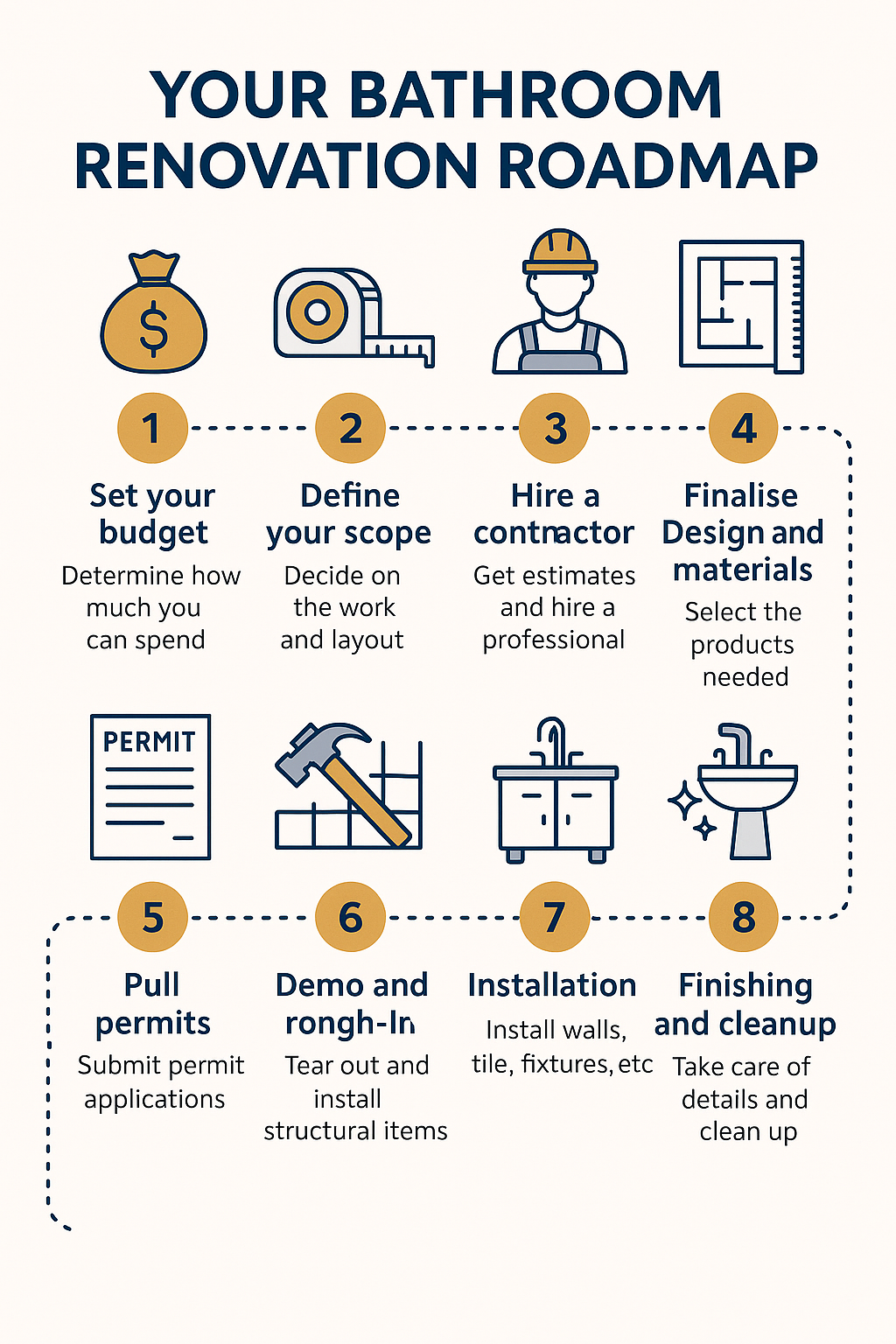
Frequently Asked Questions
How far in advance should I start planning a bathroom renovation?
For a full bathroom renovation, plan 2–4 months ahead of your desired start date. This allows time for design decisions, contractor quotes, material ordering (with lead times), and permit processing. Cosmetic renovations with no permit requirements and stock materials can move faster — 4–6 weeks is realistic.
Should I hire a designer before getting contractor quotes?
For complex renovations or primary ensuite projects, working with a designer before getting quotes provides more accurate, comparable estimates. For standard gut renovations, experienced contractors with in-house design capability can take you from concept to quote without a separate designer.
What is the right order for choosing materials?
Start with tile, because it drives the largest area of the room. Confirm floor tile first, then wall tile. Choose the vanity next, then counter material, then hardware and fixture finishes. Mirror, lighting, and accessories are last. Each step should be considered in relation to what came before.
What happens if I change my mind during construction?
Changes to confirmed scope during construction are handled through change orders, which document the additional work and cost and require homeowner approval before proceeding. Significant changes — moving plumbing that was meant to stay in place, switching tile after installation has begun — can be disruptive and costly. Finalizing selections before construction starts prevents the most common issues.