
Bathtub Materials Explained: Acrylic, Cast Iron, Fiberglass, and More
The material a bathtub is made from affects how it feels in use, how long it lasts, how much it costs, and what your bathroom floor and walls need to support it. Most homeowners recognize the visual difference between a freestanding cast iron tub and a standard alcove acrylic — but understanding the full range of material options makes it easier to choose the right tub for a specific renovation scope and budget.
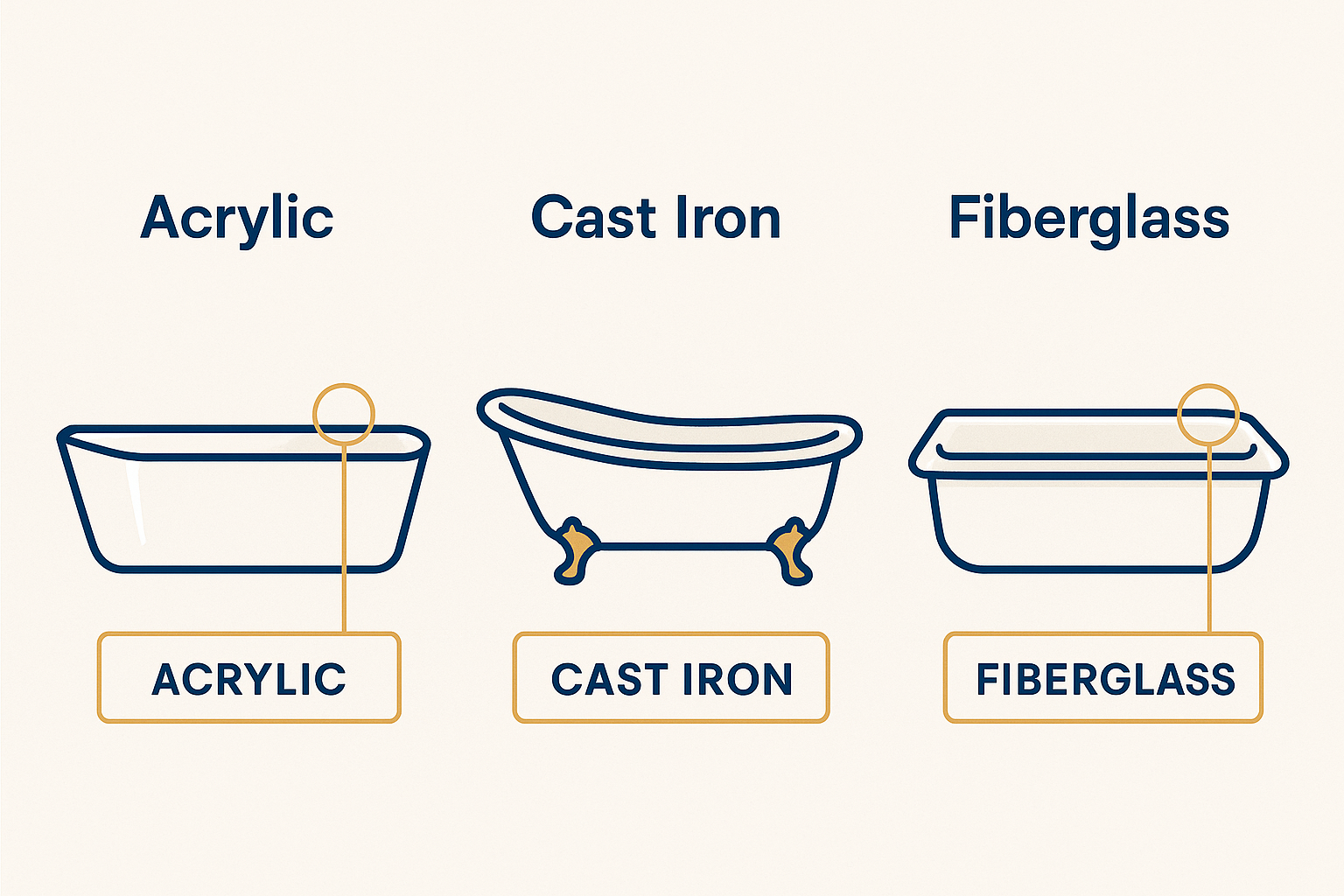
Acrylic
Acrylic bathtubs are the most common residential bathtub material in Canada. The tub is formed by heating an acrylic sheet and vacuum-forming it over a mould. The back is reinforced with fibreglass and resin for structural rigidity.
Advantages:
Lightweight. Acrylic is the lightest bathtub material available. A standard acrylic alcove tub weighs 25–40 kg, well within the load capacity of standard residential floor framing.
Warm to the touch. Acrylic does not conduct heat as rapidly as metal, so the tub surface feels warm at first contact — noticeably different from cold enamelled steel.
Heat retention. Acrylic retains bathwater temperature reasonably well, particularly compared to thin steel.
Colour and form flexibility. Acrylic is available in virtually any shape, size, and colour. It is the dominant material for freestanding soaker tubs, drop-in tubs, and alcove tubs in the residential market.
Repairability. Minor scratches and surface damage in acrylic can be polished out or professionally repaired. A chipped acrylic tub does not require full replacement.
Cost. Standard acrylic alcove tubs start at $300–$600. Freestanding acrylic soaker tubs range from $800–$3,000+ depending on style and brand.
Disadvantages:
Scratch susceptibility. Acrylic scratches more easily than porcelain-enamelled surfaces. Abrasive cleaners damage the finish. The surface requires non-abrasive cleaning products.
Flex. Thinner acrylic tubs flex slightly underfoot, which can feel insubstantial. Quality acrylic tubs use thicker gauge material and better reinforcement to minimize flex.
Surface can dull. Lower-quality acrylic yellows or loses gloss over time. Quality acrylic from established manufacturers (Mirolin, American Standard, MAAX) maintains finish better than budget alternatives.
Fibreglass (FRP)
Fibreglass-reinforced plastic (FRP) bathtubs are made by spraying a gel coat over a fibreglass mould. The result is lighter and less expensive than acrylic, but also less durable.
Advantages: Very low cost ($150–$400 for an alcove unit), lightweight, widely available.
Disadvantages: The gel coat is the wearing surface — it chips, cracks, and fades more readily than acrylic. Fibreglass tubs have a shorter lifespan under active use: typically 10–15 years before visible degradation. For a renovation intended to last 20+ years, fibreglass is not the right choice.
In the Ottawa renovation market, fibreglass tubs appear primarily in budget installations and rental properties. Mid-range and above renovations use acrylic.
Porcelain-Enamelled Steel (Pressed Steel)
A pressed steel bathtub uses a steel shell coated in a fused porcelain enamel finish. This material was the standard residential bathtub for much of the 20th century before acrylic displaced it.
Advantages:
Durable surface. Porcelain enamel is hard and scratch-resistant — more so than acrylic or fibreglass.
Easy to clean. The vitreous porcelain surface is smooth, non-porous, and resistant to staining.
Lower cost than cast iron. Pressed steel tubs cost $200–$600 installed — significantly less than cast iron.
Disadvantages:
Cold. Steel conducts heat rapidly, making the tub surface feel cold at first contact and causing bathwater to cool faster than in acrylic or cast iron.
Noise. Pressed steel rings loudly when water hits it. Quality pressed steel tubs include undercoating to reduce this.
Chips. The porcelain enamel chips on sharp impact, exposing the steel underneath. Chips lead to rust if not repaired.
Flex. Thinner steel tubs flex under weight, which creates a hollow feel and places stress on the enamel.
Cast Iron
Cast iron bathtubs are made by pouring molten iron into a mould, then coating the interior with a fused porcelain enamel finish. They are the oldest and heaviest residential bathtub material, and for many homeowners, the most desirable.
Advantages:
Exceptional durability. A quality cast iron tub is virtually indestructible under normal use. Properly maintained, a cast iron tub lasts 50–100 years. Many vintage cast iron tubs from the early 1900s remain in service.
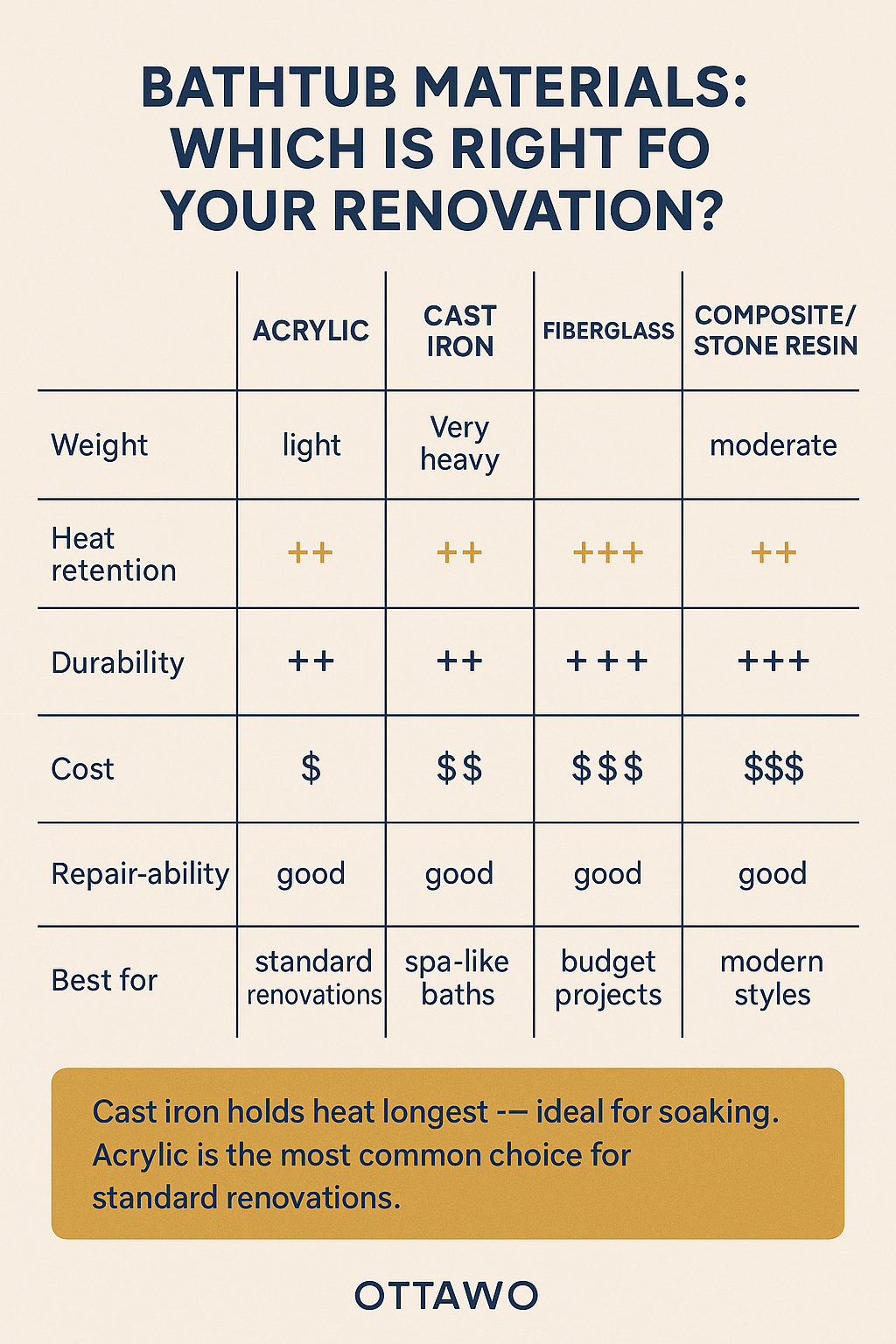
Superior heat retention. Cast iron holds bathwater temperature better than any other common tub material. The thermal mass of the iron absorbs heat from the water and radiates it back — a full bath in a cast iron tub stays warm longer than in acrylic or steel.
Solid feel. Cast iron does not flex. There is no hollow sound underfoot. The tub feels completely solid.
High-quality porcelain surface. The fused porcelain enamel on cast iron is thick and hard — more resistant to chipping and scratching than the enamel on pressed steel.
Appearance. Classic cast iron freestanding tubs — roll-top, slipper, and double-slipper styles — are the statement piece in premium ensuite renovations. No other material replicates this aesthetic.
Disadvantages:
Weight. A standard cast iron alcove tub weighs 100–150 kg. A large freestanding cast iron tub weighs 200–300 kg. This weight requires floor framing assessment before installation. In most main-floor applications, standard framing supports cast iron without modification. Upper floors and older homes may require structural reinforcement.
Cost. Cast iron alcove tubs start at $800–$1,200. Freestanding cast iron tubs from established manufacturers (Kohler, American Standard, Bain Ultra) run $2,000–$8,000+.
Cold initial surface. Like steel, cast iron feels cold at first contact. It warms quickly as the tub fills and the thermal mass stabilizes.
Stone Resin and Composite
Stone resin tubs are made from crushed stone aggregate (typically granite, quartz, or limestone) bound with resin. The result is a dense, heavy, warm-toned material that provides a matte or polished stone-like surface.
Advantages:
Appearance. Stone resin tubs have a distinctive, heavy aesthetic that reads as premium — different from both acrylic and cast iron. The matte stone finish is particularly popular in spa-style ensuite renovations.
Heat retention. Stone resin retains heat well — comparable to cast iron.
Solid feel. No flex, no hollow sound, excellent structural mass.
Disadvantages:
Weight. Stone resin tubs weigh 100–200 kg depending on size. Floor framing assessment is required.
Cost. Stone resin freestanding tubs typically run $2,000–$8,000+ — in the same range as premium cast iron.
Repair difficulty. Surface damage is harder to repair than acrylic.
Solid Surface
Solid surface bathtubs (DuPont Corian and similar materials) use the same acrylic polymer material as countertops. They are non-porous, available in custom shapes, and can be integrated seamlessly with matching wall panels and surrounds.
Advantages: Non-porous, repairable surface, available in contemporary shapes not achievable in cast iron.
Disadvantages: More expensive than acrylic, less heat-retentive than cast iron or stone resin.
Choosing by Context
Primary ensuite renovation, premium budget: Freestanding cast iron or stone resin for the statement piece. Frameless glass enclosure if adding a shower. The combination signals genuine quality.
Primary ensuite, mid-range budget: Quality freestanding or drop-in acrylic soaker tub. Brands like Mirolin, MAAX, and Bain Ultra offer acrylic tubs at $1,000–$2,500 that perform well and look appropriate in a quality renovation.
Alcove tub replacement, any budget: Quality acrylic alcove tub. The $500–$800 range from established manufacturers is appropriate for most family bathroom alcove applications.
Tub-to-shower conversion: When removing a tub entirely, the bathtub material decision goes away. For the tub-to-shower conversion context, the focus shifts to shower base, enclosure, and tile selection rather than tub specification.
For bathtub selection and installation as part of a full bathroom renovation in Ottawa, our team assists with material selection based on the renovation scope, budget, floor structure, and design direction.
For Canadian product specifications, Bain Ultra, Mirolin, and MAAX are the established Canadian bathtub manufacturers with distribution across Ottawa renovation suppliers.
Frequently Asked Questions
What is the most durable bathtub material?
Cast iron is the most durable bathtub material for long-term use. A quality cast iron tub with a fused porcelain enamel surface lasts 50+ years under normal conditions. The iron body does not deteriorate, and the enamel surface — if not chipped through heavy impact — holds its finish for decades. Stone resin is comparably durable. Both significantly outlast acrylic and fibreglass.
Is acrylic a good material for a bathtub?
Acrylic is a very good choice for most residential applications. Quality acrylic tubs from established manufacturers are durable, comfortable, easy to clean, and repairable. The advantages — lightweight, warm to the touch, available in many shapes and sizes — make acrylic the appropriate choice for most alcove and freestanding applications in the $500–$2,500 range. Avoid budget acrylic with thin gauge material that flexes underfoot.
Do cast iron bathtubs require special floor support?
Cast iron tubs weigh 100–300 kg depending on size. Standard residential floor framing typically supports a standard cast iron alcove tub without modification on main floors. Larger freestanding cast iron tubs or upper-floor installations may require framing assessment by the contractor before installation. This is a standard part of the installation planning process — your renovation contractor checks the floor structure during scope assessment.
What bathtub material holds heat best?
Cast iron and stone resin retain bathwater temperature best due to their high thermal mass. The material absorbs heat from the water and radiates it back — a full bath stays warm longer than in acrylic. Acrylic has moderate heat retention and is significantly better than pressed steel. Fibreglass has the least heat retention of standard tub materials.