
Choosing Bathroom Hardware: Finishes, Durability, and Cohesion
Bathroom hardware is the jewellery of a renovation. Towel bars, toilet paper holders, robe hooks, cabinet pulls, and door hardware are the details that differentiate a thoughtfully completed renovation from one that feels unfinished. They are also one of the areas where quality differences between products are most visible in daily use.
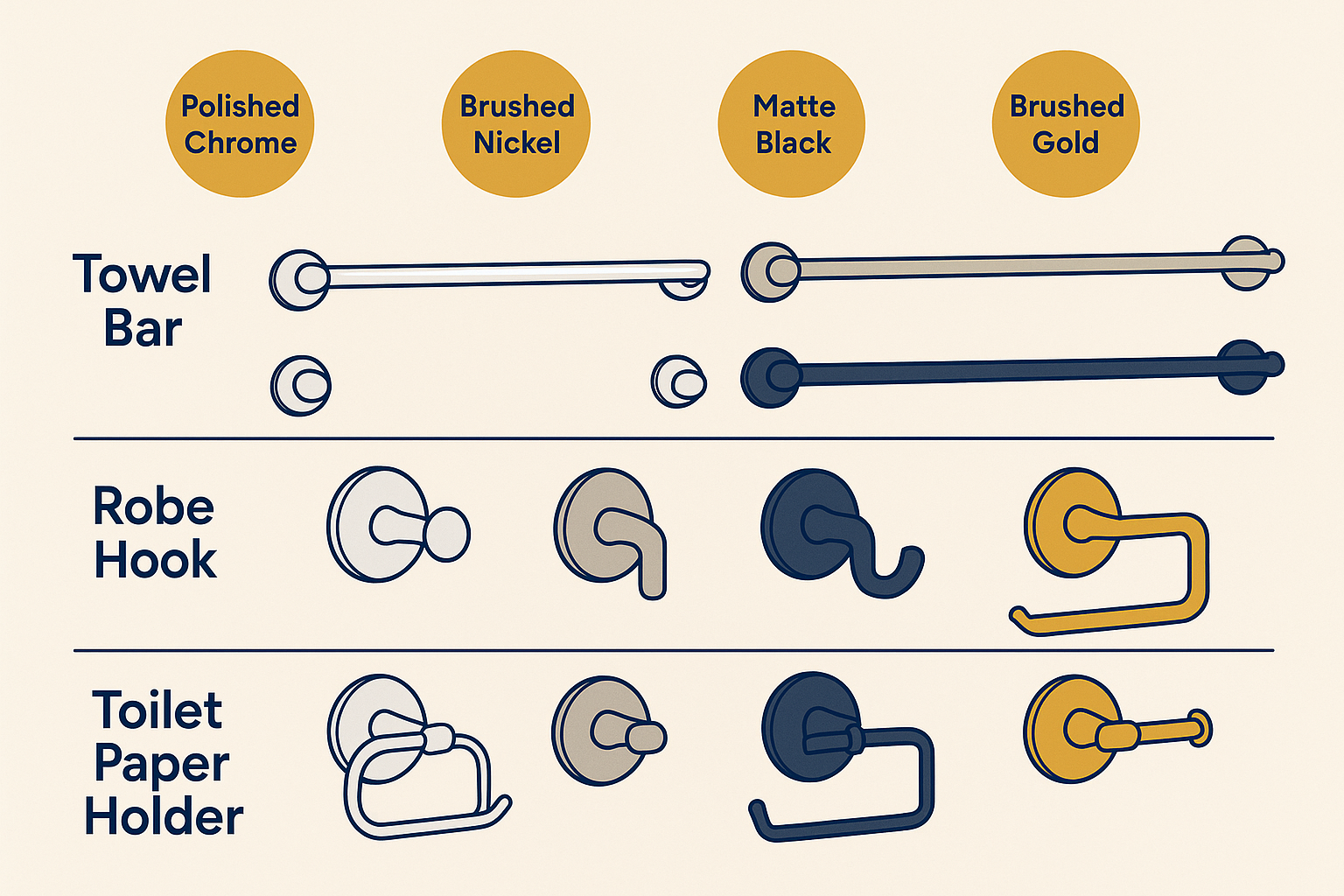
This guide covers the main finish options, what finish durability actually means, and how to approach hardware cohesion across the bathroom.
What Bathroom Hardware Includes
For planning purposes, bathroom hardware includes:
- Towel bar(s)
- Hand towel ring or bar
- Toilet paper holder
- Robe hook(s)
- Vanity cabinet knobs or pulls
- Shower door handle and hinges
- Faucet and shower trim finish (covered in fixture articles, but finish must coordinate)
- Door handle and hinges (bathroom entry door)
The finish selection across all of these elements is a single decision with many implementation points. Getting all of them in the same finish family is what creates visual cohesion.
Finish Options and Their Characteristics
Polished Chrome
Chrome is the original standard bathroom hardware finish. A highly reflective, cool-toned metallic surface that suits contemporary and traditional bathrooms equally well.
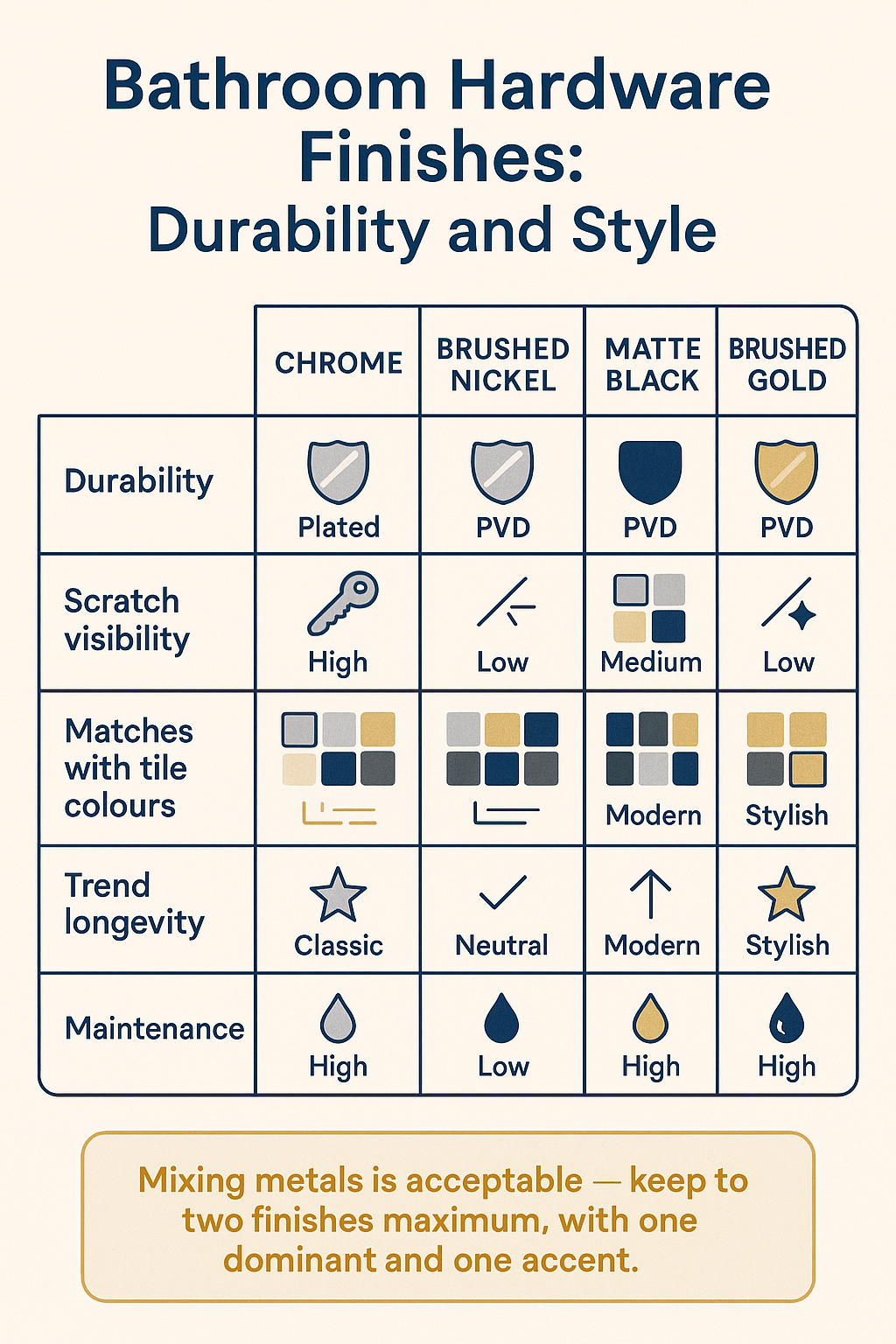
Durability: A quality chrome finish on solid brass or zinc alloy hardware is highly durable — resistant to corrosion and tarnishing when maintained. It shows fingerprints and water spots prominently, requiring more frequent wiping in an active bathroom.
Compatibility: Chrome suits bathrooms with cool-toned tile, white or grey palettes, and contemporary fixtures. Less compatible with warm-toned wood vanities and warm tile.
Brushed Nickel / Satin Nickel
Brushed nickel is the satin-textured version of nickel plating. The brushed texture hides fingerprints and water spots significantly better than polished chrome — one of its primary advantages in high-use bathrooms.
Durability: Good durability when the plating is of quality. Lower-quality brushed nickel plating can wear through at high-contact points over 5–7 years. Quality brands (Moen, Delta, Kohler) use heavier plating that holds over the product’s rated lifetime.
Compatibility: Brushed nickel works across a wider range of palettes than polished chrome — compatible with both cool and warm tile tones, wood vanities, and both contemporary and transitional design directions. It is the most versatile finish in the residential bathroom market.
Matte Black
Matte black has emerged as the dominant design trend in bathroom hardware and fixtures. The flat, non-reflective black finish creates strong visual contrast against light tile and white fixtures.
Durability: Quality matte black hardware uses PVD (Physical Vapour Deposition) coating on solid brass or stainless steel — a durable, scratch-resistant finish. Lower-quality matte black uses paint or powder coat that chips and scratches over normal use.
Maintenance: Matte black shows mineral deposits and hard water staining prominently. Ottawa municipal water has moderate mineral content, and matte black hardware in an active bathroom requires regular cleaning to maintain appearance.
Compatibility: Matte black suits contemporary, industrial, and transitional bathrooms. It works particularly well with white tile, warm wood vanities, and light-toned counters.
Brushed Gold / Brushed Brass
Warm-toned metallic finishes have returned to mainstream bathroom design after being associated with 1980s décor. Current brushed brass and brushed gold hardware uses PVD finishing that resists tarnishing — very different from the lacquered brass that went out of fashion.
Durability: PVD-coated brushed brass is highly durable and tarnish-resistant. Lacquered brass (non-PVD) will develop patina and tarnish over 3–5 years. Confirm PVD finish when purchasing.
Compatibility: Warm-toned hardware suits bathrooms with terracotta or warm tile tones, natural wood vanities, marble or white counters with warm undertones. Particularly effective in bathroom palettes that reference natural materials.
Oil-Rubbed Bronze
Oil-rubbed bronze is a dark brown, antiqued metallic finish that suits traditional and craftsman-style bathrooms. The “living finish” variation intentionally develops patina over time; standard OBR has a more stable appearance.
Durability: Variable depending on base material and coating. Solid brass with OBR finish is highly durable. Zinc alloy with OBR coating is less so.
Compatibility: Traditional, craftsman, and transitional bathroom styles. Does not suit contemporary minimal designs.
Quality Markers in Hardware
Base material: Solid brass is the quality standard for plumbing fixtures and hardware. Brass is corrosion-resistant, works well with plating processes, and holds finish over time. Zinc alloy (zamak) is a common lower-cost alternative — functional but more prone to corrosion and finish wear. Stainless steel is appropriate for hardware with no plating (brushed stainless) and is highly durable.
Plating weight: Thicker plating lasts longer. PVD-coated hardware is generally more durable than electroplated. Look for lifetime finish warranties from major manufacturers — these are a proxy for plating quality.
Weight: Quality hardware feels solid and substantial. Lightweight, hollow-feeling hardware often indicates thin gauge metal that will flex and loosen at mounting points.
Mounting system: Quality towel bars and hardware use concealed screws and set screws for a finished appearance. Look-alike products from budget suppliers use visible screws that loosen over time.
Hardware Cohesion
Cohesion in bathroom hardware means that all finish elements share a tonal and stylistic relationship. Perfect matching is not required — nor always possible, since different product categories use slightly different manufacturing processes. What you are achieving is a consistent direction that reads as intentional.
The practical approach:
1. Choose the finish direction based on the vanity, tile, and overall palette
2. Source towel bars, toilet paper holder, hooks, and cabinet pulls from the same manufacturer’s collection (or collections with confirmed finish compatibility)
3. Match faucet and shower trim finish to the hardware finish
4. Shower door hardware should match the trim finish
5. Mirror frame, if applicable, should complement the hardware finish
Mixing finishes intentionally — a brushed nickel vanity faucet with matte black towel hardware — is a valid design choice when both finishes are well-specified. Accidental mismatches read differently than intentional contrast.
For hardware selection and specification in Ottawa bathroom renovations, our team at Miracle Dream Homes assists with cohesion across all hardware and fixture elements. See our bathroom renovation page and our powder room renovation page — powder rooms in particular are where hardware selection has the most visual impact per square foot.
For product finish specifications and warranty coverage, Moen Canada, Delta Faucet Canada, and Kohler Canada provide comprehensive hardware collections with coordinated finish availability and lifetime warranties on PVD finishes.
Frequently Asked Questions
What bathroom hardware finish is easiest to maintain?
Brushed nickel and brushed gold/brass hide water spots and fingerprints the best due to their satin texture. Polished chrome and matte black show spots more prominently. For active family bathrooms where frequent polishing is not realistic, a brushed finish is the most practical choice.
Do bathroom hardware finishes have to match exactly?
Not exactly. Hardware from different manufacturers in the same finish category will vary slightly in tone. This is acceptable when all pieces are in the same finish family (all brushed nickel, all matte black). For critical coordination — faucet and shower trim with towel bars — sourcing from the same manufacturer’s collection provides the closest match.
How long does bathroom hardware last?
Quality bathroom hardware from established manufacturers with lifetime finish warranties lasts the life of the renovation — 20+ years with normal use and cleaning. Budget hardware with thin plating may show wear at high-contact points (hooks, bar centres) within 5–7 years.
Is it worth upgrading bathroom hardware during a renovation?
Yes. Hardware is a relatively small line item in a bathroom renovation budget ($200–$600 for a complete bathroom) but one of the highest-visibility elements in the finished space. The difference between quality hardware in a coordinated finish and builder-grade hardware is immediately apparent and contributes significantly to the overall perceived quality of the renovation.