
Bathroom Plumbing Basics: What Every Homeowner Should Know
You do not need to be a plumber to make good decisions about a bathroom renovation, but a basic understanding of how bathroom plumbing works helps enormously. It helps you understand what a renovation quote includes, why moving plumbing is expensive, why certain layouts are more practical than others, and what questions to ask when something goes wrong.
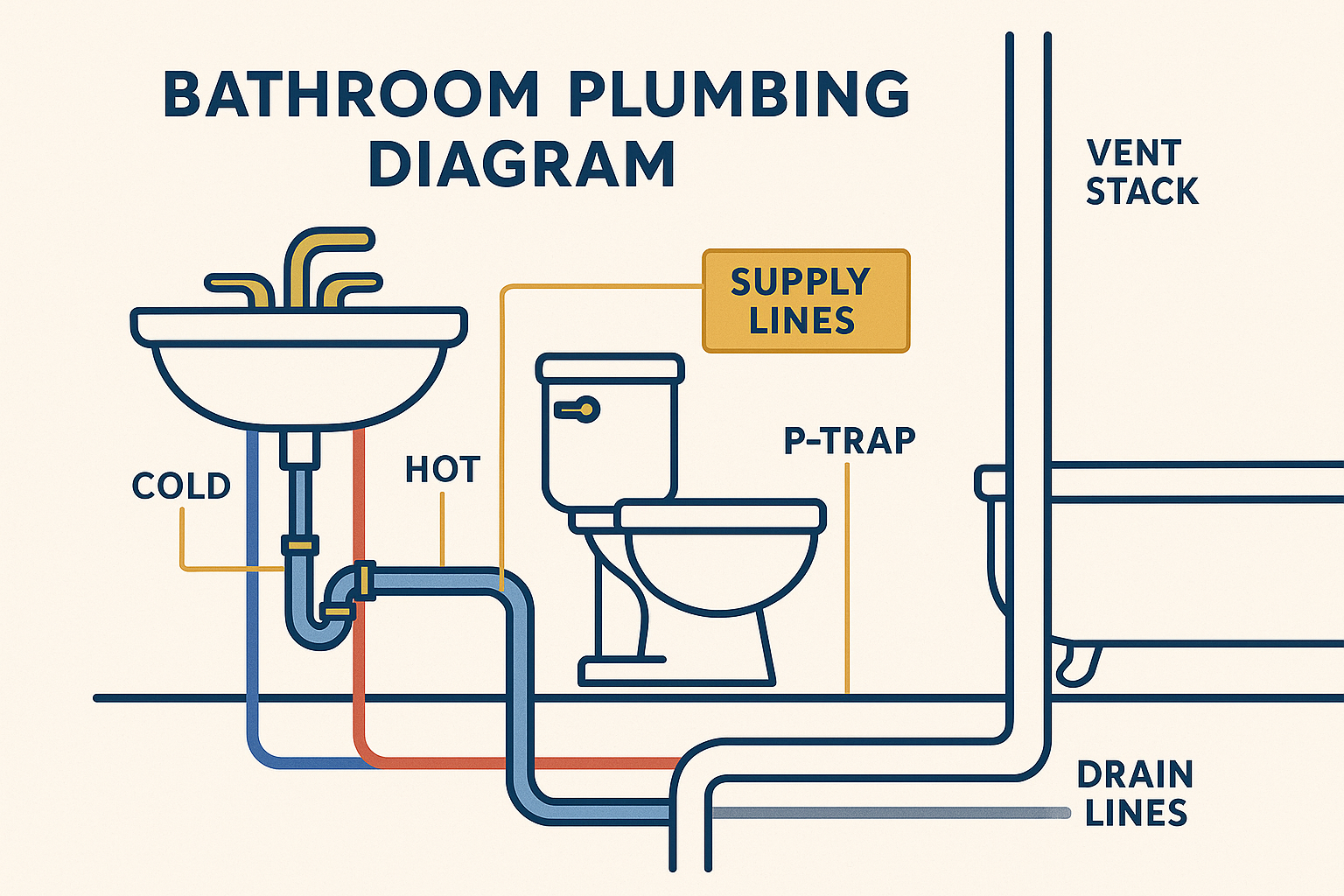
This guide covers the essential plumbing systems in a bathroom — supply, drain, and vent — and what homeowners need to understand about each.
The Two Plumbing Systems in a Bathroom
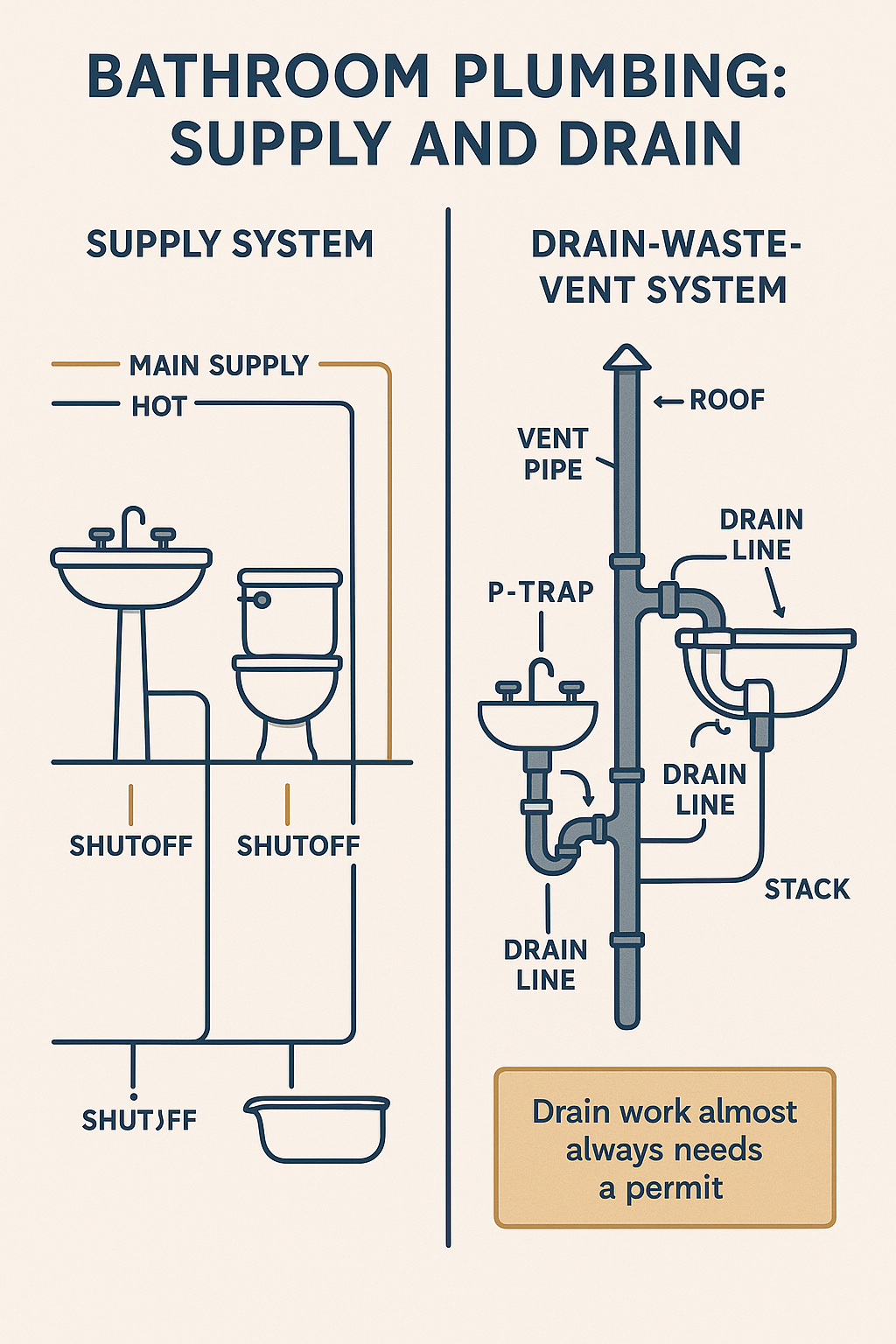
Every bathroom involves two distinct and separate plumbing systems:
Supply system: Delivers pressurized cold and hot water to your fixtures. Supply pipes are typically 12–19 mm (1/2 to 3/4 inch) diameter. They run through walls and floors from the main supply line and meter. They are always under pressure — when supply pipes fail, the result is a constant leak.
Drain-waste-vent (DWV) system: Removes used water and waste from fixtures. Drain pipes are not pressurized — they rely on gravity slope to move water toward the main drain and sewer or septic connection. They are significantly larger than supply pipes: toilet drains are typically 75 mm (3 inch), tub and shower drains 50 mm (2 inch), and sink drains 38 mm (1.5 inch).
Understanding this distinction matters because moving or adding to these systems is very different work with very different costs.
Supply Pipe Materials
Copper: The standard material for residential supply pipes for decades. Durable, corrosion-resistant, suitable for hot and cold water. Many Ottawa homes built before 2000 have copper supply lines. Well-maintained copper lasts 50+ years. Solder-jointed copper with lead-based solder (pre-1990 installations) should be replaced.
PEX (cross-linked polyethylene): The dominant new installation material. Flexible tubing that can be run in long continuous lengths with fewer fittings, reducing leak potential. Resistant to freeze damage (it expands rather than cracking). Less expensive than copper for new installation. PEX cannot be used in direct sunlight applications (UV degradation) and is not compatible with all fittings.
CPVC (chlorinated polyvinyl chloride): A plastic alternative to copper used for supply lines. Less common in Ottawa new residential construction than PEX.
Galvanized steel: Used in pre-1960s construction. Steel corrodes from the inside over decades, reducing water pressure, discolouring water, and eventually failing. If your home still has galvanized supply lines, budget for replacement — this is a known-failure material.
Drain Pipe Materials
ABS (acrylonitrile butadiene styrene): Black plastic pipe. The standard material for residential drain lines in Canadian construction since the 1970s. Durable, lightweight, and easy to join. ABS with solvent cement connections does not leak when properly made.
PVC (polyvinyl chloride): White or grey plastic pipe. Also standard in current residential construction, particularly in Ontario where ABS has largely been replaced. Compatible fittings and connection methods are similar to ABS.
Cast iron: Used in pre-1970s construction for drain stacks and main drain lines. Extremely durable but corrodes from the inside over 50–80 years. If cast iron drain lines are present in your home and are being exposed during a renovation, have them inspected by a licensed plumber for internal corrosion.
The Drain-Waste-Vent System
The DWV system is more complex than the supply system and the one most homeowners understand least.
Trap
Every fixture in a bathroom has a trap — a curved section of drain pipe that holds standing water. This standing water creates a seal that prevents sewer gases from entering the home through the drain. The P-trap under a sink and the integral trap in a toilet are the most familiar examples.
Traps must be present for every fixture. A missing or improperly installed trap allows sewer gases into the home — an odour and health concern.
Drain Slope
Drain lines must slope toward the main drain at a minimum of 1/4 inch per foot (approximately 2%) to flow properly. A slope that is too shallow produces slow drainage and sediment buildup. A slope that is too steep causes water to run ahead of solids, which then accumulate in the pipe.
This slope requirement is why moving bathroom fixtures is complicated — the drain line must maintain proper slope from the new fixture location back to the main drain stack, and that slope path must fit within the available floor joist depth.
Venting
Plumbing vents are pipes that run from the drain system through the roof. They serve two purposes: they allow air into the drain system so water flows freely (you observe this as the gurgling in a drain when venting is inadequate), and they allow sewer gases to exhaust through the roof rather than into the home.
Every fixture branch requires a vent. Adding a new bathroom fixture in a location without existing venting requires either running a new vent stack to the roof or installing an air admittance valve (AAV) — a code-approved mechanical vent that allows air in without requiring a dedicated vent stack.
Rough-In Dimensions
Rough-in refers to the location of supply and drain connections before fixtures are installed. Getting rough-in dimensions wrong is one of the most costly renovation mistakes.
Toilet rough-in: The distance from the finished wall to the centre of the toilet drain. Standard in Canadian homes is 30 cm (12 inches). Some older homes have 25 cm (10 inch) or 35 cm (14 inch) rough-in. Buying a toilet without confirming the existing rough-in dimension is a common mistake.
Shower rough-in: The height and spacing of supply connections to the shower valve vary by valve manufacturer. Confirm the rough-in specification against the valve you plan to install before closing walls.
Vanity rough-in: Supply connections at 45–50 cm off the floor (depending on the valve) and drain centred below the sink bowl. Confirm vanity bowl location before positioning rough-in.
For any bathroom renovation that involves keeping plumbing in place, measuring and confirming existing rough-in locations before selecting fixtures prevents ordering errors. Our team at Miracle Dream Homes confirms all rough-in dimensions as part of the design phase for bathroom renovations in Ottawa. For basement bathroom additions where all plumbing is new, visit our basement bathroom renovation page.
For authoritative plumbing code requirements in Ontario, the Ontario Building Code Division B Part 7 governs plumbing installations. CMHC’s homeowner plumbing guide provides accessible plain-language guidance on residential plumbing systems.
Frequently Asked Questions
What is the difference between supply and drain plumbing?
Supply plumbing delivers pressurized water to fixtures from the main water line. It operates under constant pressure. Drain plumbing removes used water and waste from fixtures using gravity, requiring specific pipe slopes to work properly. They are completely separate systems with different pipe sizes, materials, and installation requirements.
Why is moving bathroom plumbing so expensive?
Moving a bathroom fixture requires relocating both supply lines (relatively straightforward) and drain lines (significantly more complex). Drain lines must maintain a 1/4 inch per foot slope toward the main drain stack, which often requires opening floors and walls, working within tight joist spaces, and ensuring proper venting at the new location. The labour and disruption involved is the source of the cost.
What is a toilet rough-in dimension and why does it matter?
The toilet rough-in is the distance from the finished wall to the centre of the toilet drain flange. Most Canadian homes use a 30 cm (12 inch) rough-in, but some older homes differ. If you buy a toilet specified for 30 cm rough-in and your bathroom has a 25 cm rough-in, the toilet will not fit against the wall properly. Always measure the existing rough-in before purchasing a new toilet.
How do I know if my drains are properly sloped?
Properly sloped drains clear quickly and completely with no gurgling. Slow drains that clear gradually, gurgling sounds after flushing, and recurring blockages in the same location can all indicate slope problems, partial blockages, or venting issues. A plumber can camera-inspect drain lines to confirm slope and condition.