
Bathroom Shower Tile Ideas: Patterns, Formats, and Finishes
The shower is typically the visual centrepiece of a bathroom renovation. The tile choice here — the format, pattern, colour, and finish — sets the character of the entire space. It is also the area where tile must perform hardest: daily wet exposure, steam, cleaning products, and foot traffic on the floor.
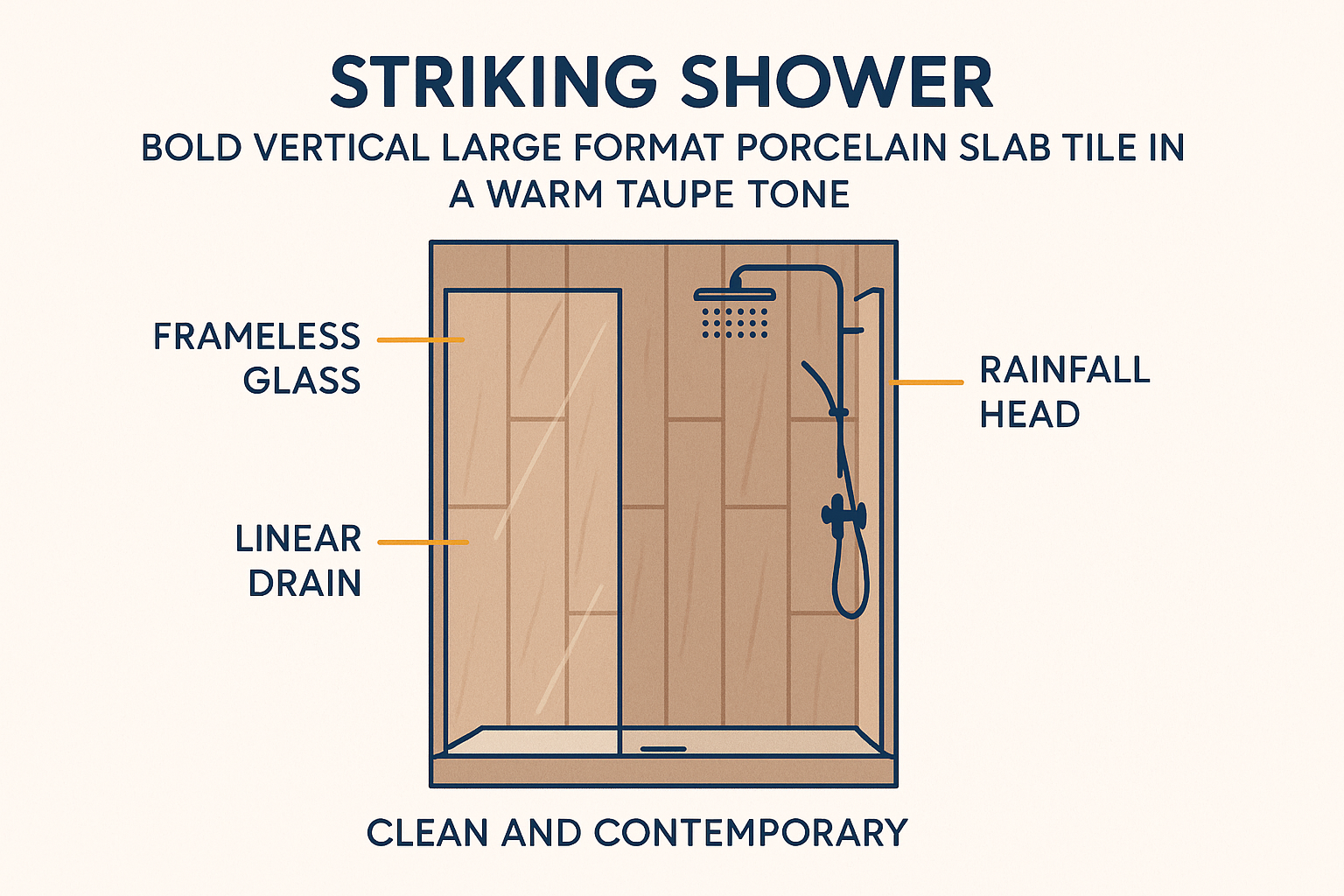
This guide covers the shower tile approaches that work best from both a design and a performance standpoint, with the practical considerations that should inform every decision.
The Shower as a Design Element
Before getting into specific tile choices, it helps to think about the shower in relation to the rest of the bathroom. The shower tile does not have to match the floor tile, but they need to work together.
The most common approaches:
– Shower tile as continuation: Use the same tile as the bathroom floor inside the shower, creating visual continuity. This reads as cohesive and expansive, particularly effective in open or walk-in showers with no door.
– Shower tile as contrast: Use a different tile inside the shower that complements but distinguishes from the floor. A white hexagon bathroom floor with a dark slate shower reads as a deliberate design distinction.
– Shower as feature: Use a premium or distinctive tile exclusively inside the shower — marble, a bold pattern, or a stone-look large-format tile — that makes the shower the clear focal point of the room.
The choice between these approaches is partly aesthetic and partly budget-driven. Using your most expensive tile only inside the shower controls cost while concentrating the visual impact where it matters most.
Shower Wall Tile Formats
Subway Tile
Subway tile — traditionally 75 mm x 150 mm (3 x 6 inch) ceramic or porcelain tile — remains the most popular shower wall tile in North American bathroom renovation. Its appeal is genuine: the classic format works across traditional, transitional, and contemporary bathrooms, ages well, and comes in a wide price range.
Contemporary variations include longer subway proportions (75 x 300 mm or 100 x 400 mm), which read as more current without losing the clean line quality of the format. A white subway tile with a contrasting dark grout has been consistently popular for a decade without showing signs of dating.
Large-Format Tile
Large-format tile — 60 x 60 cm, 60 x 120 cm, or larger — produces the most minimal, seamless appearance on a shower wall. Fewer grout lines mean less maintenance and a more contemporary look. The installation requirement is a flat substrate and careful layout planning.
Large-format tiles look particularly effective when they run floor to ceiling without breaking at a border or transition. A single large-format tile wall in a shower with a frameless glass surround reads as genuinely premium.
The practical limitation: large tiles on a shower floor are problematic (slope issues, as discussed). Large-format walls with a small-format floor is the common combination for full-height tile showers.
Mosaic Tile
Mosaic tiles — typically 25 mm x 25 mm or 50 mm x 50 mm, mounted on mesh sheets — are used primarily on shower floors and occasionally as accent bands on walls. On the shower floor, the high density of grout joints provides excellent slip resistance and conforms naturally to the floor slope. As a wall band, a row of mosaic at waist height or at the bench height creates visual interest without the commitment of an all-over pattern.
Glass mosaic provides a reflective quality that works particularly well in showers with limited natural light — the light bounces off the glass surfaces and makes the space feel brighter.
Hexagon Tile
Hexagonal tile has become a consistently popular choice for shower floors and as an accent wall tile. The format provides good slip resistance on the floor (many grout joints) and a distinctive geometric character on walls. Available in sizes from 25 mm (micro hex) to 300 mm (large hex), with the 50–100 mm range being most common in bathrooms.
A white hex shower floor with white grout reads as fresh and clean. A black hex floor with white grout creates a graphic pattern that suits contemporary and industrial-influenced bathrooms.
Shower Tile Patterns
The pattern in which tile is laid changes the look of the same tile substantially.
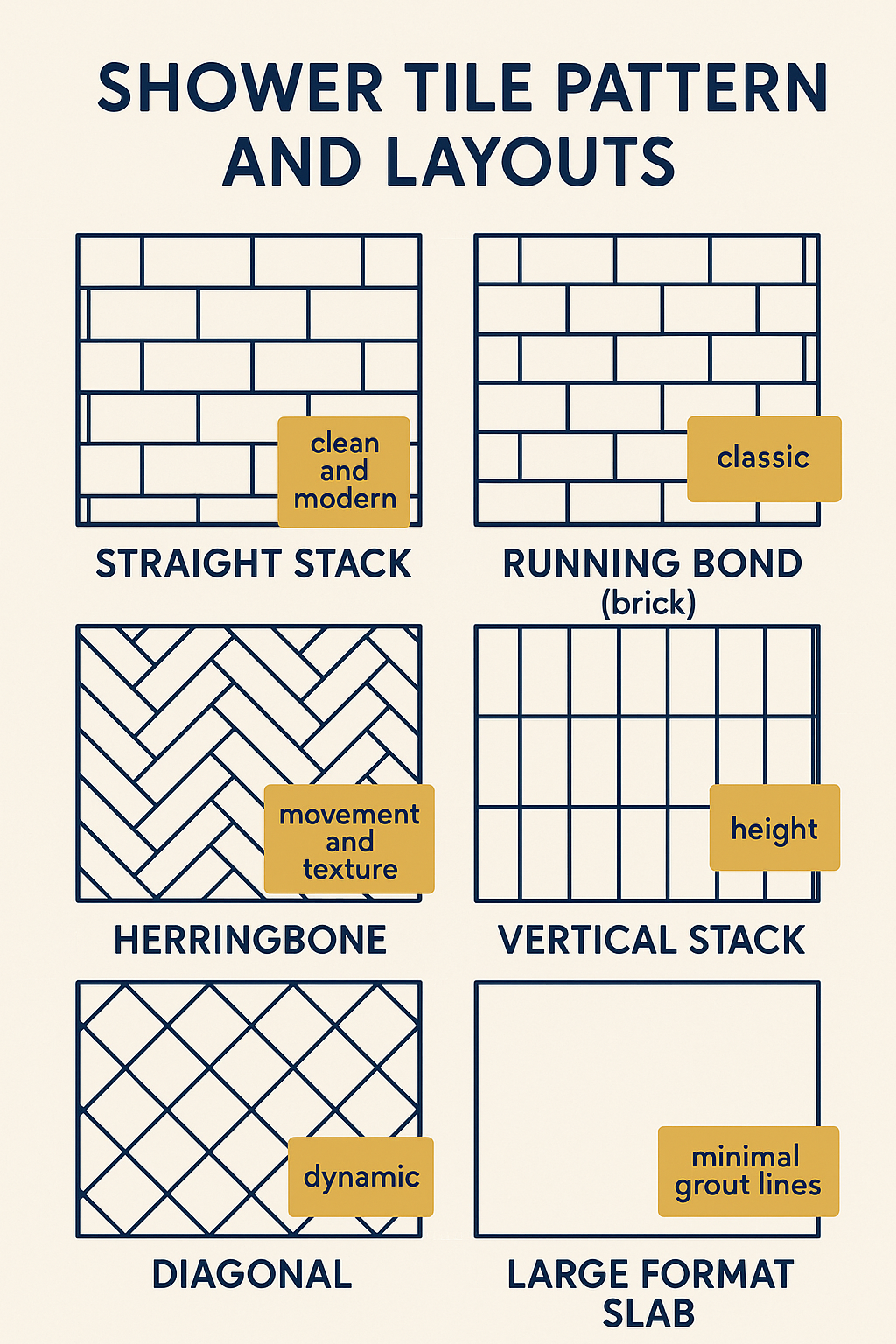
Offset/brick bond: The standard half-offset pattern. Each tile is shifted half a tile width from the row below. This is the default for subway tile and works with most rectangular formats. Produces a traditional, clean result.
Stacked/stack bond: Tiles laid with continuous vertical and horizontal grout lines. More contemporary in appearance. Works better with large-format tiles than with small tiles, where perfectly continuous grout lines require precision to avoid cumulative offset.
Herringbone: Rectangular tiles arranged in a V-pattern. Visually active and directional. Works best as an accent on one shower wall or as a floor tile rather than applied to all surfaces — full-herringbone showers can feel busy.
Vertical stack: Rectangular tiles oriented vertically with tiles stacked directly over each other. Draws the eye upward, adds perceived height. Effective in showers with standard-height ceilings.
Running bond with varying offset: Tile offset by one-third or one-quarter rather than the standard half-tile produces a different visual rhythm than the classic brick bond. Used often with longer subway proportions.
Feature Wall Approaches
In a walk-in shower without a door, the back wall is the most visible surface from outside the shower and functions as the primary visual element of the bathroom. This wall is where a feature tile — a different tile from the other three walls — makes the most impact.
Marble slab-look porcelain: A single large-format tile with marble veining, bookmatched across the wall, reads as genuine stone without the maintenance requirements. This is currently the most popular feature wall approach in mid-to-premium Ottawa renovations.
Brick or stone texture tile: Three-dimensional relief tiles that reference brick or stacked stone. More visual texture than flat tile. Works particularly well in industrial and rustic-influenced bathrooms.
Bold colour: A single wall in a deep tone — navy, forest green, charcoal — using the same tile as the rest of the shower. The colour does the work rather than the pattern.
Mixed material: Incorporating a strip of wood-look porcelain or a contrasting material band at eye level or at bench height adds depth to an otherwise uniform tile field.
Practical Considerations
Grout colour selection matters. In a shower, grout is exposed to daily water, soap, and steam. Light grout shows staining faster. Epoxy grout (rather than cement grout) is more stain-resistant and more appropriate for shower applications where maintenance effort is a concern.
Large grout joints on small tiles. Mosaic tiles have many grout joints — more surface area for mildew to develop. The cleaning effort with mosaic tile walls is higher than with large-format tile walls. Budget for regular grout cleaning or choose a larger format.
Finish consideration in wet zones. Matte and satin-finish tiles hide water spots better than polished tiles in a shower. In a shower that is used daily, the visible water marks on polished tile become a cleaning requirement that many homeowners did not anticipate.
For shower tile selection as part of a complete renovation, our team at Miracle Dream Homes handles the full process — from design to tile setting to grouting. Learn more at our tub-to-shower conversion page or our bathroom renovation page.
For tile design inspiration and technical specifications, Houzz Shower Tile Photos and the Tile Council of North America are both excellent resources.
Frequently Asked Questions
What is the most popular shower tile pattern right now?
Large-format porcelain tile — 60 x 120 cm or larger — with a marble or stone look finish is the most popular choice in mid-to-premium Ottawa bathroom renovations at present. On a budget, white subway tile in an offset pattern with a contrasting grout colour remains a consistently popular and timeless choice.
Can I use different tile on the shower floor and walls?
Yes, and this is the standard approach. Shower floors require a small-format or slip-rated tile that follows the drain slope. Shower walls can use large-format tile regardless. Using different formats on floor and walls is normal and does not require special design justification.
What is the best way to add visual interest to a shower without spending a lot?
A contrasting grout colour on otherwise standard tile is the most cost-effective way to add visual character. A different tile on the back wall only (a feature wall), using the same base tile on the other three walls, adds significant visual impact at limited additional cost.
Do shower walls need to be tiled floor to ceiling?
Not technically, but full-height tile is strongly recommended in a shower because the upper portion of shower walls does receive moisture from steam even if not direct spray. Partial tile finished with painted drywall above the tile line will show mould growth at the junction over time. Full-height tile or full-height waterproof panel is the appropriate scope.