
Tub-to-Shower Conversion for Accessibility: What’s Involved
The tub-to-shower conversion is the most common accessibility-focused bathroom renovation in Ottawa. It replaces a standard alcove bathtub — which requires stepping over a 400–500 mm rim every time it is used — with a walk-in shower that can be entered without lifting the foot high or maintaining balance on one leg over a wet surface.
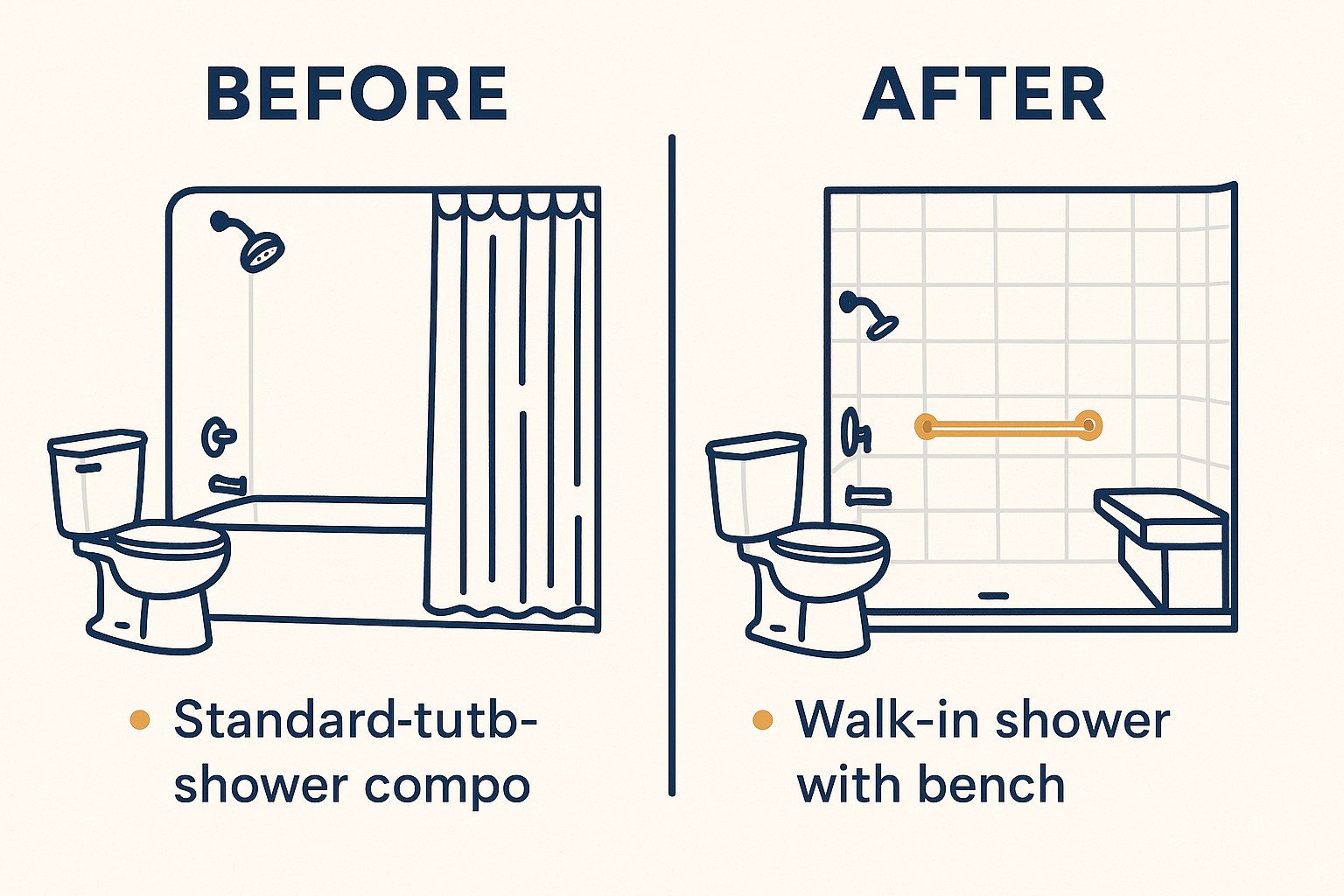
For many seniors and adults with limited mobility, the bathtub becomes the primary fall risk in the home before they recognize it as such. The conversion removes this risk while creating a better shower experience for the whole household.
What a Standard Tub-to-Shower Conversion Involves
An alcove tub-to-shower conversion in a standard Ottawa bathroom involves the following scope:
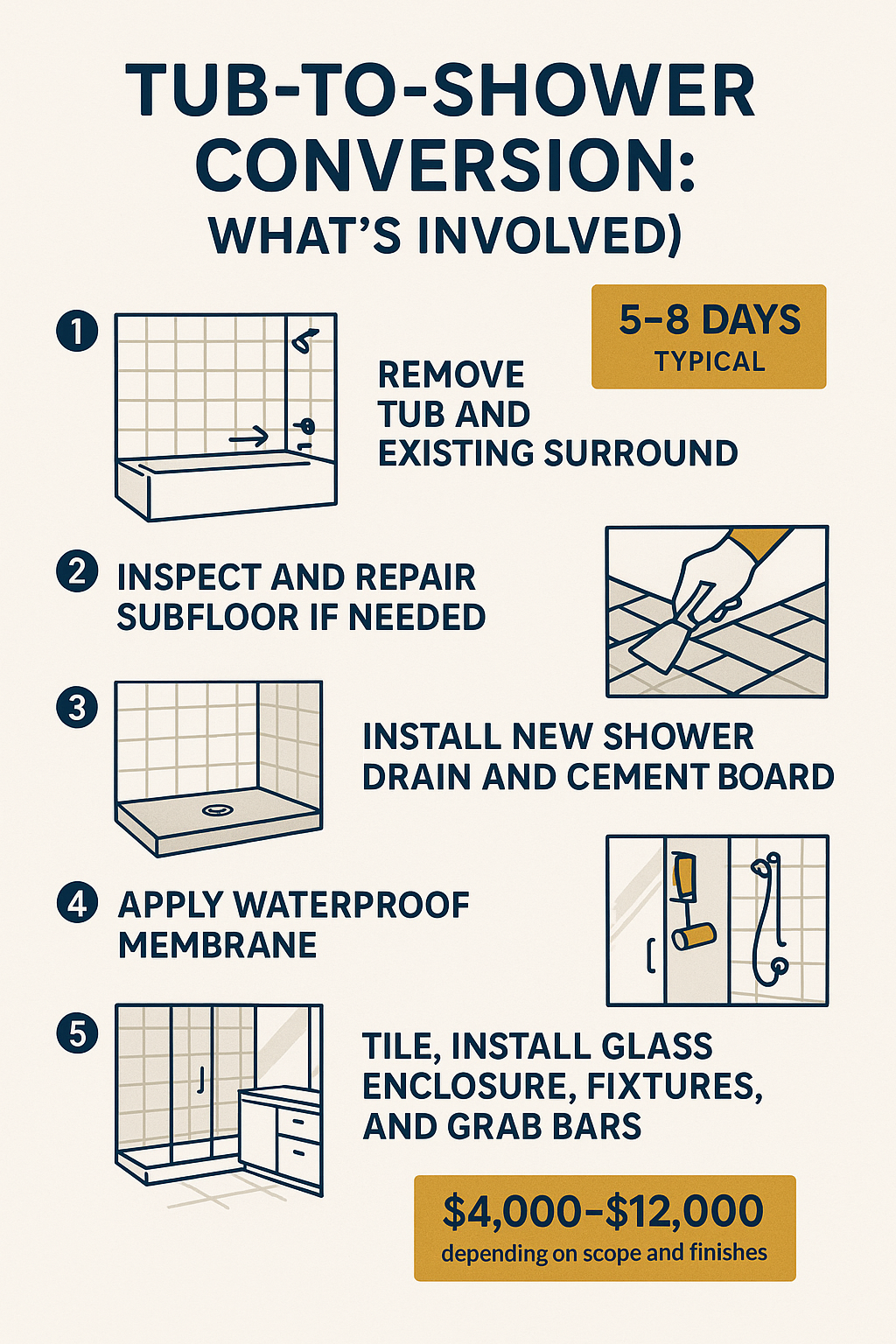
1. Demolition
The existing tub, tub surround (tile or surround panels), and plumbing fixtures are removed. The wall substrate (cement board, moisture-resistant drywall, or existing drywall) is assessed. If the existing substrate has water damage or inadequate waterproofing behind the old surround, this is identified and corrected before any new work proceeds.
The subfloor in the tub zone is assessed for rot or water damage — common in older tub installations where the floor around the tub drain or the tub edges has had chronic moisture exposure.
2. Plumbing Rough-In Adjustment
The tub drain and supply connections need modification for a shower. A tub drain typically uses a 38 mm drain; a shower requires a 50 mm drain for adequate flow capacity. The existing drain pipe may need to be upgraded.
The shower valve location (the control valve and body spray connections) is adjusted based on the new shower layout.
3. Structural Modifications for Accessibility
If the conversion includes accessibility features:
Drain location and slope: A curbless shower requires the drain to be positioned at the lowest point of a correctly sloped floor. In a converted tub zone, the floor must be sloped or a pre-sloped shower pan installed, and the drain connection brought to the correct height for a flush or near-flush entry.
Blocking installation: If grab bars are part of the scope, 19 mm plywood blocking panels are installed in the walls before tiling — at toilet grab bar positions (if the toilet is in the same bathroom) and at all shower bar positions.
Widened entry: If the shower entry width is being increased for accessibility (minimum 900 mm for wheelchair access), framing modifications are made before substrate installation.
4. Waterproofing
Shower waterproofing is a critical step that determines whether the conversion lasts 20+ years or fails within 5. The waterproofing membrane (sheet membrane or liquid-applied membrane) is installed over the substrate, covering the full floor and walls to minimum 200 mm above the wet zone. At the shower entry, waterproofing extends onto the bathroom floor in the transition zone.
5. Tile and Finishes
Shower floor tile (slip-resistant porcelain), wall tile, and all grouting and caulking. Grab bar installation into the blocking. Glass door or panel installation. Plumbing fixture installation (shower valve, showerhead, hand-held head, slide bar).
Accessibility Features to Include
When converting a tub to a shower for accessibility, these features add minimal cost when specified from the start:
Curbless entry: The defining accessibility feature. Specify a linear drain at the threshold or a point drain at the lowest point of a sloped floor. Cost incremental: $500–$1,000 over a standard curbed shower.
Grab bars: Install at shower entry (vertical bar), side wall (horizontal), and back wall (horizontal). If the toilet is in the same bathroom, add blocking and bars beside the toilet. Cost: $200–$400 per bar installed, plus $200–$500 for blocking.
Built-in bench: A tiled bench at 430–480 mm height, minimum 450 mm deep. Cost incremental: $600–$1,200 over no bench.
Hand-held showerhead on slide bar: Provides seated use capability. Cost: $150–$400 for the slide bar and hand-held unit.
Comfort-height toilet: If the toilet is being replaced in the same renovation, specify comfort height (430–480 mm seat height). Cost: $0–$100 incremental over standard height.
What a Tub-to-Shower Conversion Costs in Ottawa
Standard tub-to-shower conversion (quality finishes, no accessibility features): $10,000–$18,000
Accessibility-focused conversion (curbless, grab bars, bench, hand-held showerhead): $14,000–$22,000
Premium accessibility conversion (frameless glass, custom tile, full accessibility package): $20,000–$30,000
These ranges reflect Ottawa contractor rates and include demolition, waterproofing, tile, glass, plumbing, and accessibility features as specified.
The accessibility-focused conversion costs $3,000–$6,000 more than a standard conversion — not because the individual features are expensive, but because the curbless drain work and extended waterproofing add scope. This incremental cost delivers features that prevent falls and maintain independence for years or decades.
Tax Credit Eligibility
The Government of Canada’s Home Accessibility Tax Credit (HATC) provides a 15% non-refundable tax credit on eligible renovation expenses up to $20,000 per year for qualifying individuals — those eligible for the Disability Tax Credit or individuals 65 and older. A tub-to-shower conversion that includes accessibility modifications (curbless entry, grab bars, accessible shower bench) qualifies for this credit.
On a $20,000 accessibility conversion, the HATC provides a $3,000 tax credit, effectively reducing the net cost significantly.
For tub-to-shower conversion for accessibility in Ottawa, our team at Miracle Dream Homes specializes in this scope, combining the aesthetic quality of a contemporary shower renovation with the functional accessibility features that create a safe bathroom for years to come. See also our full bathroom renovation page.
For eligibility details on the Home Accessibility Tax Credit, Canada Revenue Agency (CRA) publishes the current guidelines, eligible expenses, and claim process.
Frequently Asked Questions
How long does a tub-to-shower conversion take?
A standard tub-to-shower conversion in Ottawa takes 7–12 business days from demolition to completion for a typical alcove tub replacement. The schedule depends on tile selection, glass lead time (typically 5–10 business days from measurement to installation), and whether any unexpected conditions (subfloor damage, plumbing complications) arise during demolition. Plan for the bathroom to be unavailable for approximately two weeks.
Can I use the existing plumbing when converting a tub to a shower?
The supply connections (hot and cold water lines) and the valve rough-in position are often reusable, depending on the existing layout and the new shower valve specification. The drain typically needs modification: a tub drain uses a 38 mm line, while a shower drain requires a 50 mm line for proper flow. If the drain connection is accessible from the basement or crawl space, upgrading it is straightforward. Your plumber assesses the existing rough-in during the renovation planning phase.
Is a tub-to-shower conversion reversible?
A tub-to-shower conversion is permanent — reversing it would require removing the shower tile, drain, and substrate, and installing a new tub, surround, and plumbing connections. For homeowners concerned about resale, the relevant consideration is whether the home retains at least one bathtub for family use. If the converted bathroom is a primary ensuite and the home has a second bathroom with a tub, the conversion does not limit the home’s appeal to buyers.
Does a tub-to-shower conversion require a permit in Ottawa?
A tub-to-shower conversion involves plumbing work (drain upgrade, fixture replacement) which requires a plumbing permit from Ottawa Building Code Services for work that involves more than replacing fixtures in-kind. Your renovation contractor handles the permit application as part of the project. The permit ensures the drain upgrade and waterproofing meet current code requirements.