
How to Choose Bathroom Floor Tile: Slip Resistance, Size, and Style
Bathroom floor tile choices often get made on appearance alone. A tile that looks perfect on a showroom floor may be the wrong choice for a wet bathroom environment if it lacks sufficient slip resistance, if the size creates installation difficulties, or if the surface texture makes cleaning a daily chore.
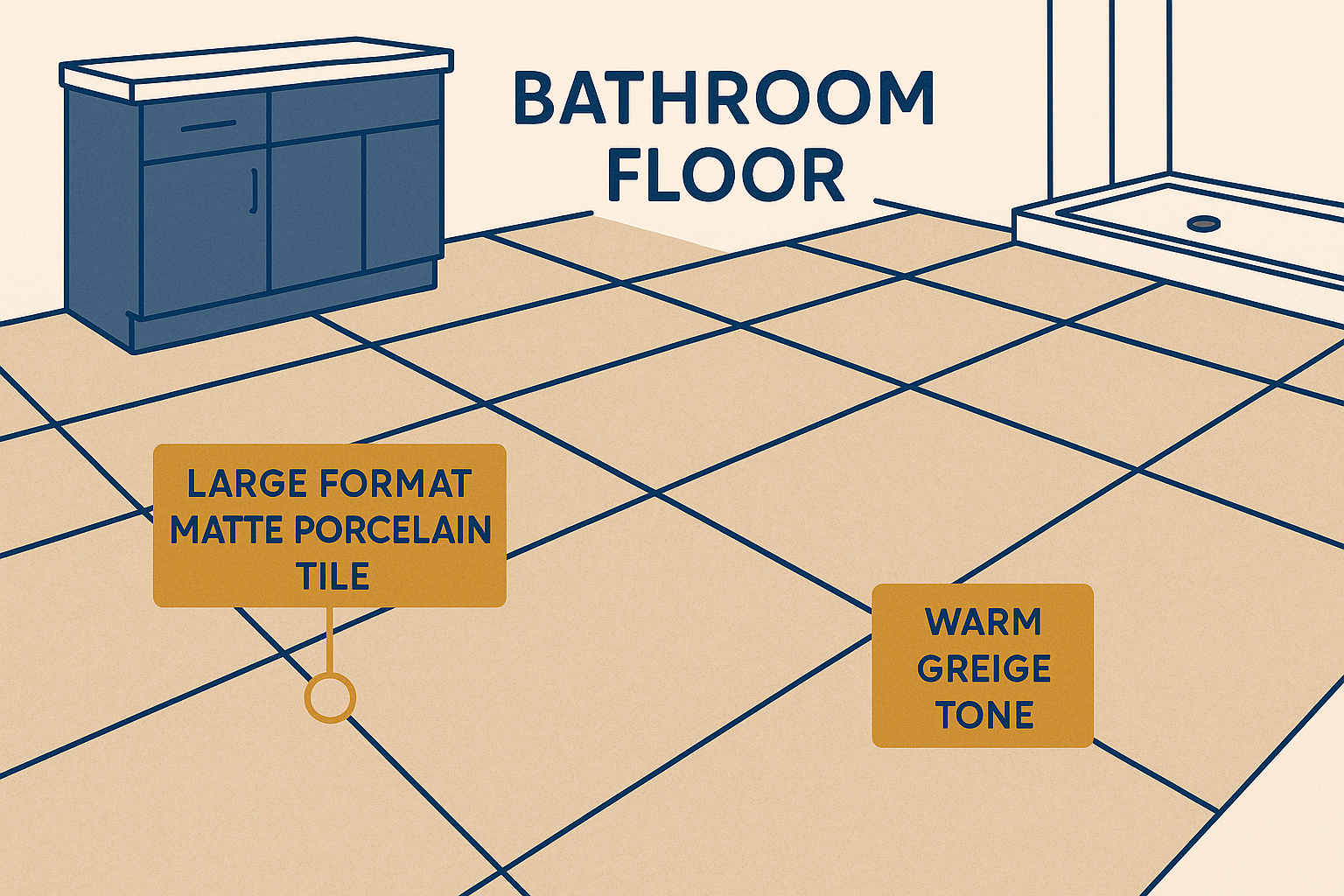
This guide walks through the three most important technical factors in bathroom floor tile selection — slip resistance, format size, and surface finish — and then addresses the design decisions that make the floor look right.
Why Bathroom Floor Tile Is Different From Wall Tile
Bathroom floor tile bears loads that wall tile never does: the weight of a person, daily foot traffic, and the transition from wet to dry footing without adequate warning. These conditions require tile that:
- Has adequate slip resistance when wet
- Is strong enough to handle point loads (heels, dropped items)
- Can be installed with the correct slope toward the drain
- Is sealed or naturally dense enough to resist water and stain penetration
These requirements eliminate some tile types and formats that work perfectly well on walls. A polished marble wall tile — visually beautiful — is a slip hazard on a wet bathroom floor. A large-format tile that cannot be sloped accurately is a problematic choice for a shower floor.
Slip Resistance: The Non-Negotiable Factor
Slip resistance is the most important performance criterion for bathroom floor tile, and it is the one most homeowners ignore because it is not visible in a showroom.
COF and DCOF Ratings
Slip resistance is measured by the coefficient of friction (COF). The Dynamic Coefficient of Friction (DCOF) test measures resistance to sliding under wet conditions — which is the relevant test for bathroom floors.
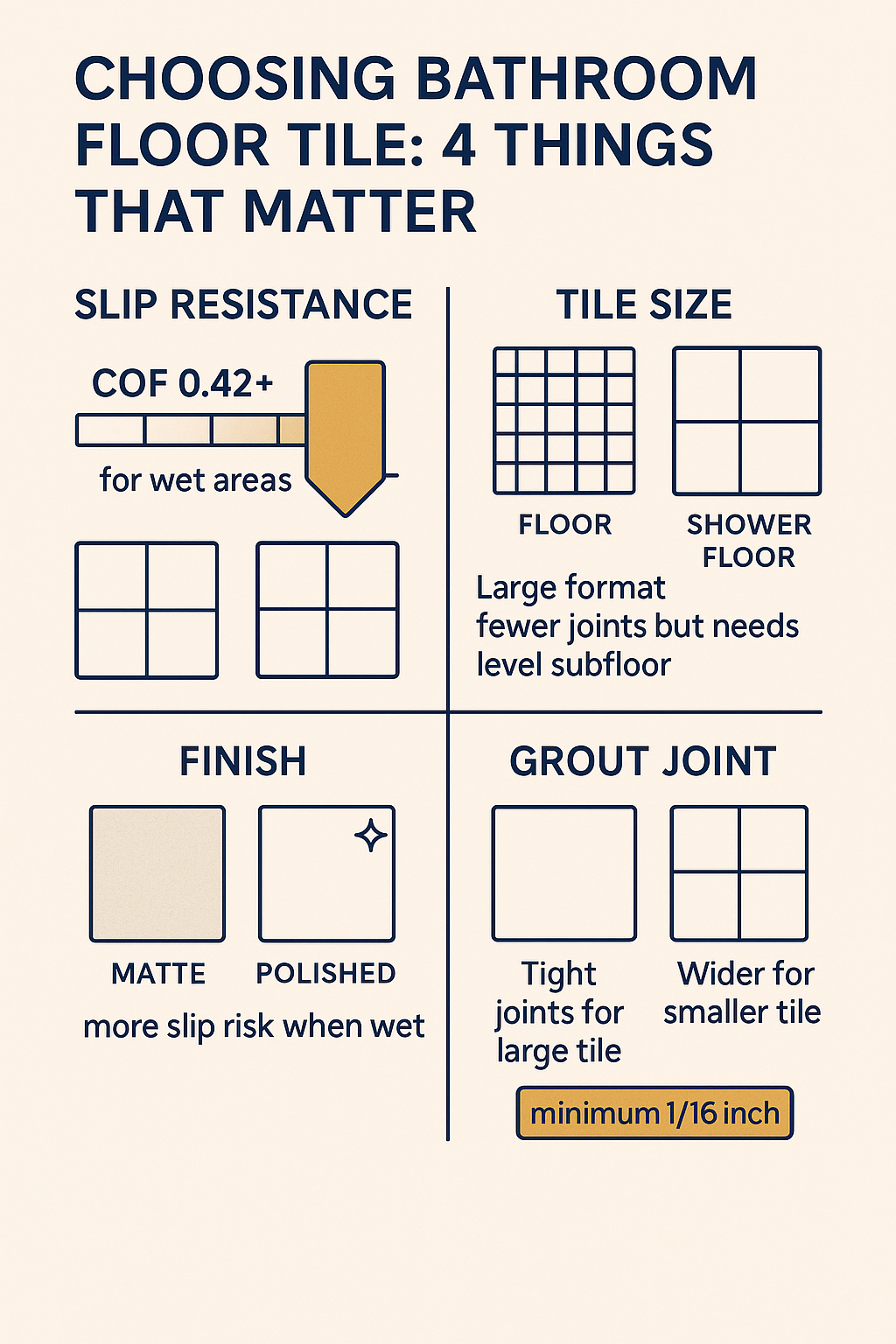
- DCOF ≥ 0.42: The minimum for floor tile used in wet conditions according to the ANSI A137.1 standard. This is the floor (pun intended) — not a target.
- DCOF 0.50–0.60: Appropriate for standard bathroom floors and shower floors.
- DCOF 0.65+: Appropriate for high-risk wet environments.
Polished stone and high-gloss tile finishes typically have DCOF below 0.42 when wet. They are not appropriate for bathroom floors, particularly shower floors, without additional surface treatment.
Practical Slip Resistance by Tile Type
- Matte porcelain: Good natural slip resistance. DCOF typically 0.50–0.70 depending on surface texture.
- Textured porcelain: Best natural slip resistance. DCOF typically 0.60–0.80+.
- Polished porcelain: Poor wet slip resistance. Not recommended for bathroom floors.
- Honed stone (marble, travertine): Moderate slip resistance — better than polished, not as good as textured porcelain.
- Polished stone: Poor wet slip resistance. Avoid on shower floors.
- Mosaic tile (25 x 25 mm or 50 x 50 mm): High slip resistance due to high grout joint density. A long-standing standard for shower floors.
Always request the DCOF rating from your tile supplier for any floor tile you are considering. Reputable tile suppliers can provide this information.
Tile Format Size and the Shower Floor Problem
Tile format — the length and width dimensions — affects both appearance and installation requirements, particularly on shower floors.
Shower Floor Slope
A properly waterproofed shower floor must slope toward the drain at a minimum of 1/4 inch per foot (approximately 2%). On a flat surface like a bathroom floor, this slope is built into the substrate — the homeowner rarely thinks about it. On a shower floor, the tile must be cut and laid to follow this slope precisely.
Small-format tile (25×25 mm to 100×100 mm): Follows the shower floor slope naturally because each tile is small enough to adjust individually. The higher grout line density improves traction and hides minor substrate variations. The standard choice for shower floors.
Medium-format tile (15×15 cm to 30×30 cm): Can work on a shower floor but requires a precisely prepared substrate to follow the slope correctly.
Large-format tile (60×60 cm and larger): Very difficult to install correctly on a shower floor because each tile spans a significant amount of the floor slope. Large tiles that do not all sit at the correct angle look obviously wrong and do not slope water to the drain properly. Large-format tile is generally not appropriate for shower floors.
Bathroom Floor (Outside Shower)
On the bathroom floor outside the shower, format size is primarily an aesthetic decision with practical considerations:
- Large-format tile (60×60 cm or 60×120 cm): Creates a clean, expansive look. Fewer grout lines mean easier cleaning and more visual continuity. Requires a flat, well-prepared substrate — any unevenness becomes obvious with large tiles.
- Medium-format tile (30×30 cm to 45×45 cm): The most forgiving format — accommodates moderate substrate variation and suits most bathroom scales.
- Small-format tile (10×10 cm to 20×20 cm): More visual activity. Works well in traditional bathrooms and powder rooms. More grout lines mean more maintenance.
Surface Finish and Maintenance
The surface finish of bathroom floor tile affects both its look and how easy it is to maintain.
Matte finish: The most practical choice for bathroom floors. Fingerprints, water spots, and mineral deposits are less visible than on polished surfaces. Easier to clean because grime sits on the surface rather than in micro-scratches. The current dominant finish in contemporary bathrooms.
Satin or soft-polished finish: A middle ground between matte and high-gloss. Shows some reflectivity without the maintenance requirements of full polish. Appropriate for bathroom floors.
Textured finish: Maximizes slip resistance. Some textures trap grime in the surface pattern — evaluate cleaning effort before selecting a heavily textured tile for high-traffic floors.
High-gloss or polished finish: Looks brilliant on walls. On bathroom floors, it shows every water spot, footprint, and soap smear. Requires constant wiping to look clean. Not recommended for bathroom floors.
Tile Colour and Visual Effect
Colour and pattern on the bathroom floor affect how the space reads from the doorway and how large it feels.
Light neutral floor tile: Makes small bathrooms feel larger. Hides nothing — soap scum, hard water deposits, and dirt all show clearly on white or light tile. Requires more frequent cleaning.
Medium tone tile (grey, greige, warm tan): The most practical middle ground. Hides typical soil without being so dark that hard water deposits become the dominant visual element.
Dark floor tile: Creates drama and sophistication. Shows hard water spotting and mineral deposits prominently. Works best in bathrooms with a water softener or in Ottawa homes with naturally lower-mineral water.
Patterned floor tile (encaustic, geometric, mosaic): Adds visual interest, particularly in powder rooms. Pattern conceals grime well. Works best when the rest of the bathroom is relatively simple.
For tile selection as part of a full bathroom renovation in Ottawa, our team at Miracle Dream Homes guides homeowners through the selection process. Visit our bathroom renovation page to learn about our process, or our tub-to-shower conversion page for shower-specific tile guidance.
For DCOF ratings and tile technical standards, the Tile Council of North America (TCNA) handbook is the definitive industry reference, and ANSI A137.1 sets the slip resistance standards used by Canadian tile suppliers.
Frequently Asked Questions
What slip resistance rating do I need for a bathroom floor tile?
For a wet bathroom floor, look for a Dynamic Coefficient of Friction (DCOF) of 0.50 or higher. For shower floors, where the surface is consistently wet, aim for 0.60 or higher. Polished stone and high-gloss tile typically fall below 0.42 when wet and should not be used on bathroom floors.
Is large-format tile a good choice for a bathroom floor?
For the main bathroom floor, yes — large-format tile creates a clean, expansive look and is easier to clean. For a shower floor, no — large tiles are very difficult to install with the correct slope toward the drain and typically result in pooling water.
How often does bathroom floor tile need to be cleaned?
The cleaning frequency depends on tile colour and finish. Light-coloured matte tile shows soap and water deposits quickly and benefits from weekly cleaning. Dark matte tile is more forgiving. High-gloss or polished tile shows footprints and water spots daily and requires the most frequent attention.
Does bathroom floor tile need to be sealed?
Porcelain tile (water absorption ≤ 0.5%) does not require sealing. Natural stone tile (marble, travertine, slate) must be sealed before grouting and re-sealed annually or as needed. Grout should be sealed after installation regardless of tile type — grout is porous and sealing significantly extends its stain resistance and lifespan.